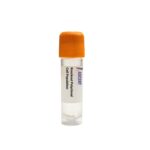
The L2HGDH Knockout SK-HEP-1 Polyclonal Cells constitute a CRISPR/Cas9-edited polyclonal knockout cell population derived from the human hepatocellular carcinoma line SK-HEP-1. This heterogeneous pool carries disruptions of the L2HGDH gene, enabling loss-of-function studies without clonal isolation. The polyclonal format ensures broad editing outcomes and robust experimental reproducibility in liver cancer investigations.
SK-HEP-1 originated from ascitic fluid of a patient with liver adenocarcinoma and displays epithelial morphology. It is extensively used in hepatocellular carcinoma (HCC) research, including studies on tumor progression, metastasis, and therapeutic responses. The SK-HEP-1 background supplies a clinically relevant platform for examining L2HGDH function in hepatic oncogenesis.
L2HGDH encodes a mitochondrial enzyme that oxidizes L-2-hydroxyglutarate (L-2-HG) to alpha-ketoglutarate (??-KG) using flavin adenine dinucleotide (FAD) as a cofactor. The protein is processed by mitochondrial processing peptidase. Knockout of L2HGDH leads to L-2-HG accumulation, which competitively inhibits ??-KG-dependent dioxygenases such as TET DNA demethylases and JmjC histone demethylases, disrupting epigenetic regulation. Prolyl hydroxylases are also affected, altering hypoxia-inducible factor stability. This oncometabolite-driven mechanism results in aberrant DNA and histone methylation, promoting a tumorigenic state.
In SK-HEP-1 cells, L2HGDH loss recapitulates oncometabolite-mediated metabolic rewiring seen in various cancers. Accumulation of L-2-HG in this liver cancer model allows dissection of how metabolic disturbances reprogram the epigenome and drive malignant characteristics. Given the frequent metabolic and epigenetic alterations in HCC, these polyclonal knockout cells are a powerful tool to probe the mechanistic link between oncometabolite signaling and hepatocellular carcinogenesis.
Applications include quantifying L-2-HG and ??-KG by LC-MS, analyzing histone methylation marks via western blot, and assessing DNA methylation through bisulfite sequencing. Functional assays for proliferation, migration, and invasion evaluate tumorigenic potential, while drug sensitivity screens identify therapeutic vulnerabilities. These cells are ideal for mechanistic studies of oncometabolite-induced epigenetic dysregulation and for testing interventions that target 2-HG accumulation. For further details or technical support, please contact Ascent Research.