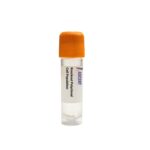
LANCL1 Knockout Raji Polyclonal Cells are a CRISPR/Cas9-edited polyclonal population derived from the Raji B lymphocyte lineage, in which the LANCL1 gene has been disrupted to create a mixed pool of cells carrying heterogeneous loss-of-function mutations. This product provides a genetically diverse knockout model that is ideal for investigating the functional consequences of LANCL1 deficiency without the constraints or artifacts that may arise from clonal selection. The polyclonal format captures the spectrum of editing outcomes generated by CRISPR/Cas9-mediated gene disruption, enabling robust phenotypic analysis in a physiologically relevant cell background that retains the genetic and epigenetic complexity of a well-characterized Burkitt lymphoma line.
The Raji host cell line is an Epstein?CBarr virus (EBV)-positive human Burkitt lymphoma B lymphocyte model originally isolated from a Nigerian patient. Widely employed in biomedical research, Raji cells exhibit a type III EBV latency program and are used extensively to dissect B cell malignancy mechanisms, viral oncology, and immune signaling pathways. Their suspension growth characteristics, expression of surface markers such as CD19 and CD20, and rapid proliferation make them a tractable system for CRISPR-based gene perturbation. The EBV positivity additionally allows dissection of interactions between viral latency and host gene function, particularly in the context of redox metabolism and mitochondrial biology.
LANCL1 (LanC Like 1) encodes a glutathione-binding protein that integrates redox sensing with mitochondrial homeostasis and cellular energy metabolism. It functions as a molecular sensor for reduced glutathione, transducing antioxidant signals to maintain mitochondrial respiratory chain integrity and to limit reactive oxygen species (ROS) accumulation. LANCL1 is also proposed to act as an abscisic acid (ABA) receptor, thereby linking metabolic stress and ABA-mediated anti-inflammatory responses in immune cells. Mechanistically, LANCL1 operates upstream of AMPK phosphorylation and PGC-1?? activation, promoting the transcription of mitochondrial biogenesis factors such as TFAM and NRF1. It interacts physically with glutathione, mitochondrial complex I, and LANCL2, while its expression is positively regulated by oxidative stress via the NRF2 pathway and by PPAR?? agonists. Disruption of LANCL1 removes a critical node in this redox-metabolic signaling hub, predicting elevated ROS levels, impaired mitochondrial respiration, and altered AMPK-driven proliferation control.
In the context of Raji Burkitt lymphoma cells, which exhibit high basal metabolic flux and reliance on redox buffering systems for survival, LANCL1 knockout is expected to exacerbate oxidative stress and compromise mitochondrial function, thereby perturbing proliferation, apoptosis, and ABA-modulated cytokine secretion. The polyclonal nature of this knockout model avoids the potential biases of single-cell cloning and is particularly suited for studies that require near-physiological heterogeneity typical of tumor cell populations. It represents a powerful tool to explore how glutathione-dependent mitochondrial surveillance contributes to B cell malignancy maintenance, and how its loss may interact with EBV-driven oncogenic programs. Moreover, the model may uncover synthetic lethal vulnerabilities that can be exploited for therapeutic benefit in B-cell lymphomas characterized by mitochondrial dysfunction or heightened oxidative load.
LANCL1 Knockout Raji Polyclonal Cells are applicable to a wide range of experimental workflows, including the investigation of redox biology in lymphomagenesis, dissection of ABA signaling in immune cells, and screening for synthetic lethal interactions using metabolic inhibitors or glutathione-depleting agents. Users can monitor knockout effects via Western blot or RT-qPCR for LANCL1, quantify glutathione levels and ROS using DCFDA, assess mitochondrial membrane potential with JC-1 dye, perform Seahorse metabolic flux analysis, and evaluate cell proliferation (MTT/ATP) or apoptosis (Annexin V/PI). By combining these readouts, researchers can delineate how LANCL1 deficiency reshapes metabolic and anti-inflammatory pathways in a B lymphocyte background, enabling deeper mechanistic insights and translational applications. For further details, please contact Ascent Research.