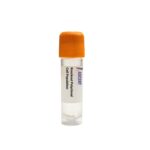
The LIMD1 Knockout Raji Polyclonal Cells provide a CRISPR/Cas9-mediated polyclonal knockout cell population targeting the LIMD1 gene in human Raji B lymphocytes. This population offers a heterogeneous loss-of-function model for studying LIMD1, a tumor suppressor adapter that coordinates HIF-1?? degradation and Hippo pathway activation. The polyclonal format preserves natural genetic variability, making it suitable for functional screens and pathway analysis.
Raji cells are a well-characterized EBV-positive B lymphocyte line isolated from a Burkitt lymphoma patient. This malignant line exhibits robust proliferation and retains key B-cell properties, serving as a standard model for lymphoma biology and drug screening. The LIMD1 knockout in this background allows focused study of LIMD1??s tumor-suppressive functions within a lymphomatous context.
LIMD1 scaffolds the VHL-PHD2 E3 ligase complex to HIF-1??, promoting oxygen-dependent proteasomal degradation and limiting expression of downstream targets like VEGF, CTGF, and CYR61. Concurrently, it activates the Hippo pathway by facilitating LATS1/2-dependent phosphorylation and inhibition of YAP/TAZ. Additional binding partners include p62/SQSTM1, TRAF6, RB1, and Elongin B/C, reflecting LIMD1??s role in miRNA biogenesis and cell adhesion. Through these networks, LIMD1 modulates let-7 and miR-21 processing, and controls p21 and Cyclin D1 levels, integrating multiple tumor-suppressive signals.
In Raji cells, loss of LIMD1 is predicted to dysregulate HIF-1?? and YAP signaling, potentially leading to normoxic HIF-1?? stabilization and enhanced YAP-driven transcription. This can impact proliferation, apoptosis, and migration, providing a platform to study how LIMD1 deficiency contributes to B-cell lymphoma progression. The EBV-positive background also permits investigation of viral interactions with these pathways, as EBV latency factors may intersect with HIF-1?? and NF-??B signaling, offering a multifaceted model for therapeutic exploration.
This knockout population supports Western blotting for HIF-1??, YAP, and phospho-YAP, RT-qPCR for CTGF, CYR61, and VEGF, and co-immunoprecipitation of LIMD1 complexes. Hypoxia response assays, YAP/TAZ reporter systems, and drug sensitivity screens are readily performed. The model is well-suited for tumor suppressor research, hypoxia biology, miRNA studies, and lymphoma drug development. For further details, contact Ascent Research.