Quick Order Cart

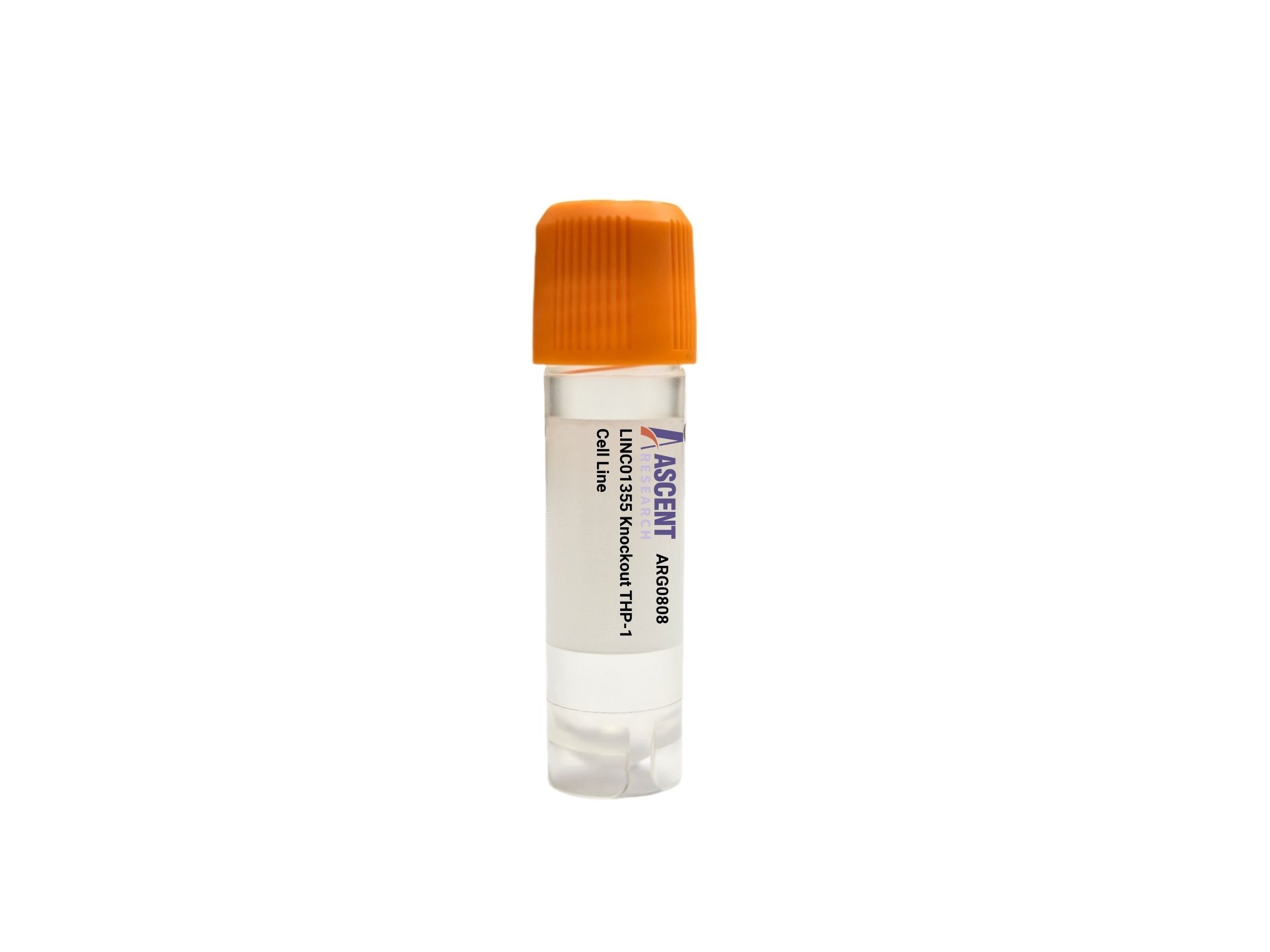
Cat. No. ARG0808

LINC01355 Knockout THP-1 Cell Line

  • Product Type:

    Genome-edited Cells

  • Tissue Source:

    Blood (peripheral blood)

  • Disease:

    Acute monoblastic leukemia

  • Gene Species:

    Homo sapiens (Human)

The LINC01355 Knockout THP-1 Cell Line is a CRISPR/Cas9-edited human monocytic leukemia cell line with targeted disruption of the LINC01355 long non-coding RNA gene. LINC01355 functions as a ceRNA that sponges miR-21 and miR-144-3p, modulating PI3K/AKT and MAPK/ERK signaling through effectors like AKT, mTOR, ERK, and STAT3. This knockout model enables loss-of-function studies in monocyte/macrophage biology, leukemia, and inflammation. Applications include transcriptomic profiling via RNA-seq, protein analysis by western blotting, functional assays for proliferation and apoptosis, and RNA immunoprecipitation to map lncRNA?CmiRNA interactions. The cell line is suitable for drug screening and immune cell signaling research.

Inquire Now

In stock

Ships next business day


Ask a Question

Shipping Info:

Cryopreserved in vials and shipped on dry ice


Disclaimer:

For Research Use Only

  • Characteristics

    Host Cell

    THP-1

    Age

    1 year

    Sex of Donor

    Male

    Gene Name

    LINC01355

    Gene Species

    Homo sapiens (Human)

    Gene Identifier

    NCBI Gene ID 100996511

  • Culture Conditions

    Temperature

    37°C

    Atmosphere

    5% CO₂

  • Quality Control

    Sterility testing

    Daily monitoring confirms that the cells are free from bacterial, yeast, and fungal contamination.

    Mycoplasma testing

    Negative for mycoplasma through PCR analysis

    Pathogens

    Cells tested negative for HIV-1, HBV, and HCV.

  • Disclaimer

    Intended Use

    This product is intended for laboratory in vitro use only. lt is not intended for diagnostic, therapeutic, or clinical applications.

    Disclaimer

    Ascent Research endeavors to provide accurate and up-to-date product information. However, no warranties or representations are made regarding its completeness or reliability. References to scientific literature and patents are for informational purposes only, and the customer assumes sole responsibility for verifying their accuracy.

    By accepting this product, the customer acknowledges and agrees to assume all risks associated with its receipt, handling, storage, disposal, and use, including compliance with all applicable safety and environmental regulations and precautions. Relevant laws, regulations, and ethical guidelines must be followed in conducting any research, modifications, or derivatives derived from this product.

    This product is provided "AS IS", and except as expressly stated herein, Ascent Research disclaims all other warranties, express or implied. Under no circumstances shall Ascent Research, its affiliates, or representatives be liable for indirect, incidental, consequential, or punitive damages arising from the use of this material. While Ascent Research employs rigorous quality control measures, we shall not be held responsible for damages resulting from misidentification or misinterpretation of the provided materials.

Description

The LINC01355 Knockout THP-1 Cell Line is a genetically modified human monocytic leukemia cell model generated via CRISPR/Cas9-mediated disruption of the LINC01355 gene. This cell line serves as a robust loss-of-function tool for investigating the biological roles of LINC01355 long non-coding RNA in hematopoietic cell contexts. It is offered as a ready-to-use knockout cell line, enabling direct functional interrogation without prior editing steps. The targeted gene disruption is achieved through CRISPR/Cas9 genome engineering, resulting in a stable knockout model suitable for diverse biomedical research applications.

The parental THP-1 cell line, originally isolated from the peripheral blood of a one-year-old male with acute monocytic leukemia, is a well-characterized model for monocyte-to-macrophage differentiation, innate immune signaling, and leukemic transformation. These suspension cells exhibit morphological and functional features of immature monocytes and can be induced to differentiate into adherent, macrophage-like cells upon treatment with phorbol esters such as PMA. This differentiation capacity makes THP-1 an invaluable system for studying macrophage biology, inflammatory responses, and the molecular mechanisms underlying acute myeloid leukemia.

LINC01355 is a long non-coding RNA that functions primarily as a competitive endogenous RNA (ceRNA) to sequester microRNAs such as miR-21 and miR-144-3p. By sponging these miRNAs, LINC01355 relieves translational repression of target mRNAs involved in critical signaling pathways, including PI3K/AKT and MAPK/ERK cascades. Consequently, LINC01355 influences the activity of downstream effectors like AKT, mTOR, GSK3??, ERK, and STAT3, as well as the stability of ??-catenin. Its expression is regulated by a network of transcription factors, epigenetic modifiers, and cellular stress signals, and it interacts with RNA-binding proteins and chromatin-modifying complexes to fine-tune gene expression programs. Through these mechanisms, LINC01355 modulates cell proliferation, apoptosis, and differentiation in a context-dependent manner.

In the THP-1 monocytic leukemia context, knockout of LINC01355 is anticipated to disrupt these regulatory networks, leading to altered monocyte/macrophage functions and potential attenuation of leukemogenic properties. Given the gene??s involvement in acute myeloid leukemia, colorectal cancer, breast cancer, and inflammatory diseases, this knockout cell line provides a physiologically relevant platform to dissect LINC01355-dependent disease mechanisms. It allows researchers to directly assess how loss of LINC01355 expression impacts THP-1 cell behavior, including differentiation potential, cytokine production, and sensitivity to chemotherapeutic agents.

This knockout cell line is applicable to a wide array of experimental techniques, including RT-qPCR and RNA-seq for transcriptomic analysis, western blotting for protein-level validation, flow cytometry for phenotypic characterization, and proliferation/apoptosis assays to measure cellular outcomes. Moreover, RNA immunoprecipitation and luciferase reporter assays enable detailed investigation of LINC01355?CmiRNA interactions, while cytokine profiling can quantify inflammatory responses. These tools support robust studies in lncRNA biology, leukemia and cancer research, drug screening, and immune cell signaling. For further information or technical support, please contact Ascent Research.


Reset Password

    Reach Us Questions? Click Me Here!

    Fill out the form below and a member of our team will contact you shortly!

    *Required field


      Reach Us

      Fill out the form below and a member of our team will contact you shortly!

      *Required field

      Product Inquiry (Optional)