Quick Order Cart

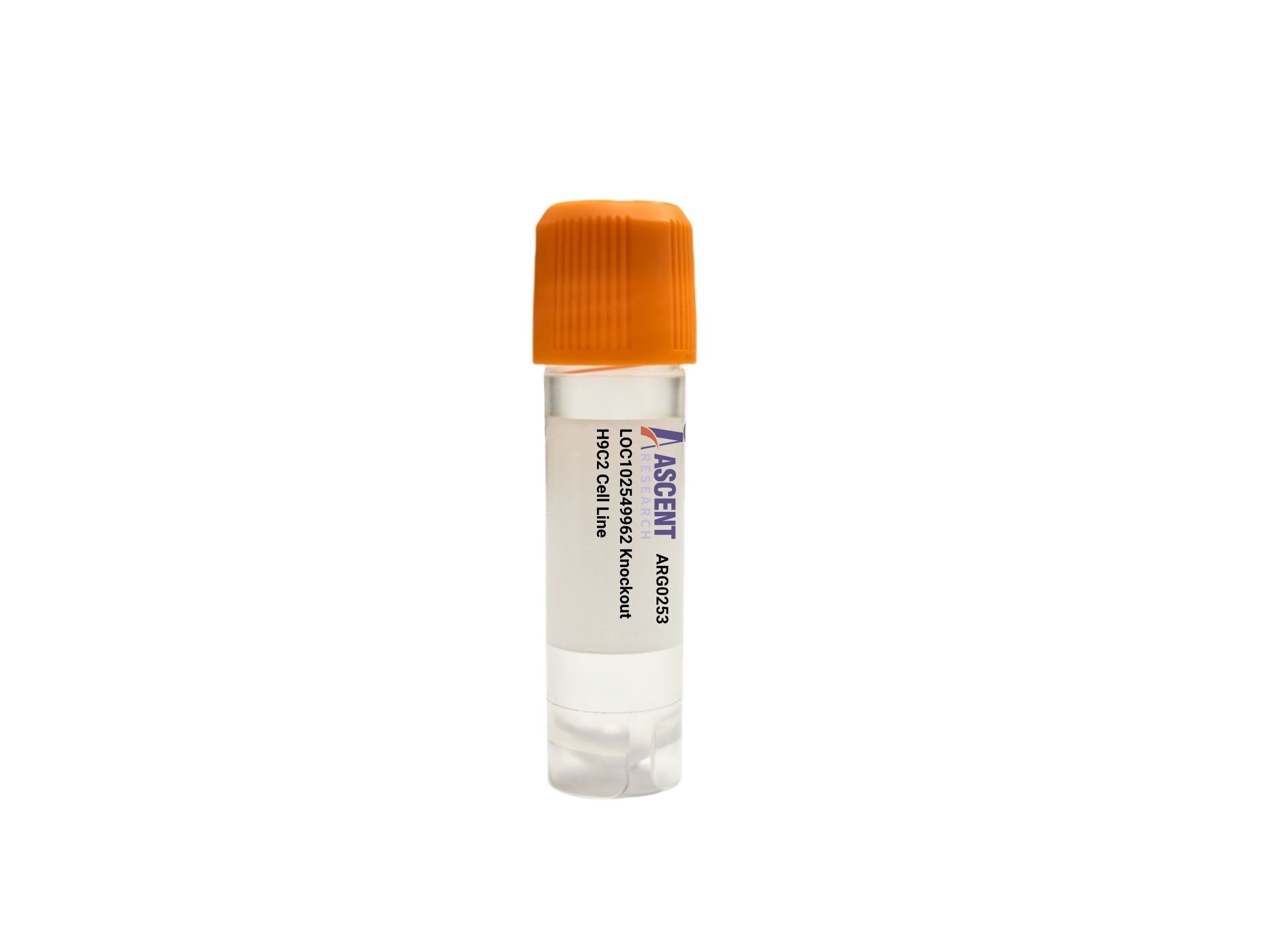
Cat. No. ARG0253

LOC102549962 Knockout H9C2 Cell Line

  • Product Type:

    Genome-edited Cells

  • Disease:

    Normal

  • Gene Species:

    Rattus norvegicus (Rat)

The LOC102549962 Knockout H9C2 Cell Line is a CRISPR/Cas9-edited knockout cell line based on the rat cardiomyoblast H9C2 line, enabling functional investigation of the long non-coding RNA LOC102549962. This lncRNA interacts with chromatin modifiers including EZH2 and PRC2, and regulates cardiac transcription networks involving MEF2C, GATA4, and signaling via Wnt, TGF-beta, and Hippo pathways. Engineered for studies of cardiac hypertrophy, heart failure, and gene regulation, the model supports assays from RNA-seq and hypertrophy stimulation to electrophysiology. Loss of LOC102549962 alters expression of downstream targets such as MYH6 and SCN5A, providing a critical tool for uncovering lncRNA mechanisms in cardiovascular disease and drug discovery.

Inquire Now

In stock

Ships next business day


Ask a Question

Shipping Info:

Cryopreserved in vials and shipped on dry ice


Disclaimer:

For Research Use Only

  • Characteristics

    Host Cell

    H9C2

    Age

    Embryo

    Gene Name

    LOC102549962

    Gene Alias

    uncharacterized LOC102549962

    Gene Species

    Rattus norvegicus (Rat)

    Gene Identifier

    NCBI Gene ID 102549962

    Gene Type

    ncRNA

  • Culture Conditions

    Temperature

    37°C

    Atmosphere

    5% CO₂

  • Quality Control

    Sterility testing

    Daily monitoring confirms that the cells are free from bacterial, yeast, and fungal contamination.

    Mycoplasma testing

    Negative for mycoplasma through PCR analysis

    Pathogens

    Cells tested negative for HIV-1, HBV, and HCV.

  • Disclaimer

    Intended Use

    This product is intended for laboratory in vitro use only. lt is not intended for diagnostic, therapeutic, or clinical applications.

    Disclaimer

    Ascent Research endeavors to provide accurate and up-to-date product information. However, no warranties or representations are made regarding its completeness or reliability. References to scientific literature and patents are for informational purposes only, and the customer assumes sole responsibility for verifying their accuracy.

    By accepting this product, the customer acknowledges and agrees to assume all risks associated with its receipt, handling, storage, disposal, and use, including compliance with all applicable safety and environmental regulations and precautions. Relevant laws, regulations, and ethical guidelines must be followed in conducting any research, modifications, or derivatives derived from this product.

    This product is provided "AS IS", and except as expressly stated herein, Ascent Research disclaims all other warranties, express or implied. Under no circumstances shall Ascent Research, its affiliates, or representatives be liable for indirect, incidental, consequential, or punitive damages arising from the use of this material. While Ascent Research employs rigorous quality control measures, we shall not be held responsible for damages resulting from misidentification or misinterpretation of the provided materials.

Description

The LOC102549962 Knockout H9C2 Cell Line is a CRISPR/Cas9-edited knockout cell line designed for loss-of-function studies of the rat long non-coding RNA LOC102549962 in a cardiac muscle context. This product provides a genetically disrupted model in which the target gene has been inactivated using CRISPR/Cas9-mediated gene disruption, enabling researchers to dissect the regulatory roles of this lncRNA in cardiomyoblast biology. The knockout cell line is supplied as a stable adherent culture derived from the H9C2 host background and is suitable for a broad range of molecular and cellular analyses relevant to cardiovascular research.

The parental H9C2 cell line is a subclone of the H9(2-1) line, originally isolated from embryonic BDIX rat heart ventricular tissue. H9C2 cells are a well-established model cardiomyoblast line that retains characteristics of embryonic heart cells, including expression of cardiac transcription factors, ion channels, and contractile proteins. This background provides a physiologically relevant host for investigating the effects of LOC102549962 knockout on cardiomyocyte differentiation, electrophysiology, and hypertrophic responses, reflecting the cellular context of developing and stressed cardiac muscle.

LOC102549962 encodes a regulatory long non-coding RNA that functions as a scaffold for chromatin-modifying complexes, interacting directly with PRC2 components, LSD1, EZH2, and DNMT1 to modulate gene expression. It is positioned within key cardiac signaling networks, receiving upstream activation from Wnt ligands, TGF-beta, and Hippo pathway effectors YAP and TAZ, while transcriptionally regulating downstream targets such as MYH6, MYH7, ACTC1, KCNA5, and SCN5A. The lncRNA also interacts with microRNAs miR-1 and miR-133 and transcription factors MEF2C, GATA4, NKX2-5, and TBX5, forming a regulatory hub that influences cardiomyoblast function and cardiac muscle contraction.

Disruption of LOC102549962 in H9C2 cells is expected to perturb these interconnected regulatory networks, providing a powerful model to study the molecular basis of cardiac hypertrophy and heart failure. The knockout may alter SMAD2/3-SMAD4 signaling downstream of TGF-beta, beta-catenin activity in the Wnt pathway, and YAP/TAZ-mediated transcriptional programs, thereby affecting cardiomyocyte growth and electrophysiological properties. This system enables precise investigation of lncRNA-dependent gene regulation in a cell line that mirrors embryonic cardiac phenotypes, making it valuable for dissecting both developmental and pathological mechanisms.

This cell line is optimized for a variety of research applications, including transcriptomic profiling via RNA-seq, validation of gene expression changes by RT-qPCR and Western blotting, and cellular hypertrophy assays using angiotensin II stimulation. It supports functional studies of lncRNA-chromatin interactions through ChIRP and RIP, immunofluorescence for cardiac markers, and electrophysiological recordings for ion channel analysis. Additionally, the model is suitable for drug screening targeting cardiac diseases such as myocardial infarction and congenital heart disease. For further information, please contact Ascent Research.


Reset Password

    Reach Us Questions? Click Me Here!

    Fill out the form below and a member of our team will contact you shortly!

    *Required field


      Reach Us

      Fill out the form below and a member of our team will contact you shortly!

      *Required field

      Product Inquiry (Optional)