Quick Order Cart

Cat. No. ARG1205

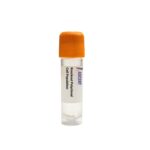
LRPAP1 Knockout Raji Polyclonal Cells

  • Product Type:

    Polyclonal Cell Population

  • Species:

    Homo sapiens (Human)

  • Tissue Source:

    Bone

  • Disease:

    Burkitt lymphoma

The LRPAP1 Knockout Raji Polyclonal Cells are a CRISPR/Cas9-edited polyclonal population of human B lymphoblasts with targeted disruption of the LRPAP1 gene. LRPAP1 is an endoplasmic reticulum chaperone essential for the proper folding and trafficking of LDL receptor family members, including LRP1, LRP2, VLDLR, and ApoER2. Loss of LRPAP1 function leads to receptor mistrafficking and impaired ligand internalization. This knockout model enables the study of lipoprotein metabolism, B lymphocyte endocytosis, and receptor signaling pathways in an Epstein-Barr virus-positive background. Typical applications include fluorescent ligand uptake assays, flow cytometry, co-immunoprecipitation, and drug screening for LRP1-related disorders.

Inquire Now

In stock

Ships next business day


Ask a Question

Shipping Info:

Cryopreserved in vials and shipped on dry ice


Disclaimer:

For Research Use Only

  • Characteristics

    Host Cell

    Raji

    Cell Type

    B cell line

    Sex of Donor

    Male

    Age

    11 years

    Derived From Site

    In situ; Maxilla

    Gene Name

    LRPAP1

    Gene Identifier

    NCBI Gene ID 4043

    Morphology

    Lymphoblast-like

    Growth Mode

    Suspension

    Storage

    Liquid nitrogen (LN2)

  • Culture Conditions

    Growth medium

    RPMI 1640

    Supplement(s)

    10% Fetal Bovine Serum, 1% Penicillin-Streptomycin Solution

    Temperature

    37°C

    Atmosphere

    5% CO₂

  • Quality Control

    Sterility testing

    The bacterial, yeast, and fungi are not detected in these cells by daily monitor.

    Mycoplasma testing

    Negative for mycoplasma through PCR analysis

  • Disclaimer

    Intended Use

    This product is intended for laboratory in vitro use only. lt is not intended for diagnostic, therapeutic, or clinical applications.

    Disclaimer

    Ascent Research endeavors to provide accurate and up-to-date product information. However, no warranties or representations are made regarding its completeness or reliability. References to scientific literature and patents are for informational purposes only, and the customer assumes sole responsibility for verifying their accuracy.

    By accepting this product, the customer acknowledges and agrees to assume all risks associated with its receipt, handling, storage, disposal, and use, including compliance with all applicable safety and environmental regulations and precautions. Relevant laws, regulations, and ethical guidelines must be followed in conducting any research, modifications, or derivatives derived from this product.

    This product is provided "AS IS", and except as expressly stated herein, Ascent Research disclaims all other warranties, express or implied. Under no circumstances shall Ascent Research, its affiliates, or representatives be liable for indirect, incidental, consequential, or punitive damages arising from the use of this material. While Ascent Research employs rigorous quality control measures, we shall not be held responsible for damages resulting from misidentification or misinterpretation of the provided materials.

Description

The LRPAP1 Knockout Raji Polyclonal Cells constitute a CRISPR/Cas9-edited polyclonal knockout cell population, generated by targeted gene disruption of the LRPAP1 locus in the human B lymphocyte Raji cell line. This loss-of-function model enables detailed investigation of LRPAP1 chaperone activity within a suspension-adapted, Epstein-Barr virus (EBV)-positive lymphoblastoid background. The polyclonal nature preserves population-level heterogeneity while abolishing wild-type protein expression, providing a robust tool for functional genomics in endocytic receptor biology. Researchers can utilize these cells to dissect ligand internalization, receptor trafficking, and downstream signaling pathways controlled by low-density lipoprotein receptor (LDLR) family members.

The parental Raji cell line was derived from a male patient with Burkitt lymphoma and maintains latent EBV infection. These suspension-grown, non-adherent B lymphocytes are widely employed as models for B lymphocyte biology, EBV latency mechanisms, and immune response studies. Their transformed phenotype supports stable propagation and compatibility with high-throughput screening platforms. The EBV-positive status adds relevance for investigations intersecting viral pathogenesis with host metabolic or endocytic functions, expanding the utility of the knockout system beyond classical lipoprotein receptor research.

LRPAP1 functions as an endoplasmic reticulum (ER) chaperone that binds selectively to the ligand-binding domains of LDLR family members??including LRP1, LRP2 (megalin), VLDLR, and ApoER2??preventing premature interaction with extracellular ligands such as ApoE and ??2-macroglobulin. This interaction ensures correct folding and facilitates receptor trafficking through the secretory pathway to the cell surface. LRPAP1 disruption leads to ER retention and proteasomal degradation of these receptors, thereby blocking clathrin-mediated endocytosis and downstream signal transduction. The chaperone network is regulated by the ER stress response and feedback from receptor expression levels, and it is intimately connected to lipoprotein metabolism and neuronal receptor sorting.

In Raji cells, LRPAP1 knockout offers unique opportunities to explore B-cell-specific endocytic dynamics and the potential influence of EBV latency on receptor processing. Since megalin and LRP1 participate in antigen uptake and immune signaling, their loss on B lymphoblasts may alter lipoprotein scavenging and cytokine responsiveness. The model also provides a cellular platform for examining LRPAP1-related autosomal recessive nonsyndromic hearing loss, as receptor mistrafficking mirrors pathogenic mechanisms observed in affected tissues. Additionally, the EBV context allows probing of viral manipulation of host chaperone and trafficking pathways.

These polyclonal knockout cells facilitate a wide array of experimental applications, including fluorescent ligand uptake assays using labeled ApoE or ??2-macroglobulin to measure endocytic activity, Western blotting for LRP1/LRP2 stability, flow cytometry for surface receptor quantification, and co-immunoprecipitation to map chaperone?Creceptor complexes. Researchers can perform RT-qPCR or RNA-seq to profile transcriptional changes and phospho-signaling analyses to assess downstream pathway activation. The model is suited for drug screens targeting LRP1-related disorders and for engineering complex in vitro systems to study lipoprotein metabolism. For further technical specifications, please contact Ascent Research.


Reset Password

    Reach Us Questions? Click Me Here!

    Fill out the form below and a member of our team will contact you shortly!

    *Required field


      Reach Us

      Fill out the form below and a member of our team will contact you shortly!

      *Required field

      Product Inquiry (Optional)