Quick Order Cart

Cat. No. ARG43950

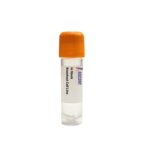
Lrpprc Knockout B16-F10 Cell Line

  • Product Type:

    In Stock Cell Lines

  • Species:

    Mus musculus (Mouse)

  • Tissue Source:

    Skin

  • Disease:

    Melanoma

The Lrpprc Knockout B16-F10 Cell Line is a CRISPR/Cas9-edited mouse melanoma cell line (B16-F10 background) with targeted disruption of the Lrpprc gene, enabling loss-of-function studies of this focal adhesion scaffold protein. Lrpprc recruits phosphatases such as PTPN12 to dephosphorylate SRC, FAK, and paxillin downstream of integrins and growth factor receptors (PDGFR, EGFR), modulating Rho GTPases (RAC1, ROCK) and MAPK/ERK signaling to control cell migration and invasion. This model is ideal for investigating melanoma metastasis mechanisms, screening anti-metastatic compounds, and performing wound healing or transwell migration assays.

Inquire Now

In stock

Ships next business day


Ask a Question

Shipping Info:

Cryopreserved in vials and shipped on dry ice


Disclaimer:

For Research Use Only

  • Characteristics

    Host Cell

    B16-F10

    Age

    Unknown

    Gene Name

    Lrpprc

    Gene Identifier

    NCBI Gene ID 228607

    Morphology

    Epithelial-like

    Growth Mode

    Adherent

    Storage

    Liquid nitrogen (LN2)

  • Culture Conditions

    Temperature

    37°C

    Atmosphere

    5% COâ‚‚

  • Quality Control

    Sterility testing

    The bacterial, yeast, and fungi are not detected in these cells by daily monitor.

    Mycoplasma testing

    Negative for mycoplasma through PCR analysis

  • Disclaimer

    Intended Use

    This product is intended for laboratory in vitro use only. It is not intended for diagnostic, therapeutic, or clinical applications.

    Disclaimer

    Ascent Research endeavors to provide accurate and up-to-date product information. However, no warranties or representations are made regarding its completeness or reliability. References to scientific literature and patents are for informational purposes only, and the customer assumes sole responsibility for verifying their accuracy.

    By accepting this product, the customer acknowledges and agrees to assume all risks associated with its receipt, handling, storage, disposal, and use, including compliance with all applicable safety and environmental regulations and precautions. Relevant laws, regulations, and ethical guidelines must be followed in conducting any research, modifications, or derivatives derived from this product.

    This product is provided "AS IS", and except as expressly stated herein, Ascent Research disclaims all other warranties, express or implied. Under no circumstances shall Ascent Research, its affiliates, or representatives be liable for indirect, incidental, consequential, or punitive damages arising from the use of this material. While Ascent Research employs rigorous quality control measures, we shall not be held responsible for damages resulting from misidentification or misinterpretation of the provided materials.

Description

The Lrpprc Knockout B16-F10 Cell Line is a CRISPR/Cas9-edited knockout cell line derived from the B16-F10 mouse melanoma line, with targeted disruption of the Lrpprc gene. It provides a stable loss-of-function model for investigating Lrpprc, a scaffold protein that recruits phosphatases to focal adhesions. This cell line eliminates Lrpprc protein function, allowing direct assessment of its role in adhesion signaling without the limitations of pharmacological or transient methods. The cell line is maintained under standard culture conditions and can be used directly in migration and adhesion assays.

B16-F10 is a highly metastatic subline of the C57BL/6 B16 melanoma, widely used for studying tumor metastasis and cell motility. Its aggressive migration and invasion, coupled with a syngeneic background, facilitate in vivo transplantation and in vitro assays of adhesion dynamics and Rho GTPase-driven cytoskeletal reorganization. B16-F10 cells are characterized by elevated expression of integrins and active Rho GTPases, which drive their motility. The Lrpprc knockout in this context allows dissection of the specific contribution of phosphatase scaffolding to these dynamic processes. The knockout line in this background ensures sensitive detection of Lrpprc-dependent metastatic phenotypes.

Lrpprc acts as a molecular scaffold, recruiting PTPN12 and other phosphatases to focal adhesions, where it dephosphorylates SRC family kinases, FAK, and paxillin downstream of integrins and growth factor receptors (PDGFR, EGFR). It interacts with p130Cas and actin regulators to modulate Rho GTPases (RAC1, ROCK) and MAPK/ERK signaling, controlling adhesion turnover and migration. This dephosphorylation activity terminates signaling events initiated by integrin clustering and growth factor binding, making Lrpprc a key negative regulator of adhesion complex turnover. Consequently, its loss disrupts the balance between adhesion assembly and disassembly, leading to hyperphosphorylation of adhesion complex components.

In the B16-F10 melanoma model, Lrpprc knockout is expected to impair focal adhesion disassembly, reducing migration and invasion through extracellular matrix. Because B16-F10 cells rely on rapid adhesion turnover for efficient invasion, the knockout cell line may exhibit reduced metastatic ability, providing a tool to study the adhesion-related checkpoints in metastasis. This cell line provides a genetic system to dissect how phosphatase scaffolding at adhesions influences melanoma progression, specifically evaluating nodes within the integrin?CRho GTPase?CMAPK axis critical for metastasis.

Applications include wound healing and transwell migration/invasion assays to measure 2D motility and matrix penetration, immunofluorescence for focal adhesion proteins (paxillin, vinculin), and phospho-western blotting for FAK (pY397) and SRC (pY416). GTPase activity assays for RAC1 and RhoA connect phenotypic changes to signaling outputs. These approaches enable comprehensive analysis of the interplay between Lrpprc, adhesion dynamics, and metastatic signaling. The model suits mechanistic metastasis studies, functional genomics screens, and anti-metastatic compound testing. For further information, contact Ascent Research.


Reset Password

    Reach Us Questions? Click Me Here!

    Fill out the form below and a member of our team will contact you shortly!

    *Required field


      Reach Us

      Fill out the form below and a member of our team will contact you shortly!

      *Required field

      Product Inquiry (Optional)