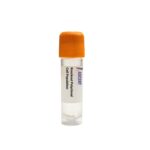
The LRRC8D Knockout Raji Polyclonal Cells represent a CRISPR/Cas9-edited polyclonal knockout cell population in which the LRRC8D gene has been disrupted to abolish its functional expression. This product is supplied as a polyclonal pool, offering a heterogeneous population of cells with targeted genomic modifications that enable the study of LRRC8D-dependent processes in a B lymphocyte context. The knockout model is generated without single-cell cloning, providing a practical and representative system for loss-of-function experiments. Researchers can employ this tool to dissect the roles of volume-regulated anion channel (VRAC) activity in B cell biology, leveraging a model system that maintains the background heterogeneity typical of lymphoma cell populations.
The Raji host cell line is an EBV-positive Burkitt lymphoma-derived B lymphoblast cell line, widely utilized for investigating B cell malignancies, antigen presentation, and antibody production. These cells exhibit characteristics of mature B cells and serve as a robust model for studying lymphomagenesis, drug responses, and immune cell signaling. Their inherent ability to proliferate in suspension and their well-characterized genetic and phenotypic profile make them particularly suitable for knockout-based functional studies. The Raji background further allows exploration of how LRRC8D loss impacts pathophysiological processes relevant to B cell lymphomas, including dysregulated volume homeostasis and apoptotic signaling.
LRRC8D encodes an essential subunit of the heteromeric VRAC channel, which also comprises LRRC8A, LRRC8B, LRRC8C, and LRRC8E. VRAC is activated by upstream stimuli such as hypo-osmotic stress, cell swelling, reduced intracellular ionic strength, and reactive oxygen species. Upon activation, VRAC mediates the efflux of chloride ions and organic osmolytes including taurine, aspartate, glutamate, and myo-inositol, driving regulatory volume decrease (RVD) and cell shrinkage. LRRC8D-containing VRAC complexes are directly implicated in the apoptotic volume decrease pathway, linking channel activity to programmed cell death. The disruption of LRRC8D thus prevents proper channel assembly and function, blocking the downstream osmotic and ionic fluxes necessary for volume regulation and apoptosis.
In the context of Raji B cells, knockout of LRRC8D eliminates VRAC-mediated anion and osmolyte transport, impairing the cells?? ability to undergo RVD upon hypotonic challenge. This deficiency may alter susceptibility to apoptotic stimuli, given the role of VRAC in facilitating apoptotic volume decrease. Additionally, because VRAC activity has been associated with drug resistance mechanisms??potentially influencing the cellular handling of chemotherapeutics such as cisplatin and doxorubicin??this knockout model provides a platform to investigate how loss of LRRC8D modulates treatment sensitivity in B cell malignancies. The model is also relevant for studying conditions linked to volume dysregulation, including edema and ischemic stroke, advancing understanding of VRAC-dependent pathophysiology in lymphoid cells.
Researchers can apply this knockout cell population in a variety of experimental settings. Whole-cell patch clamp electrophysiology directly assesses VRAC currents, while calcein-quenching assays monitor cell volume dynamics in real time. Drug sensitivity panels targeting cisplatin or doxorubicin, combined with apoptosis detection via Annexin V staining, clarify the role of LRRC8D in chemo-resistance. Molecular validation can be performed using Western blotting and RT-qPCR for LRRC8D expression, and flow cytometry provides quantification of cell size alterations. This product is offered by Ascent Research to support advanced investigations into ion channel biology and cancer cell signaling; for technical inquiries and additional details, please contact our scientific support team.