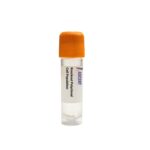
The LRSAM1 Knockout Raji Polyclonal Cells are a CRISPR/Cas9-edited polyclonal knockout cell population derived from Raji B lymphocytes, featuring disruption of the LRSAM1 gene. This heterogeneous pool provides a loss-of-function model without clonal selection, enabling robust experimental designs that account for population diversity while interrogating gene function in a lymphoid background.
Raji cells are a suspension B lymphocyte line originating from an EBV-positive Burkitt lymphoma. They retain key B-cell characteristics such as immunoglobulin production and antigen presentation, and are widely used in immunology and cancer research to model B-cell signaling, lymphomagenesis, and host?Cpathogen interactions. Their lymphoid identity and EBV status make them particularly suitable for studying innate immune pathways and autophagy-related processes in B cells.
LRSAM1 encodes an E3 ubiquitin ligase essential for xenophagy, the selective autophagic degradation of intracellular bacteria. It is activated downstream of Toll-like receptor ligands and inflammatory cytokines, and together with the E2 enzyme UBE2L3, LRSAM1 catalyzes ubiquitination of bacterial surface proteins. These ubiquitin chains are recognized by p62/SQSTM1, which links the tagged bacteria to the autophagic machinery via interaction with MAP1LC3 (LC3). Core autophagy components including the ATG12?CATG5 conjugate, Beclin-1, and ULK1 are subsequently recruited, directly coupling pathogen sensing to autophagosome formation.
LRSAM1 disruption in Raji B cells enables dissection of antibacterial autophagy in lymphocytes, which are not canonical phagocytes yet may participate in intracellular pathogen clearance. As LRSAM1 mutations cause Charcot-Marie-Tooth disease type 2P, this model offers a platform to explore non-neuronal contributions to neuropathy and the impact of impaired xenophagy on B-cell malignancy progression within a lymphomatous context.
Typical assays include Western blot and RT-qPCR to confirm knockout, LC3 turnover assays to measure autophagy flux, and Salmonella gentamicin protection tests to assess intracellular bacterial clearance. Co-immunoprecipitation and ubiquitination experiments permit analysis of LRSAM1 interactions with UBE2L3, p62, and LC3. The polyclonal pool supports screening of autophagy modulators in a human B-cell background and enables mechanistic studies in cancer biology and ubiquitin-mediated proteolysis. For further details, please contact Ascent Research.