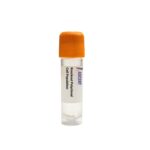
The M6PR Knockout Raji Polyclonal Cells are a CRISPR/Cas9-edited polyclonal knockout cell population designed to disrupt the M6PR gene in the Raji human B lymphocyte line, generating a loss-of-function model for investigating lysosomal enzyme sorting and trafficking. These gene-edited cells are produced without single-cell cloning, maintaining population-level heterogeneity while providing robust gene disruption for comparative functional studies.
The Raji cell line is a suspension lymphoblastoid line derived from a Burkitt’s lymphoma patient and is EBV-positive. It serves as a widely utilized B-cell model for studying MHC class II antigen presentation, immunoglobulin expression, and oncogenic signaling. Raji’s rapid growth in suspension and amenability to transfection and viral transduction facilitate high-throughput analyses, making it an appropriate host for examining the consequences of lysosomal pathway perturbations on B-cell functions.
M6PR encodes the cation-dependent mannose-6-phosphate receptor (CD-MPR), which recognizes mannose-6-phosphate tags on newly synthesized lysosomal hydrolases in the trans-Golgi network. Bound enzymes are trafficked via clathrin-coated vesicles to endosomes for delivery to lysosomes. Receptor cycling to the cell surface also recovers secreted hydrolases. M6PR function is regulated by the transcription factor TFEB and by adaptors such as GGA proteins and the retromer complex (VPS35, VPS29, VPS26). Disruption of M6PR leads to missorting and hypersecretion of hydrolases like cathepsin D, cathepsin B, and beta-hexosaminidase, causing lysosomal enzyme deficiency, impaired degradation, and altered autophagic flux.
In Raji cells, M6PR knockout connects lysosomal dysfunction to antigen processing and cancer cell biology. Defective hydrolase delivery can undermine MHC class II antigen presentation and autophagy-dependent processes, potentially affecting B-cell survival and proliferation. The model is pertinent for studying lysosomal storage disorder-like phenotypes, exploring how autophagy defects influence lymphoma metabolism, and evaluating lysosomotropic drug sensitivity such as to hydroxychloroquine.
Applications include Western blotting for M6PR and lysosomal markers, RT-qPCR for transcript quantification, immunofluorescence for subcellular localization, and enzymatic assays for secreted beta-hexosaminidase or cathepsin activity. Autophagy flux experiments (LC3 turnover) and LysoTracker flow cytometry assess lysosomal function. Drug sensitivity screens with chloroquine or functional complementation with wild-type M6PR facilitate structure-function studies. For further details or custom requests, please contact Ascent Research.