Quick Order Cart

Cat. No. ARG43959

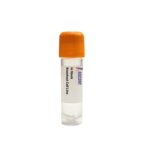
MBD4 Knockout Y79 Cell Line

  • Product Type:

    In Stock Cell Lines

  • Species:

    Homo sapiens (Human)

  • Tissue Source:

    Eye (globe)

  • Disease:

    Retinoblastoma

CRISPR/Cas9-edited knockout cell line targeting MBD4 in the Y79 human retinoblastoma background. This model disrupts the DNA glycosylase responsible for excising thymine from G:T mismatches at CpG sites, impairing base excision repair. MBD4 functions downstream of TP53 and interacts with MLH1, FADD, and epigenetic modifiers DNMT1 and HDAC2. Ideal for investigating mutation accumulation, DNA damage signaling, and BER deficiency in a neuroepithelial tumor context. Supports applications in cancer genomic instability research and retinoblastoma functional analysis using assays such as comet assays, ??-H2AX immunofluorescence, and co-immunoprecipitation.

Inquire Now

In stock

Ships next business day


Ask a Question

Shipping Info:

Cryopreserved in vials and shipped on dry ice


Disclaimer:

For Research Use Only

  • Characteristics

    Host Cell

    Y79

    Sex of Donor

    Female

    Age

    2.5 years

    Derived From Site

    In situ; Ocular globe

    Gene Name

    MBD4

    Gene Identifier

    NCBI Gene ID 8930

    Growth Mode

    Suspension

    Storage

    Liquid nitrogen (LN2)

  • Culture Conditions

    Temperature

    37°C

    Atmosphere

    5% COâ‚‚

  • Quality Control

    Sterility testing

    The bacterial, yeast, and fungi are not detected in these cells by daily monitor.

    Mycoplasma testing

    Negative for mycoplasma through PCR analysis

  • Disclaimer

    Intended Use

    This product is intended for laboratory in vitro use only. It is not intended for diagnostic, therapeutic, or clinical applications.

    Disclaimer

    Ascent Research endeavors to provide accurate and up-to-date product information. However, no warranties or representations are made regarding its completeness or reliability. References to scientific literature and patents are for informational purposes only, and the customer assumes sole responsibility for verifying their accuracy.

    By accepting this product, the customer acknowledges and agrees to assume all risks associated with its receipt, handling, storage, disposal, and use, including compliance with all applicable safety and environmental regulations and precautions. Relevant laws, regulations, and ethical guidelines must be followed in conducting any research, modifications, or derivatives derived from this product.

    This product is provided "AS IS", and except as expressly stated herein, Ascent Research disclaims all other warranties, express or implied. Under no circumstances shall Ascent Research, its affiliates, or representatives be liable for indirect, incidental, consequential, or punitive damages arising from the use of this material. While Ascent Research employs rigorous quality control measures, we shall not be held responsible for damages resulting from misidentification or misinterpretation of the provided materials.

Description

The MBD4 Knockout Y79 Cell Line is a CRISPR/Cas9-edited knockout cell product designed to disrupt expression of the MBD4 gene in a defined human retinoblastoma background. This engineered cell line serves as a loss-of-function model for investigating the roles of the MBD4 DNA glycosylase in base excision repair (BER) and genome maintenance. The knockout does not presuppose a specific editing outcome, and the product is supplied as a stable cell line suitable for a broad range of molecular and cellular analyses without claims of clonal derivation. Researchers can use this system to examine the consequences of MBD4 deficiency on mutation accumulation and DNA damage signaling.

The parental Y79 cell line is derived from a human retinoblastoma tumor, classified as a neuroepithelial malignancy, and grows in suspension. It retains features of primitive neural lineage cells and is widely utilized as a model for retinal cancer biology. The suspension growth characteristic makes Y79 particularly amenable to scalable culture and high-throughput assays, including drug sensitivity screenings and genetic modifier experiments. This host background provides a relevant context for exploring how loss of MBD4 modulates DNA repair pathways in a neuroectodermal tumor setting, where aberrant CpG methylation and microsatellite instability are often implicated.

MBD4 encodes a methyl-CpG binding domain protein with DNA glycosylase activity specifically directed at G:T mismatches generated by spontaneous deamination of 5-methylcytosine. It initiates the short-patch BER pathway, supplying incision activity that is followed by concerted action of APE1, DNA polymerase ??, XRCC1, and PARP1. MBD4 is regulated by the tumor suppressor TP53 and functionally interacts with chromatin modifiers DNMT1 and HDAC2, as well as with MLH1, a key mismatch repair protein, and the death effector FADD. Downstream events include processing of methylated DNA substrates and transcriptional repression through methyl-CpG binding, linking MBD4 to both repair and epigenetic silencing networks.

In the MBD4 Knockout Y79 Cell Line, disrupted MBD4 expression leads to impaired removal of thymine from G:T mismatches, resulting in elevated C-to-T transition mutation rates at CpG dinucleotides. This defect can promote a mutator phenotype especially relevant in retinoblastoma cells that are subject to deamination pressure from localized methylation patterns. The model recapitulates a BER deficiency state that has been associated with colorectal and Lynch-related cancers, melanoma, and breast cancer susceptibility, thereby enabling dissection of tissue-independent and tissue-specific mechanisms of genomic instability.

Researchers can employ this knockout line to study BER kinetics, CpG mutation spectra, and DNA damage responses using assays such as western blotting, ??-H2AX immunofluorescence for double-strand break detection, alkaline comet assay for strand-break quantification, and in vitro BER activity measurements. Co-immunoprecipitation with MLH1 or other interacting factors permits mapping of repair complex dynamics. Mutation frequency analysis via targeted deep sequencing of methylated loci offers insight into clonal evolution. For additional information or support, please contact Ascent Research.


Reset Password

    Reach Us Questions? Click Me Here!

    Fill out the form below and a member of our team will contact you shortly!

    *Required field


      Reach Us

      Fill out the form below and a member of our team will contact you shortly!

      *Required field

      Product Inquiry (Optional)