Quick Order Cart

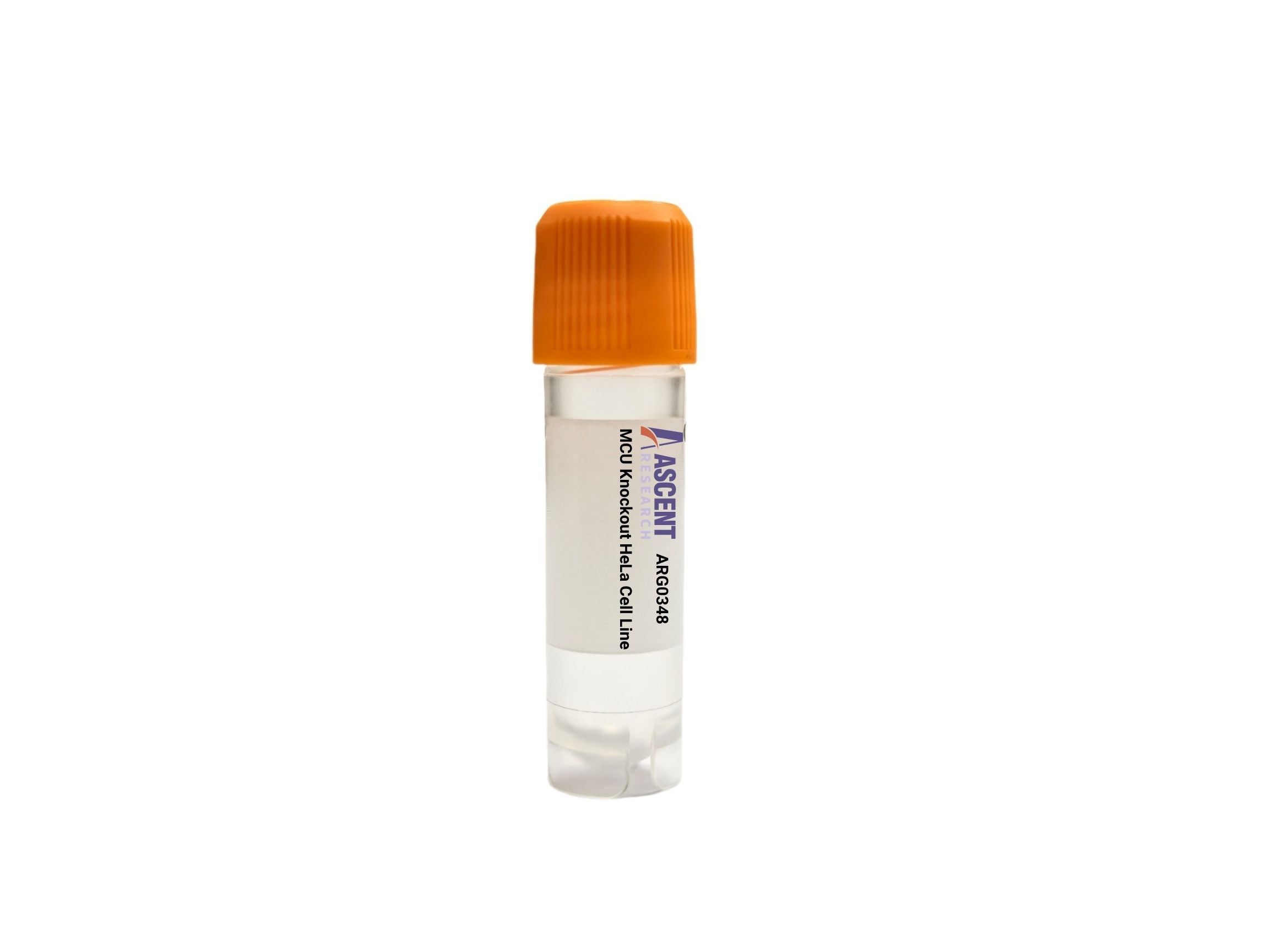
Cat. No. ARG0348

MCU Knockout HeLa Cell Line

  • Product Type:

    Genome-edited Cells

  • Tissue Source:

    Uterus (cervix)

  • Disease:

    Adenocarcinoma

  • Gene Species:

    Homo sapiens (Human)

The MCU Knockout HeLa Cell Line is a CRISPR/Cas9-edited cell line with targeted disruption of MCU, the pore-forming subunit of the mitochondrial calcium uniporter. Derived from human HeLa epithelial cells, this model eliminates MCU-dependent mitochondrial calcium uptake, enabling precise investigation of metabolism, apoptosis, and calcium signaling. MCU??s regulation by MICU1/MICU2 and its downstream effects on pyruvate dehydrogenase and caspase activation highlight its central role in mitochondrial physiology. Ideal for studies of oxidative phosphorylation, mitochondrial calcium dynamics, and cell death pathways, the knockout line supports applications such as Rhod-2 AM imaging, Seahorse metabolic profiling, and high-throughput drug discovery. It provides a reliable, cancer-relevant platform for dissecting MCU-dependent mechanisms and validating potential therapeutic interventions.

Inquire Now

In stock

Ships next business day


Ask a Question

Shipping Info:

Cryopreserved in vials and shipped on dry ice


Disclaimer:

For Research Use Only

  • Characteristics

    Host Cell

    HeLa

    Morphology

    Epithelial-like

    Age

    31 years

    Sex of Donor

    Female

    Gene Name

    MCU

    Gene Species

    Homo sapiens (Human)

    Gene Identifier

    NCBI Gene ID 90550

  • Culture Conditions

    Temperature

    37°C

    Atmosphere

    5% CO₂

  • Quality Control

    Sterility testing

    Daily monitoring confirms that the cells are free from bacterial, yeast, and fungal contamination.

    Mycoplasma testing

    Negative for mycoplasma through PCR analysis

    Pathogens

    Cells tested negative for HIV-1, HBV, and HCV.

  • Disclaimer

    Intended Use

    This product is intended for laboratory in vitro use only. lt is not intended for diagnostic, therapeutic, or clinical applications.

    Disclaimer

    Ascent Research endeavors to provide accurate and up-to-date product information. However, no warranties or representations are made regarding its completeness or reliability. References to scientific literature and patents are for informational purposes only, and the customer assumes sole responsibility for verifying their accuracy.

    By accepting this product, the customer acknowledges and agrees to assume all risks associated with its receipt, handling, storage, disposal, and use, including compliance with all applicable safety and environmental regulations and precautions. Relevant laws, regulations, and ethical guidelines must be followed in conducting any research, modifications, or derivatives derived from this product.

    This product is provided "AS IS", and except as expressly stated herein, Ascent Research disclaims all other warranties, express or implied. Under no circumstances shall Ascent Research, its affiliates, or representatives be liable for indirect, incidental, consequential, or punitive damages arising from the use of this material. While Ascent Research employs rigorous quality control measures, we shall not be held responsible for damages resulting from misidentification or misinterpretation of the provided materials.

Description

The MCU Knockout HeLa Cell Line is a CRISPR/Cas9-edited knockout cell line featuring targeted disruption of the MCU gene, which encodes the pore-forming subunit of the mitochondrial calcium uniporter. This loss-of-function model enables rigorous dissection of mitochondrial calcium uptake and its downstream effects in a stable, renewable cellular context. Providing a critical control for comparative studies against wild-type HeLa cells, the cell line facilitates investigation of MCU-dependent metabolic and apoptotic processes within an adherent epithelial model.

HeLa cells are a human epithelial cell line derived from cervical adenocarcinoma, characterized by HPV18-positivity, aneuploidy, and immortalized growth. Despite genomic complexity, HeLa cells maintain functional mitochondrial machinery and apoptotic pathways, providing a consistent and well-characterized host for gene-editing studies. Their widespread use in cancer and metabolic research ensures translational relevance, making them an ideal background for MCU knockout generation.

MCU constitutes the principal channel of the mitochondrial calcium uniporter complex, mediating rapid calcium influx into the mitochondrial matrix at ER-mitochondria contact sites in response to high-cytosolic calcium microdomains. The channel is allosterically regulated by MICU1 and MICU2, which set the calcium uptake threshold, while EMRE and MCUB contribute to complex assembly. Upstream regulators include calcium, MICU1, MICU2, EMRE, and reactive oxygen species, and downstream targets encompass pyruvate dehydrogenase phosphatase, TCA cycle enzymes, and caspase activation, linking MCU activity to oxidative metabolism and apoptotic execution. Interacting factors such as MCUR1 and SLC25A23 further fine-tune MCU function, and representative pathway components include VDAC, IP3R, and the MCU holocomplex.

In HeLa cells, MCU disruption ablates the primary route for mitochondrial calcium import, creating a powerful platform to dissect metabolism-apoptosis crosstalk. Loss of MCU decouples calcium signaling from pyruvate dehydrogenase phosphatase activation and TCA cycle stimulation, thereby altering oxidative phosphorylation and cellular bioenergetics. The knockout also impairs calcium-induced mitochondrial permeability transition, offering insight into apoptosis resistance mechanisms relevant to cancer. The HPV18-positive, aneuploid background provides a disease-relevant context for examining how mitochondrial calcium dynamics influence oncogenic signaling, stress responses, and therapeutic vulnerability.

This cell line supports mitochondrial calcium imaging with Rhod-2 AM, JC-1 membrane potential assays, and Seahorse metabolic profiling. It facilitates apoptosis signaling studies via Annexin V and caspase assays, expression analysis by western blotting and RT-qPCR, and high-throughput drug screens. For further information, please contact Ascent Research.


Reset Password

    Reach Us Questions? Click Me Here!

    Fill out the form below and a member of our team will contact you shortly!

    *Required field


      Reach Us

      Fill out the form below and a member of our team will contact you shortly!

      *Required field

      Product Inquiry (Optional)