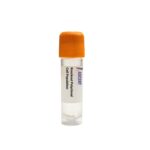
The MDM2 Knockout Raji Polyclonal Cells represent a CRISPR/Cas9-edited polyclonal knockout cell population in which the MDM2 gene has been disrupted to create a loss-of-function model. This product is supplied as a heterogeneous pool of Raji cells with diverse editing outcomes, enabling pooled functional studies without clonal selection. The polyclonal format preserves biological variability and is suitable for experiments where representation of multiple genotypes is advantageous, such as pooled screens or assessments of population-level responses. CRISPR/Cas9-mediated gene disruption targets the MDM2 locus, abrogating its protein expression and providing a versatile tool for investigating the p53?CMDM2 regulatory axis in a B-cell lymphoma background.
Raji cells are an Epstein?Barr virus (EBV)-positive B lymphoblast cell line derived from a patient with Burkitt lymphoma. As a model of B-cell lymphoma, Raji cells exhibit characteristics of mature B lymphocytes and are widely employed in immunology and cancer research, particularly for studying lymphomagenesis, viral oncogenesis, and immune cell interactions. The EBV-positive status contributes to a distinct cellular context, with latent viral gene expression influencing cell growth and survival pathways. This host cell background provides a clinically relevant system for assessing the role of MDM2 in B-cell malignancies, where MDM2 overexpression and p53 inactivation are frequently observed.
MDM2 encodes an E3 ubiquitin ligase that negatively regulates the tumor suppressor p53 by promoting its ubiquitination and proteasomal degradation. Through this mechanism, MDM2 controls p53 stability and activity, thereby influencing apoptosis, cell cycle arrest, and DNA damage responses. MDM2 is transcriptionally regulated by p53 in an auto-regulatory feedback loop and is activated by upstream signals such as ATM/ATR kinases, MYCN, and E2F1. It also interacts with key regulatory partners including MDM4 (MDMX), p14ARF (CDKN2A), and ribosomal proteins RPL5 and RPL11, which modulate its ligase activity. MDM2 targets not only p53 but also RB1 and p73, and undergoes auto-ubiquitination. By disrupting MDM2 expression, this knockout model unleashes p53-dependent transcription of downstream effectors like p21 (CDKN1A) and BAX, leading to potent tumor-suppressive outcomes.
In the Raji cell context, MDM2 knockout has profound implications for p53-mediated tumor suppression. Disruption of MDM2 relieves the negative regulation of p53, resulting in p53 stabilization, activation of target genes, and induction of apoptosis and cell cycle arrest. This is particularly relevant in B-cell lymphomas, where MDM2 amplification and p53 pathway inactivation contribute to oncogenesis and therapy resistance. The Raji MDM2 knockout model therefore enables dissection of the p53?CMDM2 interaction in a malignant B-cell environment, facilitating studies on how EBV-positive lymphoma cells respond to p53 reactivation. Moreover, it provides a platform for evaluating the efficacy and mechanism of action of MDM2 inhibitors like Nutlin-3a, which can be benchmarked against the genetic knockout phenotype.
This knockout cell population is suited for a wide range of research applications, including the study of p53-dependent apoptosis, DNA damage responses, and drug resistance mechanisms. Representative assays include Western blotting for p53, MDM2, and p21; RT-qPCR for target gene expression; immunofluorescence to assess p53 nuclear localization; flow cytometry for apoptosis and cell cycle profiling; co-immunoprecipitation to examine MDM2?Cp53 interactions; and drug sensitivity assays with MDM2 antagonists. Transcriptomic profiling via RNA-seq can further reveal global gene expression changes upon MDM2 loss. The polyclonal nature enables robust, reproducible experiments without clonal artifacts. For detailed protocols, validation data, or technical support, please contact Ascent Research.