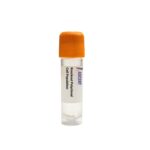
The MIER3 Knockout Raji Polyclonal Cells are a CRISPR/Cas9-edited polyclonal knockout cell population derived from the Raji B lymphocyte line, providing a loss-of-function model for the transcriptional repressor MIER3. This heterogeneous polyclonal pool harbors targeted disruption of the MIER3 gene, enabling robust functional studies without clonal bias, and is optimized for investigating gene regulatory mechanisms in B-cell lymphoma.
The Raji cell line is an Epstein-Barr virus (EBV)-positive Burkitt lymphoma model, originating from a human B lymphocyte with the t(8;14) translocation that drives constitutive MYC overexpression. The neoplastic phenotype of Raji cells makes them a standard system for studying aggressive B-cell malignancies, deregulated apoptosis, and viral-host interactions in lymphomagenesis.
MIER3 acts as a transcriptional repressor by recruiting histone deacetylases HDAC1 and HDAC2 via the SIN3A co-repressor complex, facilitating chromatin condensation and gene silencing. It is regulated by FGF and TGF-beta signaling and represses downstream targets including CCND1, MYC, and BCL2, which govern cell cycle progression and apoptosis. Knockout of MIER3 is predicted to derepress these genes, potentially altering proliferative and survival signals.
In the Raji context, MIER3 knockout allows dissection of epigenetic repression superimposed on MYC-driven oncogenesis. This model is particularly relevant for studying how loss of MIER3-mediated silencing modulates the expression of key oncogenes and tumor suppressors, thereby influencing lymphoma cell fate and sensitivity to HDAC inhibitors.
Applications include RNA-seq and RT-qPCR for gene expression profiling, ChIP-qPCR for histone modification analysis, flow cytometry for cell cycle assessment, and apoptosis assays (Annexin V). Proliferation can be measured by MTT or CFSE dilution. This polyclonal knockout is suitable for drug target validation and screens. For further details, contact Ascent Research.