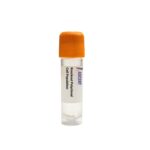
The MINK1 Knockout Raji Polyclonal Cells are a CRISPR/Cas9-edited polyclonal knockout cell population in which the MINK1 gene (MAP4K6) has been disrupted to create a loss-of-function model. This product provides a mixed population of edited Raji cells, enabling functional studies of MINK1-dependent signaling without clonal selection. The gene-edited cell pool is suitable for bulk assays where polyclonal representation of knockout genotypes is desired, and it avoids artifacts associated with single-cell cloning. The knockout cells retain the intrinsic properties of the parental Raji line while lacking functional MINK1 kinase, allowing researchers to dissect MINK1-mediated pathways in a B-lymphocyte context.
The host Raji cell line is an Epstein-Barr virus (EBV)-positive Burkitt lymphoma-derived B lymphocyte model. Originating from a Nigerian patient, Raji cells express latent viral genes and are widely used to study B-cell biology, lymphomagenesis, and EBV latency programs. These suspension cells grow in culture and provide a tractable system for investigating oncogenic signaling, apoptosis regulation, and immune cell functions. Their EBV-positive status adds a layer of complexity relevant to virus-host interactions, making them a valuable platform for examining how cellular kinases intersect with viral latency and lymphoproliferation.
MINK1 (Misshapen-like kinase 1) is a germinal center kinase family serine/threonine kinase that acts as an upstream activator of the JNK and p38 MAPK cascades. MINK1 is activated by upstream regulators such as TNF-alpha, IL-1, CD40 ligation, B-cell receptor engagement, and cellular stress stimuli including osmotic shock and UV irradiation. Upon activation, MINK1 phosphorylates and activates MAP2K4 (MKK4) and MAP2K7 (MKK7), which in turn phosphorylate JNK (MAPK8/9/10), as well as MAP2K3 (MKK3) and MAP2K6 (MKK6) upstream of p38 (MAPK11/12/13/14). Downstream targets of these pathways include transcription factors ATF2 and c-Jun. MINK1 interacts with adaptor proteins TRAF2 and TRAF6, and its activity is modulated by interactions with RAC1, CDC42, and NCK-interacting kinase (NIK). Through these connections, MINK1 integrates cytokine and stress signals to regulate gene expression, cytoskeletal dynamics, and cell fate decisions.
In Raji B cells, MINK1 is positioned to modulate signaling downstream of key receptors, including CD40 and the B-cell receptor. These pathways control B-cell activation, proliferation, and apoptosis. Given the oncogenic nature of Raji cells and their EBV-driven gene expression, MINK1 may influence both MAPK-dependent survival signals and viral latency maintenance. Ablation of MINK1 in this polyclonal knockout population enables dissection of its role in B-cell lymphoma biology, including how MINK1-dependent phosphorylation of JNK and p38 affects downstream targets such as c-Jun and ATF2. Researchers can explore whether MINK1 contributes to cytokine production, chemoresistance, or EBV lytic reactivation in a polyclonal setting that mimics heterogeneous tumor populations.
These polyclonal knockout cells are designed for a breadth of research applications, including the study of MAPK signaling in B-cell lymphomas and the investigation of EBV-host interactions. Typical assays include Western blotting for phospho-JNK and phospho-p38 to assess MINK1-dependent activation, flow cytometry for apoptosis markers such as Annexin V, RT-qPCR for downstream target genes, and luciferase-based reporter assays for NF-kB and AP-1 activity. Co-immunoprecipitation experiments can probe MINK1 interaction partners, while cell viability and migration assays support drug sensitivity screening and functional genomics studies. For further technical information, please contact Ascent Research.