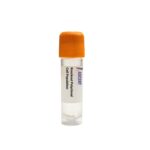
The MORC3 Knockout Raji Polyclonal Cells product comprises a population of Raji B lymphocytes in which the MORC3 (MORC family CW-type zinc finger 3) gene has been disrupted using CRISPR/Cas9-mediated genome editing. This polyclonal knockout cell pool provides a heterogeneous population with loss-of-function mutations in MORC3, enabling functional studies without clonal selection. The knockout cells serve as a relevant model to investigate MORC3-dependent transcriptional regulation and interferon signaling in a human B lymphocyte context.
The Raji cell line is a Burkitt lymphoma-derived B lymphocyte line widely employed in immunology and cancer research. These cells retain key B cell characteristics, including immunoglobulin production, antigen presentation, and immune defense functions. Raji cells are responsive to viral stimuli and interferon treatment, making them suitable for studying innate immune pathways. Their tumorigenic origin also provides a background for exploring B cell lymphoma biology and interferon-mediated tumor surveillance.
MORC3 functions as an interferon-inducible transcriptional repressor that localizes to PML nuclear bodies and modulates type I interferon responses. Upon viral infection, type I interferons (IFN-alpha/beta) engage IFNAR, activating JAK1 and TYK2, which phosphorylate STAT1. STAT1/IRF9 complexes induce MORC3 expression. MORC3 then interacts with PML, SUMO, and histone deacetylases to repress a subset of ISGs, including CXCL10, preventing excessive inflammation. Key components include IFNAR, JAK1, TYK2, STAT1, IRF9, and the ISRE element.
In Raji B lymphocytes, disruption of MORC3 eliminates its repressive function on ISG expression, potentially leading to dysregulated interferon responses and altered viral sensing. Given that B cells are critical for adaptive immunity and can undergo viral transformation, this knockout model provides insight into how MORC3 balances antiviral defense and inflammatory gene expression in lymphomas. It may also reveal roles for MORC3 in B cell proliferation, apoptosis, or immune evasion mechanisms associated with Burkitt lymphoma.
This polyclonal knockout product supports diverse assays, including Western blotting to assess MORC3 and ISG protein levels, RT-qPCR for quantification of ISG transcripts such as CXCL10, immunofluorescence to visualize PML bodies and MORC3 localization, and chromatin immunoprecipitation (ChIP-qPCR) to study MORC3-chromatin interactions. Reporter assays using ISRE-luciferase constructs measure interferon-driven transcriptional activity. Flow cytometry enables profiling of B cell surface markers, while viral infection assays permit evaluation of antiviral responses. For additional technical specifications, contact Ascent Research.