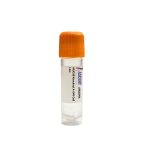
The MUC5B Knockout A-549 Cell Line is a human CRISPR/Cas9-engineered gene knockout model in which the MUC5B locus has been disrupted to eliminate functional gene expression. This stable in vitro cell line is generated in the A-549 background, a human alveolar epithelial carcinoma cell line frequently used to study distal lung epithelial biology. In this context, the model is relevant for investigation of mucin-associated epithelial phenotypes, secretory output, inflammatory responsiveness, and environmental stress responses in pulmonary epithelial cells.
A-549 cells are derived from human lung adenocarcinoma and retain broad utility as an experimental system for pulmonary epithelial signaling, xenobiotic response biology, infection-related studies, and evaluation of anticancer agents. The line is widely used to model epithelial differentiation-associated processes and mucus-related gene regulation in the lung. Because A-549 cells provide a tractable epithelial platform with strong compatibility across molecular, biochemical, and imaging workflows, they are frequently applied in studies linking airway epithelial function to inflammatory signaling, tumor-associated epithelial plasticity, and host-environment interactions.
MUC5B encodes a large secreted gel-forming mucin that contributes directly to extracellular mucus gel formation, airway surface protection, mucus viscoelasticity, and mucociliary clearance capacity. Its biosynthesis requires extensive O-glycosylation and disulfide-dependent multimerization within the secretory pathway, placing it in functional relationship with glycosyltransferases, protein disulfide isomerases, AGR2, and related anterior gradient protein family chaperones. MUC5B expression is regulated by EGFR pathway inputs, including EGF and TGFA, and by inflammatory mediators such as IL13, IL1B, and TNF, with downstream integration through ERK1/2, PI3K, AKT, STAT6, and NFKB. Transcriptional control is further linked to SPDEF and FOXA2, while ERN2 connects secretory epithelial stress adaptation to mucin production programs. MUC5B also functions within a broader mucus network that includes MUC5AC, FCGBP, BPIFB1, and CLCA1. These mechanisms are highly relevant to airway mucus hypersecretion, idiopathic pulmonary fibrosis, asthma, chronic bronchitis, cystic fibrosis airway disease, and the lung cancer microenvironment.
In the A-549 host background, loss of MUC5B provides a focused system for dissecting how a major secreted polymeric mucin influences epithelial phenotype and stimulus-responsive secretory behavior. This model is useful for studying how mucin depletion alters cytokine-induced transcriptional programs, EGFR-dependent responses, secretory pathway load, and epithelial surface defense outputs without changing the broader epithelial origin of the host line. It is also relevant for examining interactions between mucin biology and tumor-associated epithelial signaling.
This knockout cell line supports mechanistic studies using RT-qPCR, western blotting, ELISA for secreted mucins, immunofluorescence, and confocal microscopy to quantify changes in mucin-associated expression and localization. It can be incorporated into cytokine stimulation assays with IL13, IL1B, TNF, or EGFR ligands to assess pathway-dependent regulation by phospho-signaling analysis, RNA-seq, and secretome profiling. Additional applications include mucin staining for extracellular matrix-like mucus output, co-immunoprecipitation for mucin-interacting secretory factors, infection assays evaluating airway defense-related phenotypes, and drug sensitivity studies examining how mucus-associated epithelial states influence therapeutic response. Researchers may contact Ascent Research for additional technical information, product details, or related gene-edited cell models.