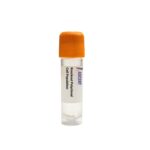
The MYOF Knockout Raji Polyclonal Cells represent a CRISPR/Cas9-edited polyclonal knockout cell population derived from the human Burkitt lymphoma Raji B-lymphocyte line. This product provides a mixed population of cells with targeted disruption of the MYOF gene, enabling loss-of-function studies in a lymphoid malignancy background. The polyclonal format offers a diverse genetic editing landscape suitable for pooled functional assays and population-level analyses.
Raji cells are Epstein?CBarr virus (EBV)-positive, suspension B lymphocytes originally isolated from a Burkitt lymphoma patient. They serve as a well-established model for B-cell malignancies, exhibiting rapid proliferation and characteristic lymphoblastoid morphology. The EBV-immortalized status and Burkitt lymphoma origin make them particularly relevant for investigating oncogenic signaling, immune cell biology, and B-cell receptor trafficking.
MYOF (myoferlin) encodes a ferlin family protein involved in membrane repair, endocytic recycling, and cell migration. MYOF interacts with dysferlin, EHD1, EHD2, caveolin-1, and HRas to coordinate vesicle trafficking and plasma membrane resealing. The protein is regulated by upstream signals including HIF-1??, TGF-??, and NF-??B, and it modulates downstream effectors such as EHD2, caveolin-1, dynamin-2, and HRas, thereby contributing to Ras-MAPK pathway activity and actin cytoskeleton dynamics.
In Raji B cells, MYOF disruption impairs endocytic recycling and membrane repair, leading to altered surface receptor expression and attenuated cell migration. These defects may influence B-cell receptor trafficking, antigen presentation, and signal transduction, with potential implications for understanding lymphomagenesis and B-cell malignancies. The knockout model thus provides a valuable tool to dissect MYOF-dependent membrane dynamics and their role in Burkitt lymphoma pathogenesis.
Typical applications include investigating endocytosis in lymphoma using transferrin uptake assays, assessing cell migration and invasion via transwell assays, and monitoring surface receptor levels by flow cytometry. The cells can also be employed in viability assays and western blotting to evaluate MYOF-dependent signaling pathways. This polyclonal knockout population is particularly suited for studying heterogeneous responses in B-cell populations. For further technical details and ordering information, please contact Ascent Research.