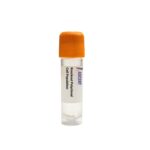
The NAIF1 Knockout Raji Polyclonal Cells consist of a CRISPR/Cas9-edited polyclonal knockout cell population derived from the Raji B-lymphoblastoid line, with targeted disruption of the NAIF1 gene. This model eliminates functional expression of the pro-apoptotic nuclear protein NAIF1, enabling researchers to investigate its role in apoptosis regulation and tumor suppression. The polyclonal format yields a heterogeneous population with diverse knockout alleles, suitable for pooled functional screens, bulk assays, and pathway analysis. The cells are provided as a ready-to-use suspension culture, validated for NAIF1 ablation at the protein level, and maintained under standard conditions.
The Raji parental line is an Epstein-Barr virus (EBV)-positive B-lymphoblastoid cell line originally established from a Burkitt’s lymphoma patient. Raji cells grow in suspension and are extensively utilized as a model for B-cell malignancies, EBV-mediated lymphomagenesis, and immunological studies. They retain key germinal center B-cell characteristics and exhibit constitutive activation of survival pathways, making them a robust system for investigating oncogenic mechanisms and therapeutic responses. The cell line’s immortalized nature and well-defined genetic background ensure experimental reproducibility.
NAIF1 encodes a nuclear protein that acts as a pro-apoptotic effector downstream of p53 following genotoxic injury or DNA damage. Activated NAIF1 downregulates the anti-apoptotic protein BCL2 and upregulates the pro-apoptotic factor BAX, shifting the balance toward mitochondrial outer membrane permeabilization. This results in the release of cytochrome c (CYCS) into the cytoplasm, where it assembles with APAF1 and pro-caspase-9 into the apoptosome. Caspase-9 activation subsequently cleaves effector caspase-3, driving the execution phase of intrinsic apoptosis. NAIF1 therefore functions as a critical node linking p53-dependent stress signals to the core mitochondrial apoptotic cascade.
In the context of Raji cells, knockout of NAIF1 compromises the intrinsic apoptotic pathway, providing a valuable tool to dissect mechanisms of apoptosis resistance prevalent in Burkitt’s lymphoma and other B-cell lymphomas. Because NAIF1 expression is often downregulated in solid tumors such as breast and lung cancers, this model also supports broader tumor-suppressor research. The EBV-positive background further enables exploration of how viral elements and host apoptotic regulators collaborate in lymphomagenesis. Consequently, NAIF1-deficient Raji polyclonal cultures offer a flexible platform for functional interrogation and preclinical drug testing.
Typical experiments employ flow cytometry with Annexin V/propidium iodide staining to quantify apoptosis, Western blotting to detect cleaved caspase-3, and MTT assays for viability. These polyclonal knockout cells facilitate drug sensitivity screens and signaling dissections focused on BCL2 family members and caspase activation. RT-qPCR can confirm NAIF1 transcript loss, and combinatorial studies with BAX or APAF1 overexpression further delineate pathway architecture. The model is well-suited for applications in functional genomics, cancer cell biology, and signal transduction research. For product details, technical support, or ordering, please contact Ascent Research.