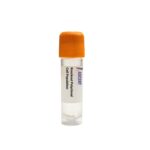
The NAPB Knockout Raji Polyclonal Cells are a CRISPR/Cas9-edited polyclonal knockout population targeting the human NAPB gene in the Raji B lymphocyte line. This polyclonal product features gene disruption of NAPB, which encodes beta-SNAP, a key mediator of SNARE complex disassembly. Generated via CRISPR/Cas9-mediated gene disruption, the cells provide a loss-of-function model suitable for population-level studies without clonal isolation. The heterogeneous knockout alleles enable robust functional genomic assays and exclude biases from single-cell cloning.
The Raji cell line is a lymphoblastoid line derived from Burkitt lymphoma, characterized by EBV positivity, B-cell surface markers including CD19, and constitutive secretion of IgM. As a suspension line with high transfection efficiency, Raji serves as a classic model for B-cell lymphoma biology and exocytic secretion research. Its well-documented features make it an ideal platform for investigating secretory pathway components in a B-cell context.
NAPB encodes beta-SNAP, a soluble NSF attachment protein that binds to assembled SNARE complexes (comprising syntaxin-1, SNAP-25, and VAMP2) and recruits NSF ATPase. NSF-driven ATP hydrolysis disassembles post-fusion SNARE complexes, enabling vesicle recycling. Beta-SNAP function is regulated by calcium influx and synaptic activity. In B lymphocytes, calcium signals triggered by B-cell receptor engagement may similarly regulate SNARE-dependent secretion. Knockout of NAPB disrupts this disassembly step, leading to impaired SNARE recycling and attenuated exocytosis.
In Raji B cells, beta-SNAP disruption provides a model to study SNARE-mediated exocytosis in the context of immunoglobulin secretion and surface receptor trafficking. The knockout population can be used to assess effects on IgM secretion measured by ELISA and CD19 surface expression by flow cytometry. This model allows dissection of beta-SNAP function in lymphoblastoid secretion and offers a non-neuronal platform to compare SNARE mechanisms, with potential relevance to B-cell effector functions and lymphoma biology.
Researchers can employ these cells for Western blot confirmation of NAPB ablation, RT-qPCR analysis of transcript levels, and co-immunoprecipitation to probe SNARE complex integrity. Functional assays include ELISA for secreted IgM to quantify exocytic output and flow cytometry for surface CD19 to monitor trafficking. The cells are also suitable for drug screening to identify modulators of SNARE assembly/disassembly. For further details, please contact Ascent Research.