Quick Order Cart

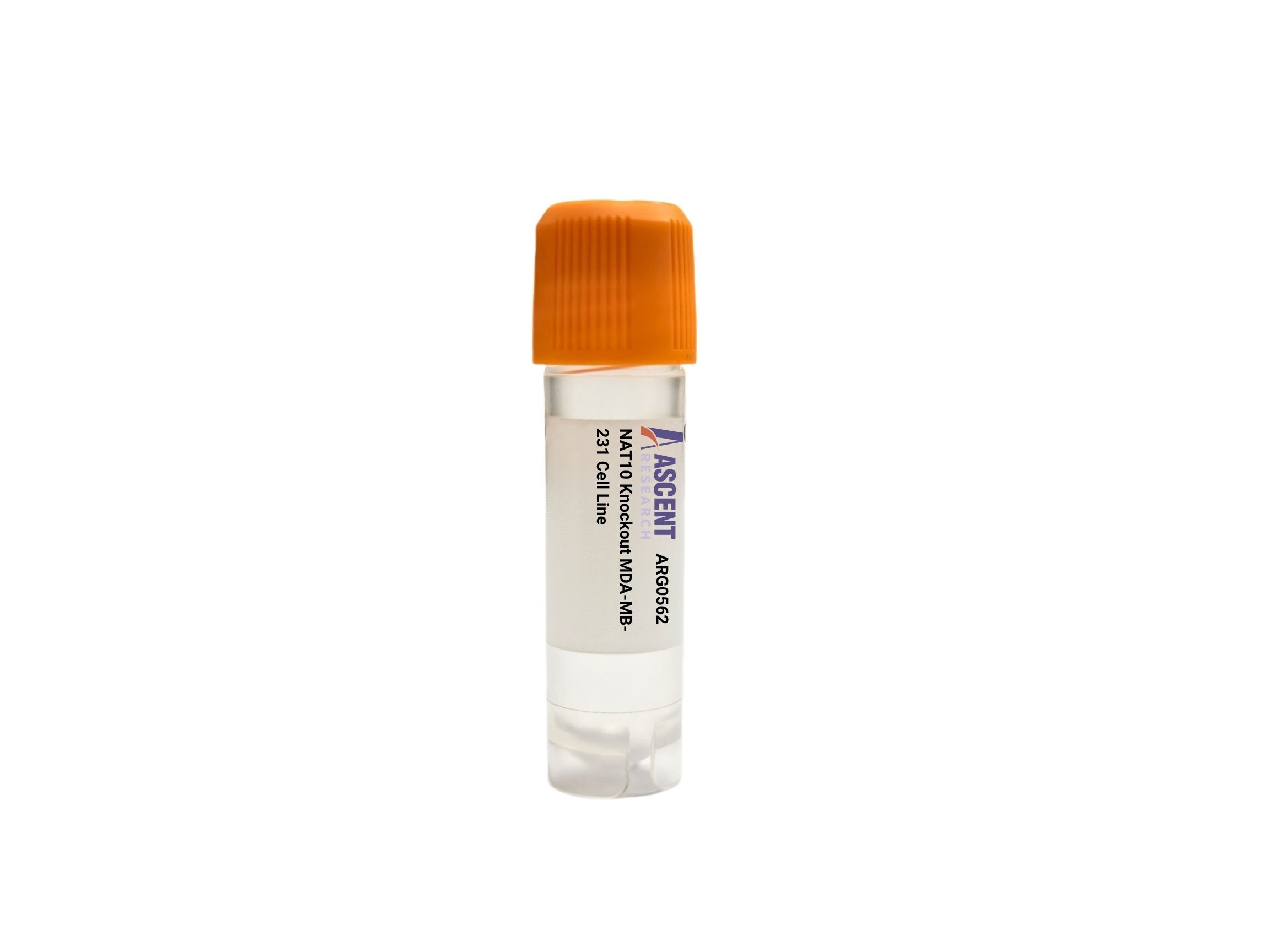
Cat. No. ARG0562

NAT10 Knockout MDA-MB-231 Cell Line

  • Product Type:

    Genome-edited Cells

  • Tissue Source:

    Breast (mammary gland)

  • Disease:

    Adenocarcinoma

  • Gene Species:

    Homo sapiens (Human)

The NAT10 Knockout MDA-MB-231 Cell Line is a CRISPR/Cas9-edited knockout cell model derived from the triple-negative breast cancer line MDA-MB-231. It enables study of NAT10, an N-acetyltransferase involved in ac4C RNA modification, histone acetylation, and microtubule acetylation, with key roles in ribosome biogenesis and cell cycle progression, regulated by MYC, mTOR, and HIF1A. This loss-of-function cell line is instrumental for exploring NAT10-mediated regulation of proliferation and metastasis via mTOR and p53 signaling, and for therapeutic target studies in aggressive breast cancer. Applications include western blotting for acetylated targets, migration assays, and transcriptome-wide ac4C profiling.

Inquire Now

In stock

Ships next business day


Ask a Question

Shipping Info:

Cryopreserved in vials and shipped on dry ice


Disclaimer:

For Research Use Only

  • Characteristics

    Host Cell

    MDA-MB-231

    Morphology

    Epithelial-like

    Age

    51 years

    Sex of Donor

    Female

    Gene Name

    NAT10

    Gene Alias

    N-acetyltransferase 10; hALP; FLJ10774; FLJ12179; NET43; KIAA1709; Kre33

    Gene Species

    Homo sapiens (Human)

    Gene Identifier

    NCBI Gene ID 55226

    Gene Family

    SSU processome, GCN5 related N-acetyltransferases

  • Culture Conditions

    Temperature

    37°C

    Atmosphere

    5% CO₂

  • Quality Control

    Sterility testing

    Daily monitoring confirms that the cells are free from bacterial, yeast, and fungal contamination.

    Mycoplasma testing

    Negative for mycoplasma through PCR analysis

    Pathogens

    Cells tested negative for HIV-1, HBV, and HCV.

  • Disclaimer

    Intended Use

    This product is intended for laboratory in vitro use only. lt is not intended for diagnostic, therapeutic, or clinical applications.

    Disclaimer

    Ascent Research endeavors to provide accurate and up-to-date product information. However, no warranties or representations are made regarding its completeness or reliability. References to scientific literature and patents are for informational purposes only, and the customer assumes sole responsibility for verifying their accuracy.

    By accepting this product, the customer acknowledges and agrees to assume all risks associated with its receipt, handling, storage, disposal, and use, including compliance with all applicable safety and environmental regulations and precautions. Relevant laws, regulations, and ethical guidelines must be followed in conducting any research, modifications, or derivatives derived from this product.

    This product is provided "AS IS", and except as expressly stated herein, Ascent Research disclaims all other warranties, express or implied. Under no circumstances shall Ascent Research, its affiliates, or representatives be liable for indirect, incidental, consequential, or punitive damages arising from the use of this material. While Ascent Research employs rigorous quality control measures, we shall not be held responsible for damages resulting from misidentification or misinterpretation of the provided materials.

Description

The NAT10 Knockout MDA-MB-231 Cell Line is a CRISPR/Cas9-edited knockout cell model derived from the triple-negative breast cancer line MDA-MB-231, in which the NAT10 gene encoding N-acetyltransferase 10 has been disrupted. This stable loss-of-function cell line enables sustained investigation of NAT10-dependent molecular mechanisms without the limitations of transient knockdown approaches, providing a defined genetic background for functional studies.

MDA-MB-231 is an epithelial breast adenocarcinoma cell line originally isolated from the pleural effusion of a 51-year-old female with metastatic breast adenocarcinoma. The cells are estrogen receptor-negative, progesterone receptor-negative, and HER2-negative (triple-negative), and harbor a mutant TP53 tumor suppressor. This line is highly invasive and widely used as a model for triple-negative breast cancer and metastatic progression, reflecting the aggressive nature of this disease subtype.

NAT10 is an N-acetyltransferase that catalyzes N4-acetylcytidine (ac4C) modification on RNA, acetylates histones, and acetylates microtubules, thereby promoting ribosome biogenesis, RNA processing, and cell cycle progression. Upstream, NAT10 is regulated by MYC, mTOR, and HIF1A. Downstream targets include acetylated histone H4, acetylated ??-tubulin, rRNA ac4C modification, CCND1, CDK4, and p53. Interacting partners include THUMPD1, MCRS1, UTP14A, and UTP3. Through these interactions, NAT10 integrates signals from the mTOR-RPS6KB1 axis and influences p53-mediated responses, positioning it at the intersection of growth factor signaling, protein synthesis, and stress adaptation.

In MDA-MB-231 cells, NAT10-dependent acetylation stabilizes target mRNAs and proteins critical for proliferation and motility. Knockout of NAT10 reduces ac4C modifications, leading to diminished ribosome biogenesis, impaired microtubule acetylation, and attenuated cell cycle entry. This compromises the high-rate protein synthesis and cytoskeletal dynamics required for the invasive phenotype of triple-negative breast cancer cells, thereby uncovering potential therapeutic vulnerabilities.

This cell line is suitable for dissecting the role of ac4C RNA modification in breast cancer, evaluating NAT10 as a therapeutic target in triple-negative disease, and elucidating regulatory networks controlling metastasis and proliferation. Representative experimental approaches include western blotting for acetylated ??-tubulin or ac4C, RT-qPCR for NAT10 target gene expression, RNA immunoprecipitation for ac4C, cell proliferation assays (MTT or BrdU), transwell migration/invasion assays, flow cytometry for cell cycle analysis, and transcriptome-wide ac4C profiling via RNA-seq. For further technical information or custom requests, please contact Ascent Research.


Reset Password

    Reach Us Questions? Click Me Here!

    Fill out the form below and a member of our team will contact you shortly!

    *Required field


      Reach Us

      Fill out the form below and a member of our team will contact you shortly!

      *Required field

      Product Inquiry (Optional)