Quick Order Cart

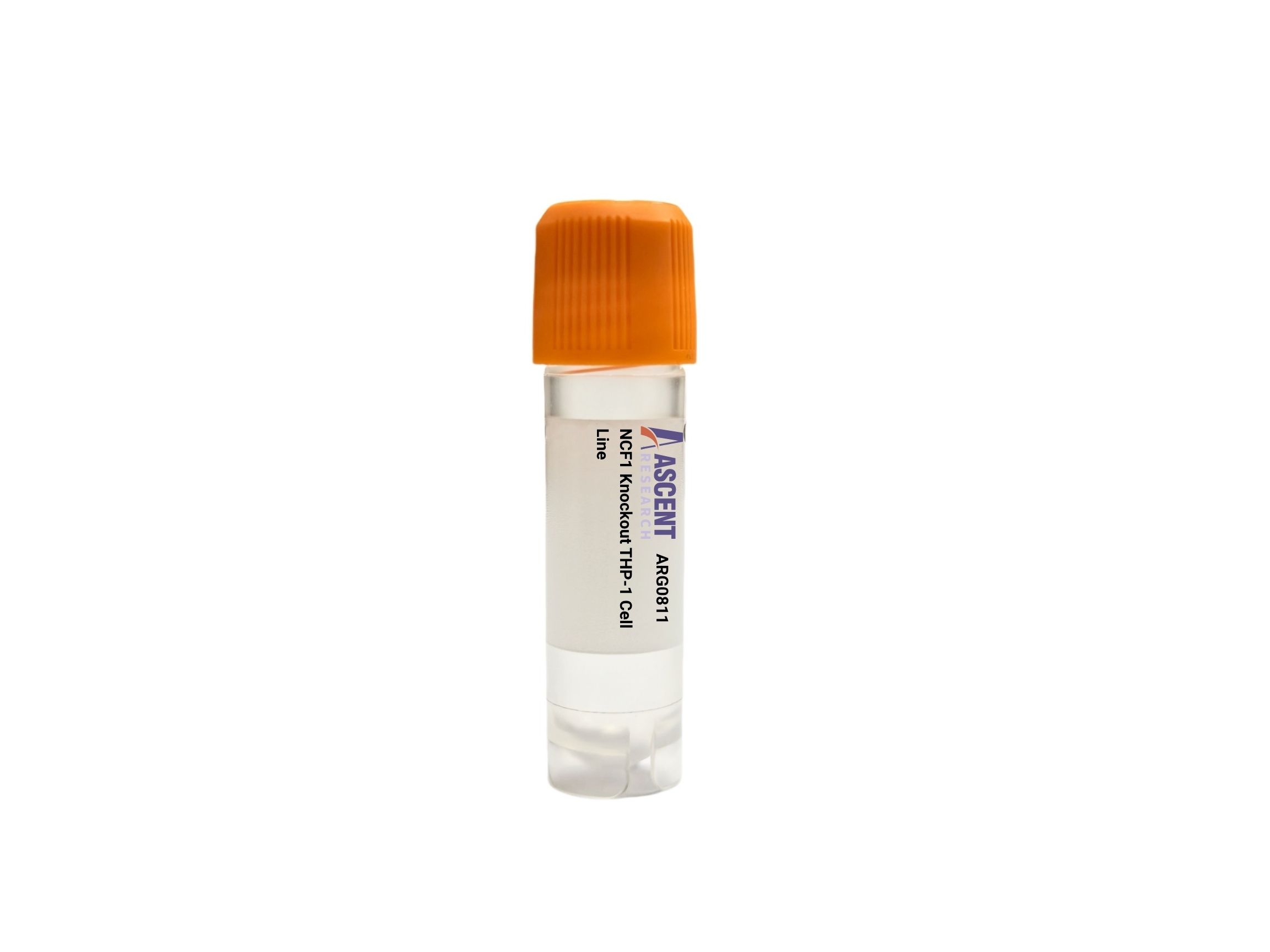
Cat. No. ARG0811

NCF1 Knockout THP-1 Cell Line

  • Product Type:

    Genome-edited Cells

  • Tissue Source:

    Blood (peripheral blood)

  • Disease:

    Acute monoblastic leukemia

  • Gene Species:

    Homo sapiens (Human)

The NCF1 Knockout THP-1 Cell Line is a CRISPR/Cas9-edited human monocytic cell line with targeted disruption of the NCF1 gene, encoding the critical NADPH oxidase subunit p47phox. Engineered from the widely used THP-1 acute monocytic leukemia line, this model eliminates superoxide production in response to stimuli such as PMA, fMLP, and TNF-??, which normally activate p47phox via PKC and Rac GTPases. This loss-of-function cell line is an essential tool for investigating NADPH oxidase complex assembly, ROS-mediated innate immunity, and chronic granulomatous disease. Key applications include respiratory burst assays, inhibitor screening, and functional phagocyte studies in autoimmune and inflammatory research.

Inquire Now

In stock

Ships next business day


Ask a Question

Shipping Info:

Cryopreserved in vials and shipped on dry ice


Disclaimer:

For Research Use Only

  • Characteristics

    Host Cell

    THP-1

    Age

    1 year

    Sex of Donor

    Male

    Gene Name

    NCF1

    Gene Species

    Homo sapiens (Human)

    Gene Identifier

    NCBI Gene ID 653361

  • Culture Conditions

    Temperature

    37°C

    Atmosphere

    5% CO₂

  • Quality Control

    Sterility testing

    Daily monitoring confirms that the cells are free from bacterial, yeast, and fungal contamination.

    Mycoplasma testing

    Negative for mycoplasma through PCR analysis

    Pathogens

    Cells tested negative for HIV-1, HBV, and HCV.

  • Disclaimer

    Intended Use

    This product is intended for laboratory in vitro use only. lt is not intended for diagnostic, therapeutic, or clinical applications.

    Disclaimer

    Ascent Research endeavors to provide accurate and up-to-date product information. However, no warranties or representations are made regarding its completeness or reliability. References to scientific literature and patents are for informational purposes only, and the customer assumes sole responsibility for verifying their accuracy.

    By accepting this product, the customer acknowledges and agrees to assume all risks associated with its receipt, handling, storage, disposal, and use, including compliance with all applicable safety and environmental regulations and precautions. Relevant laws, regulations, and ethical guidelines must be followed in conducting any research, modifications, or derivatives derived from this product.

    This product is provided "AS IS", and except as expressly stated herein, Ascent Research disclaims all other warranties, express or implied. Under no circumstances shall Ascent Research, its affiliates, or representatives be liable for indirect, incidental, consequential, or punitive damages arising from the use of this material. While Ascent Research employs rigorous quality control measures, we shall not be held responsible for damages resulting from misidentification or misinterpretation of the provided materials.

Description

The NCF1 Knockout THP-1 Cell Line is a CRISPR/Cas9-edited knockout cell line engineered for advanced biomedical research into phagocyte NADPH oxidase function. This product features targeted disruption of the NCF1 gene in the human monocytic leukemia THP-1 cell line, providing a robust loss-of-function model to investigate the roles of p47phox in reactive oxygen species (ROS) generation and innate immune signaling. The engineered cell line is supplied as a viable, proliferating culture suitable for downstream functional assays and screening applications.

THP-1 cells are derived from the peripheral blood of a one-year-old male with acute monocytic leukemia and serve as a widely used model for monocyte and macrophage biology. These suspension cells can be differentiated into macrophage-like cells via phorbol esters, exhibiting characteristic phagocytic activity, cytokine production, and responsiveness to innate immune stimuli. This well-characterized cellular background enables robust analysis of NADPH oxidase-dependent processes in a human system, making it an ideal host for interrogating NCF1 function.

NCF1 encodes p47phox, an essential cytosolic organizing subunit of the phagocyte NADPH oxidase complex. Upon activation by upstream signals such as protein kinase C (PKC), Rac1/2 GTPases, or physiological stimuli including phorbol myristate acetate (PMA), formyl-methionyl-leucyl-phenylalanine (fMLP), and tumor necrosis factor alpha (TNF-??), p47phox undergoes phosphorylation and translocates to the membrane. There, it assembles with the membrane-bound p22phox (CYBA) and gp91phox (CYBB) catalytic core, along with other regulatory subunits including p67phox (NCF2), p40phox (NCF4), the small GTPases Rac1/2, and NOXO1. This assembly activates the enzyme to produce superoxide anion, which dismutates to hydrogen peroxide and fuels myeloperoxidase-dependent generation of hypochlorous acid. These reactive species are critical for microbial killing and also modulate downstream signaling pathways such as NF-??B activation.

Disruption of NCF1 in THP-1 cells recapitulates key features of chronic granulomatous disease (CGD), an inherited immunodeficiency characterized by defective respiratory burst. This knockout model enables direct interrogation of the molecular requirements for NADPH oxidase assembly and oxidase-derived ROS in monocytic cells. It is particularly valuable for studying the roles of p47phox in phagosome maturation, cytokine regulation, and the interplay between redox status and inflammatory responses. Because THP-1 cells retain many features of primary monocytes, this cell line offers a physiologically relevant platform to dissect the contributions of NCF1 to innate immunity.

Researchers can employ the NCF1 Knockout THP-1 Cell Line in a variety of experimental paradigms, including cytochrome c reduction assays, luminol-based chemiluminescence, and flow cytometric measurements using DHR123 or DCFDA to quantify ROS production. The line is suitable for bacterial killing and phagocytosis assays to assess functional consequences of p47phox loss. It also facilitates screening of pharmacological modulators of NADPH oxidase activity and investigation of ROS-dependent signaling in autoimmune and inflammatory disorders. For further information or to discuss custom applications, please contact Ascent Research.


Reset Password

    Reach Us Questions? Click Me Here!

    Fill out the form below and a member of our team will contact you shortly!

    *Required field


      Reach Us

      Fill out the form below and a member of our team will contact you shortly!

      *Required field

      Product Inquiry (Optional)