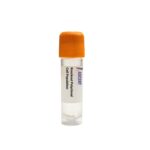
The NDFIP1 Knockout Raji Polyclonal Cells represent a CRISPR/Cas9-edited polyclonal knockout cell population derived from the Raji human B lymphocyte cell line, featuring targeted disruption of the NDFIP1 gene. This knockout model abolishes expression of the NDFIP1 adaptor protein, which functions as a critical recruiter of Nedd4-family E3 ubiquitin ligases to substrate proteins. The polyclonal nature ensures a heterogeneous pool of gene-edited cells, suitable for pooled functional assays without clonal selection artifacts.
The parental Raji cell line is an EBV-positive Burkitt lymphoma model characterized by a t(8;14) translocation that juxtaposes c-MYC with the immunoglobulin heavy chain locus, driving constitutive proliferation and blocking terminal differentiation. Raji cells express surface IgM and retain functional B cell receptor (BCR) signaling machinery, making them a well-established system for investigating antigen receptor-mediated signal transduction, apoptosis regulation, and Epstein-Barr virus biology in a malignant B cell context.
NDFIP1 encodes a transmembrane adaptor that interacts with Nedd4-1, Nedd4-2, and Itch ubiquitin ligases to promote ubiquitination of key signaling effectors such as EGFR and c-FLIP, leading to their lysosomal or proteasomal degradation. In lymphocytes, NDFIP1 is activated downstream of BCR stimulation, NFATc1 transcription, IL-2 receptor signaling, and CD40 co-stimulation, and it governs PTEN nuclear import and subsequent suppression of PI3K/AKT signaling. Thus, NDFIP1 serves as a negative regulator linking antigen receptor activation to ubiquitin-dependent attenuation of proliferative and survival pathways.
In the Raji Burkitt lymphoma background, NDFIP1 disruption is predicted to enhance BCR-driven AKT activity due to impaired PTEN nuclear translocation and reduced degradation of anti-apoptotic c-FLIP, thereby altering the threshold for apoptosis and promoting survival signaling. This polyclonal knockout population provides a physiologically relevant platform to dissect how NDFIP1-mediated ubiquitination controls immune homeostasis and contributes to lymphomagenesis, particularly in the context of c-MYC-driven oncogenesis and EBV latency.
Researchers can employ these NDFIP1 knockout Raji polyclonal cells to investigate BCR signaling dynamics via phospho-AKT flow cytometry, quantify ubiquitination events through co-immunoprecipitation of Nedd4 ligases and substrate proteins, assess apoptosis resistance with flow-based assays, and screen drug candidates targeting ubiquitin ligase pathways. The model is compatible with Western blotting, RT-qPCR, and functional studies of immune tolerance mechanisms, making it a valuable tool for autoimmunity, lymphoma, and ubiquitin-proteasome research. Please contact Ascent Research for additional information.