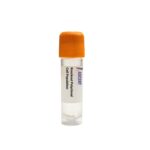
The NFAT5 Knockout Raji Polyclonal Cells represent a CRISPR/Cas9-edited polyclonal knockout cell population derived from the human Raji B lymphocyte cell line, engineered to disrupt the NFAT5 gene. This loss-of-function model enables investigation of NFAT5-dependent transcriptional programs in a B-cell context without the constraints of clonal selection, preserving the inherent heterogeneity of polyclonal cultures. The cells are supplied as a ready-to-use knockout pool, allowing researchers to study the collective impact of NFAT5 disruption on osmotic stress responses, immune signaling, and lymphomagenesis. By targeting a critical osmosensitive transcription factor, this product supports mechanistic studies and drug screening applications in a well-characterized Burkitt lymphoma background.
Raji cells are an Epstein-Barr virus (EBV)-transformed human Burkitt lymphoma B lymphocyte line that serves as a standard model for B-cell malignancies. They exhibit constitutive activation of B cell receptor (BCR) and Toll-like receptor (TLR) pathways, providing a relevant platform for dissecting oncogenic and immune signaling networks. Raji cells express surface markers characteristic of mature B cells and are widely utilized in studies of apoptosis, cell cycle regulation, and immunoglobulin production. Their robust proliferation and ease of culture make them an ideal host for CRISPR-based gene disruption, enabling efficient generation of polyclonal knockout populations for functional genomics.
NFAT5 (nuclear factor of activated T cells 5) functions as a master osmosensitive transcription factor that integrates hypertonic stress and immune receptor signals. It is activated by hypertonic environments, lipopolysaccharide (LPS), and TNF-?? through upstream kinases including p38 MAPK and ATM, which promote its nuclear translocation and transcriptional activity. Once active, NFAT5 forms complexes with cofactors such as CBP/p300 and interacts with NF-??B, AP-1, and STAT3 to regulate gene expression. Key downstream targets include osmoprotective genes like SLC5A3 and SLC6A12, as well as pro-inflammatory cytokines TNF-?? and IL-6, and immunoglobulin genes critical for B-cell effector function. These interactions place NFAT5 at the nexus of osmotic adaptation and immune response pathways.
In the Raji B-cell context, NFAT5 knockout disrupts the cellular response to hypertonic stress, impairing the expression of osmolyte transporters and compromising cell viability under hyperosmolar conditions. Additionally, loss of NFAT5 attenuates BCR and TLR signaling outputs, as NF-??B and AP-1 transcriptional programs are partially dependent on NFAT5 co-activation. Consequently, immunoglobulin production and secretion, measured by IgM/IgG ELISA, are diminished, highlighting NFAT5’s role in B-cell activation and effector function. This knockout model thus recapitulates defects in osmotic adaptation and immune signaling that are relevant to hyperosmolarity-related diseases, chronic inflammation, and B-cell malignancies.
The NFAT5 Knockout Raji Polyclonal Cells are suitable for a wide range of experimental applications. Researchers can employ Western blotting and immunofluorescence to confirm NFAT5 disruption and assess its subcellular localization. RT-qPCR and luciferase reporter assays allow quantification of NFAT5 target gene transcription under varying tonicity conditions. Flow cytometry for B-cell activation markers (e.g., CD69, CD86) and cell viability assays under hypertonic stress provide functional readouts of the knockout phenotype. This model is also valuable for drug screening studies targeting NFAT5 inhibitors or downstream pathways. For further information, including lot-specific validation data, please contact Ascent Research.
These polyclonal knockout cells empower detailed exploration of NFAT5’s role in B-cell biology, lymphomagenesis, and osmotic stress signaling, offering a versatile tool for both basic research and translational studies.