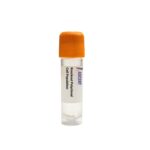
NLRX1 Knockout Raji Polyclonal Cells are a CRISPR/Cas9-edited polyclonal cell population designed to disrupt the NLRX1 gene in the Raji human B lymphoblastoid cell line. This polyclonal knockout model enables loss-of-function studies of NLRX1, a mitochondrial protein that negatively regulates innate immune responses. The cell population is generated by transient expression of CRISPR/Cas9 ribonucleoproteins targeting NLRX1, followed by antibiotic selection and expansion without single-cell cloning, resulting in a heterogeneous pool of edited alleles. This format is well-suited for investigating NLRX1-dependent phenotypes in bulk cell populations, including signaling pathway analysis, cytokine production profiling, and mitochondrial function assays.
The Raji host cell line is derived from a Burkitt lymphoma patient and serves as a widely used model for B lymphocyte biology and lymphomagenesis. Raji cells exhibit constitutive activation of NF-??B and express latent Epstein-Barr virus, making them relevant for immune signaling studies and cancer research. Their lymphoblastoid phenotype permits interrogation of innate immune pathways in a B-cell context, allowing researchers to dissect how mitochondrial adaptor proteins like NLRX1 modulate antiviral and inflammatory cascades within lymphoid cells.
NLRX1 is anchored to the mitochondrial outer membrane and functions as a potent suppressor of RIG-I-like receptor (RLR) signal transduction. Upon viral infection or interferon stimulation, NLRX1 directly interacts with MAVS to block the recruitment of downstream effectors TRAF6, TBK1, and IKK??, thereby inhibiting the phosphorylation and nuclear translocation of IRF3 and IRF7. This suppression attenuates transcription of type I interferons, such as IFN-??, and pro-inflammatory cytokines, including IL-6, through the IRF and NF-??B pathways. Additionally, NLRX1 partners with UQCRC2, TUFM, and STING to modulate autophagy and mitochondrial reactive oxygen species (ROS) production, reinforcing cellular homeostasis. Loss of NLRX1 thus relieves these inhibitory constraints, potentially heightening innate immune activation and altering mitochondrial quality control.
In the Raji B-cell environment, NLRX1 knockout provides a unique model to study intersectional signaling between mitochondrial innate immunity and oncogenic pathways. The Burkitt lymphoma background, with its intrinsic NF-??B activity and viral latency, offers a competent platform for examining how NLRX1 removal influences MAVS-dependent signaling, autophagy flux, and ROS levels in malignant lymphocytes. This system is particularly valuable for exploring the interplay between antiviral defenses and B-cell transformation, as well as for evaluating the role of NLRX1 in shaping tumor-associated inflammatory environments.
This polyclonal knockout cell product is suitable for diverse experimental workflows central to innate immunity, autophagy, and cancer immunology. Researchers can measure NLRX1 protein expression by Western blotting, monitor IRF3 phosphorylation status, quantify IFN-?? and IL-6 transcripts via RT-qPCR, and assess NF-??B activity using luciferase reporter assays. Co-immunoprecipitation experiments can probe the NLRX1?CMAVS interaction, while immunofluorescence enables visualization of mitochondrial morphology. Cellular ROS detection kits and autophagy flux assays (e.g., LC3 turnover) further allow dissection of NLRX1’s role in metabolic and degradative pathways. Together, these readouts empower detailed mechanistic investigations into antiviral responses, inflammatory regulation, and mitochondrial biology. For additional information and technical support, please contact Ascent Research.