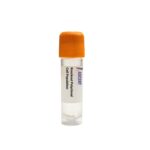
The NMI Knockout Raji Polyclonal Cells product consists of a CRISPR/Cas9-edited polyclonal knockout cell population in which the NMI gene is disrupted via non-homologous end joining-mediated frameshift mutations. This polyclonal pool provides a heterogeneous yet genetically defined loss-of-function model in the Raji B lymphocyte background, avoiding clonal artifacts while capturing diverse knockout events. The product is designed for researchers investigating interferon signaling, STAT transcription factor networks, and Myc-dependent pathways in a human B-cell lymphoma context. As a polyclonal population, it retains mixed genotypes and is suitable for bulk functional assays such as Western blotting, RT-qPCR, and RNA sequencing, where population-level responses are of primary interest.
The host Raji cell line is derived from a Burkitt lymphoma patient and is an Epstein-Barr virus (EBV)-transformed lymphoblastoid B cell line. These cells exhibit characteristic features of mature B lymphocytes, including surface immunoglobulin expression and constitutive activation of NF-??B and STAT pathways, partly driven by EBV latency programs. Raji cells are widely used to study B-cell malignancies, humoral immunity, and viral oncogenesis. Their rapid proliferation and well-characterized signaling networks make them an ideal chassis for dissecting oncogenic and immune signaling mechanisms. The EBV-immortalized background also provides a relevant model for investigating interactions between viral latency and host interferon responses.
NMI (N-Myc and STAT interactor) is an interferon-inducible protein that bridges type I and II interferon signaling with broader transcriptional networks. NMI physically interacts with STAT1, STAT3, and STAT5, enhancing their DNA-binding and transcriptional activities upon stimulation by interferon-alpha/beta or interferon-gamma. It also binds c-Myc and N-Myc, modulating Myc target genes such as CCND1 and CDKN1A, thereby linking interferon responses to cell cycle control and apoptosis. Upstream, NMI expression is activated by the ISGF3 complex (STAT1/STAT2/IRF9) and by NF-??B downstream of receptors such as IFNAR and IL-6R. Downstream, NMI promotes the induction of interferon-stimulated genes (ISGs) including OAS1, MX1, and PKR (EIF2AK2). Through these interactions, NMI positions itself at the intersection of innate immunity, antiviral defense, and growth regulation.
In the Raji B-cell context, NMI knockout eliminates its interaction with STAT factors and c-Myc, leading to impaired interferon-induced transcription and altered Myc-driven proliferation and survival signals. This model recapitulates key aspects of lymphomagenesis where interferon signaling and Myc pathways are dysregulated, such as in aggressive B-cell lymphomas and autoimmune conditions like psoriasis. The polyclonal knockout population enables researchers to assess the overall impact of NMI loss on STAT phosphorylation kinetics, ISG induction, and Myc target gene expression without clonal selection biases. It also provides a platform to study how EBV latency programs intersect with NMI-mediated signaling, as EBV nuclear antigens can modulate STAT and NF-??B pathways.
Typical experimental workflows include interferon stimulation assays followed by RT-qPCR or Western blotting for ISGs (MX1, OAS1) and phospho-STAT1, co-immunoprecipitation to assess NMI-STAT interaction loss, and proliferation or apoptosis assays to evaluate Myc-dependent phenotypes. The polyclonal format is well-suited for RNA-seq to identify global transcriptomic changes, drug screening for modulators of interferon or Myc pathways, and flow cytometric profiling of surface markers. This NMI knockout model offers a powerful tool for dissecting innate immunity, B-cell biology, and therapeutic target validation in lymphoma research. For further product details or technical specifications, please contact Ascent Research.