Quick Order Cart

Cat. No. ARG44006

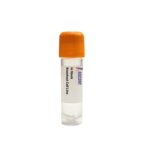
NOD2 Knockout HL-60 Cell Line

  • Product Type:

    In Stock Cell Lines

  • Species:

    Homo sapiens (Human)

  • Tissue Source:

    Blood (peripheral blood)

  • Disease:

    Acute myeloid leukemia (AML)

The NOD2 Knockout HL-60 Cell Line is a CRISPR/Cas9-edited knockout model derived from the human promyelocytic leukemia HL-60 line. It provides loss of NOD2 function, enabling investigation of intracellular pattern recognition receptor signaling in myeloid cell contexts. The gene encodes a muramyl dipeptide sensor that activates NF-??B and MAPK pathways via RIPK2, leading to pro-inflammatory cytokine and defensin production. This cell line is ideal for studying innate immune mechanisms, inflammatory bowel disease, and evaluating RIPK2 inhibitors using assays such as ELISA, western blotting, and NF-??B reporter systems.

Inquire Now

In stock

Ships next business day


Ask a Question

Shipping Info:

Cryopreserved in vials and shipped on dry ice


Disclaimer:

For Research Use Only

  • Characteristics

    Host Cell

    HL-60

    Sex of Donor

    Female

    Derived From Site

    In situ; Peripheral blood

    Gene Name

    NOD2

    Gene Identifier

    NCBI Gene ID 64127

    Growth Mode

    Suspension

    Storage

    Liquid nitrogen (LN2)

  • Culture Conditions

    Temperature

    37°C

    Atmosphere

    5% CO₂

  • Quality Control

    Sterility testing

    The bacterial, yeast, and fungi are not detected in these cells by daily monitor.

    Mycoplasma testing

    Negative for mycoplasma through PCR analysis

  • Disclaimer

    Intended Use

    This product is intended for laboratory in vitro use only. lt is not intended for diagnostic, therapeutic, or clinical applications.

    Disclaimer

    Ascent Research endeavors to provide accurate and up-to-date product information. However, no warranties or representations are made regarding its completeness or reliability. References to scientific literature and patents are for informational purposes only, and the customer assumes sole responsibility for verifying their accuracy.

    By accepting this product, the customer acknowledges and agrees to assume all risks associated with its receipt, handling, storage, disposal, and use, including compliance with all applicable safety and environmental regulations and precautions. Relevant laws, regulations, and ethical guidelines must be followed in conducting any research, modifications, or derivatives derived from this product.

    This product is provided "AS IS", and except as expressly stated herein, Ascent Research disclaims all other warranties, express or implied. Under no circumstances shall Ascent Research, its affiliates, or representatives be liable for indirect, incidental, consequential, or punitive damages arising from the use of this material. While Ascent Research employs rigorous quality control measures, we shall not be held responsible for damages resulting from misidentification or misinterpretation of the provided materials.

Description

The NOD2 Knockout HL-60 Cell Line is a CRISPR/Cas9-edited knockout cell line originating from the human HL-60 promyelocytic leukemia line. This model provides a loss-of-function system in which NOD2 expression is disrupted, enabling precise studies of intracellular pattern recognition receptor signaling and innate immune processes. The cell line is well-suited for assays investigating NOD2-dependent pathways.

HL-60 cells are a classical model for myeloid differentiation and leukemia, established from a 36-year-old female with acute promyelocytic leukemia. These cells can be induced to differentiate along granulocytic or monocytic/macrophage-like lineages using chemical agents such as DMSO or phorbol esters. This property renders HL-60 useful for investigating myeloid cell functions in both undifferentiated and mature states.

NOD2 functions as a cytosolic receptor for bacterial muramyl dipeptide (MDP). Ligand binding triggers NOD2 self-oligomerization and recruitment of RIPK2 via CARD interactions, which in turn activates the IKK complex and TAK1. Downstream, NF-??B and MAP kinase cascades??including p38, JNK, and ERK??are engaged, leading to transcription of pro-inflammatory cytokines (e.g., TNF, IL-6, IL-8) and antimicrobial peptides such as defensins. NOD2 also interfaces with autophagy through interactions with ATG16L1 and CARD9. Upstream regulators include TNF-?? and TLR agonists, which modulate NOD2 expression, while the receptor itself serves as a critical sensor of microbial wall components.

In the HL-60 background, NOD2 knockout eliminates the primary MDP-sensing pathway, enabling dissection of innate immune signaling in a myeloid progenitor context. Because HL-60 can be driven toward macrophage-like cells??a lineage where NOD2 is highly relevant??this model allows evaluation of receptor-dependent cytokine secretion, NF-??B transcriptional responses, and autophagy induction upon MDP challenge. It is particularly useful for characterizing how NOD2 loss influences differentiation-linked immune functions and for modeling aspects of Crohn??s disease and Blau syndrome.

This knockout cell line supports a wide range of experimental approaches, including western blotting, RT-qPCR, ELISA, NF-??B reporter assays, and MDP stimulation studies to quantify pathway activation. It is also applicable in co-immunoprecipitation of NOD2?CRIPK2 complexes, phospho-signaling analysis of MAPK members, and autophagy flux monitoring. The model facilitates pharmacological testing of RIPK2 inhibitors and functional rescue with disease-associated NOD2 variants. For further inquiries, please contact Ascent Research.


Reset Password

    Reach Us Questions? Click Me Here!

    Fill out the form below and a member of our team will contact you shortly!

    *Required field


      Reach Us

      Fill out the form below and a member of our team will contact you shortly!

      *Required field

      Product Inquiry (Optional)