Quick Order Cart

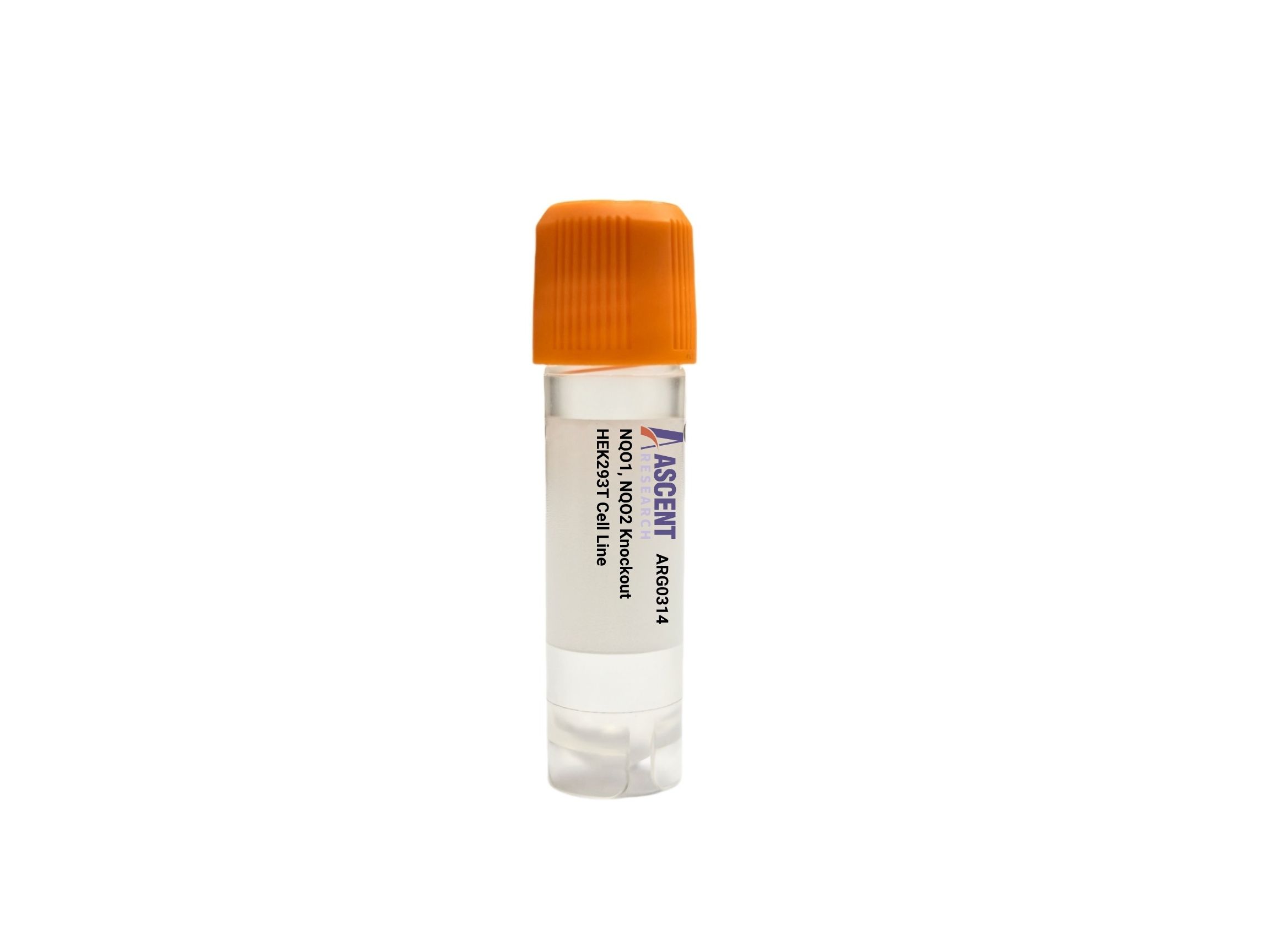
Cat. No. ARG0314

NQO1, NQO2 Knockout HEK293T Cell Line

  • Product Type:

    Genome-edited Cells

  • Tissue Source:

    Kidney

  • Gene Species:

    Homo sapiens (Human)

The NQO1, NQO2 Knockout HEK293T Cell Line is a CRISPR/Cas9-edited dual-knockout model in human embryonic kidney epithelial cells. It disrupts the genes encoding NQO1 and NQO2, two NAD(P)H-dependent quinone reductases that detoxify quinones and, in the case of NQO1, stabilize p53. These enzymes are regulated by the NRF2-KEAP1 pathway and are central to antioxidant defense and xenobiotic metabolism. This cell line facilitates investigation of NRF2 signaling, p53 regulation, and redox biology. Applications include cancer research, oxidative stress studies, and drug metabolism, supported by pathways involving NFE2L2, KEAP1, and TP53. The model supports enzymatic, viability, and pathway activation assays.

Inquire Now

In stock

Ships next business day


Ask a Question

Shipping Info:

Cryopreserved in vials and shipped on dry ice


Disclaimer:

For Research Use Only

  • Characteristics

    Host Cell

    HEK293T

    Age

    Fetus

    Sex of Donor

    Female

    Gene Name

    Nqo1, Nqo2

    Gene Species

    Homo sapiens (Human)

    Gene Identifier

    NCBI Gene ID 1728, 4835

  • Culture Conditions

    Temperature

    37°C

    Atmosphere

    5% CO₂

  • Quality Control

    Sterility testing

    Daily monitoring confirms that the cells are free from bacterial, yeast, and fungal contamination.

    Mycoplasma testing

    Negative for mycoplasma through PCR analysis

    Pathogens

    Cells tested negative for HIV-1, HBV, and HCV.

  • Disclaimer

    Intended Use

    This product is intended for laboratory in vitro use only. lt is not intended for diagnostic, therapeutic, or clinical applications.

    Disclaimer

    Ascent Research endeavors to provide accurate and up-to-date product information. However, no warranties or representations are made regarding its completeness or reliability. References to scientific literature and patents are for informational purposes only, and the customer assumes sole responsibility for verifying their accuracy.

    By accepting this product, the customer acknowledges and agrees to assume all risks associated with its receipt, handling, storage, disposal, and use, including compliance with all applicable safety and environmental regulations and precautions. Relevant laws, regulations, and ethical guidelines must be followed in conducting any research, modifications, or derivatives derived from this product.

    This product is provided "AS IS", and except as expressly stated herein, Ascent Research disclaims all other warranties, express or implied. Under no circumstances shall Ascent Research, its affiliates, or representatives be liable for indirect, incidental, consequential, or punitive damages arising from the use of this material. While Ascent Research employs rigorous quality control measures, we shall not be held responsible for damages resulting from misidentification or misinterpretation of the provided materials.

Description

The NQO1, NQO2 Knockout HEK293T Cell Line is a CRISPR/Cas9-edited knockout cell line designed for investigating the roles of NAD(P)H:quinone oxidoreductase 1 and 2 in cellular detoxification and antioxidant responses. This cell line, derived from the HEK293T host, carries targeted disruptions in both the NQO1 and NQO2 genes, providing a dual-loss-of-function model. The use of CRISPR/Cas9 technology ensures effective ablation of gene function, enabling researchers to dissect the individual and combined contributions of these enzymes to quinone metabolism and stress signaling pathways.

The HEK293T host cell line is a well-characterized human embryonic kidney epithelial cell line that stably expresses the SV40 large T antigen, derived from the original HEK293 strain. Its epithelial origin, rapid proliferation, and high transfection competency make it an ideal platform for gene editing and functional studies. HEK293T cells retain many features of kidney epithelial cells, including responsiveness to oxidative stress and xenobiotic stimuli, providing a physiologically relevant background for examining the roles of NQO1 and NQO2 in antioxidant defense and detoxification.

NQO1 and NQO2 are flavin-dependent quinone reductases that catalyze the obligate two-electron reduction of quinones to hydroquinones, thereby preventing semiquinone radical formation. Their expression is transcriptionally regulated by NFE2L2 (NRF2), which is sequestered by KEAP1 and targeted for degradation by the CUL3 ubiquitin ligase complex. Under oxidative stress, NRF2 is released, dimerizes with MAF proteins, and binds antioxidant response elements (AREs) to induce NQO1, NQO2, HMOX1, and other cytoprotective targets. NQO1 also physically interacts with and stabilizes the tumor suppressor p53 (TP53), protecting it from proteasomal degradation and enhancing its transcriptional activity. NQO2 can utilize NRH or melatonin as co-substrates and is implicated in melatonin-binding and circadian modulation.

In HEK293T cells expressing functional NRF2, KEAP1, and p53, the simultaneous knockout of NQO1 and NQO2 provides a unique platform to study NRF2-ARE signaling and p53 crosstalk. Disruption of these major NRF2 effectors separates transcriptional outcomes from enzymatic detoxification. Loss of NQO1 destabilizes p53, enabling detailed analysis of p53-dependent responses to genotoxic and oxidative stress. The epithelial nature of HEK293T cells also makes this model relevant to renal and epithelial cancers where NQO1 and NQO2 are often dysregulated.

This knockout cell line is suited for investigating NRF2 pathway dynamics, quinone-mediated redox cycling, and p53 regulation. Researchers can use Western blotting and RT-qPCR for expression analysis, and enzymatic activity assays with menadione or other quinones to measure residual reductase function. Oxidative stress challenges and cell viability assays reveal the cytoprotective roles of NQO1/NQO2. The line supports p53 stabilization assays and high-content screens for compounds that bypass NQO1-dependent p53 protection, facilitating drug discovery and toxicology studies. For further details, contact Ascent Research.


Reset Password

    Reach Us Questions? Click Me Here!

    Fill out the form below and a member of our team will contact you shortly!

    *Required field


      Reach Us

      Fill out the form below and a member of our team will contact you shortly!

      *Required field

      Product Inquiry (Optional)