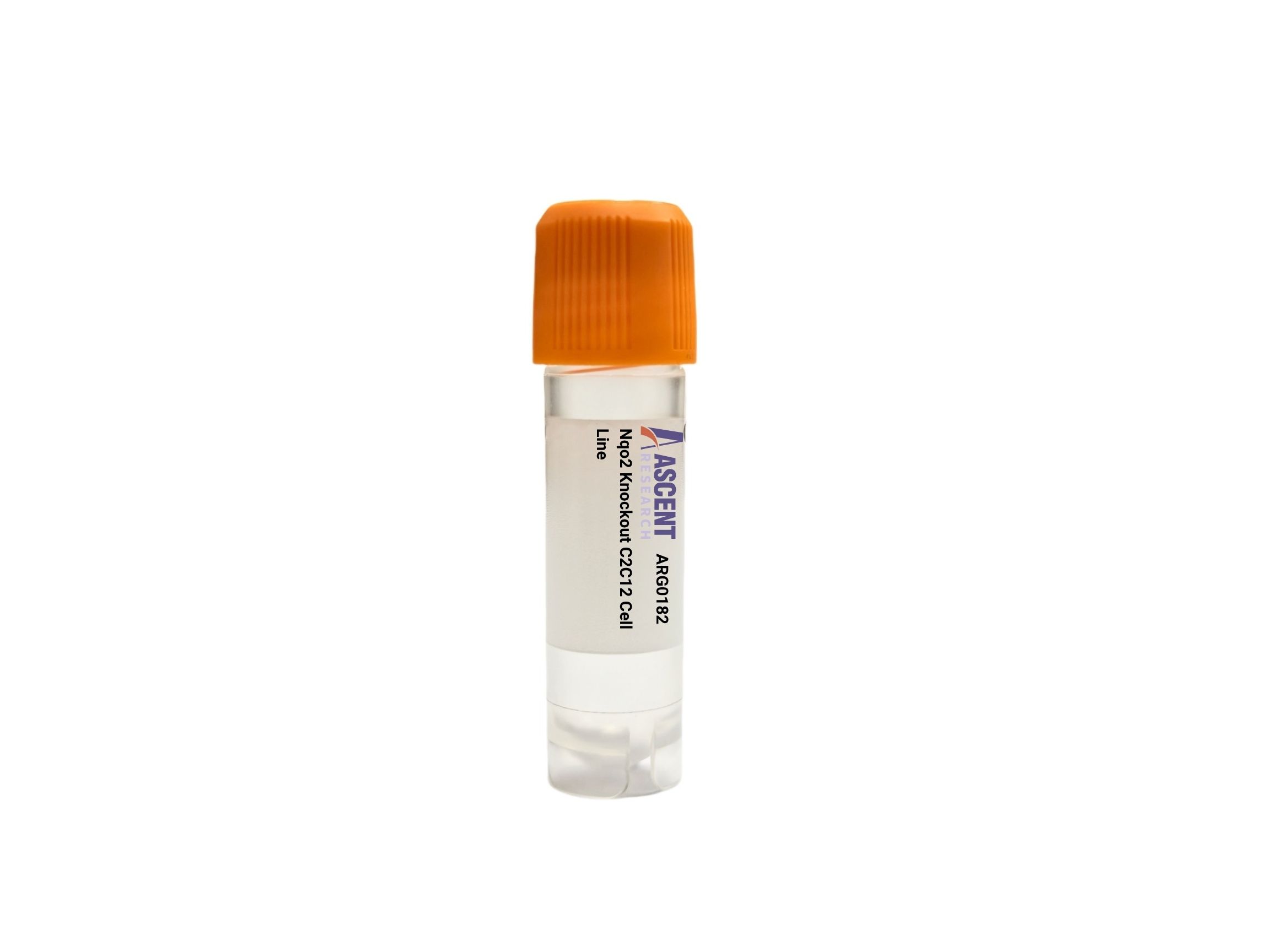
The Nqo2 Knockout C2C12 Cell Line is a CRISPR/Cas9-engineered mouse myoblast model in which the Nqo2 gene has been disrupted to eliminate functional NQO2 expression. This stable in vitro system is designed for mechanistic studies of quinone metabolism, intracellular redox control, and stress adaptation in skeletal muscle precursor cells. Because the parental C2C12 line retains robust proliferative capacity and can be induced to undergo myogenic differentiation, this knockout model provides a defined genetic background for examining Nqo2-dependent phenotypes across both myoblast and myotube states.
C2C12 cells are derived from murine adult skeletal muscle satellite cells and are extensively used to study myogenesis, muscle metabolism, oxidative injury, and differentiation-associated transcriptional remodeling. In growth conditions, they function as proliferating skeletal muscle precursors, whereas serum withdrawal promotes fusion into multinucleated myotubes. This dual-state biology makes C2C12 a valuable host for investigating how metabolic stress, antioxidant responses, and xenobiotic handling influence lineage progression, muscle-cell survival, and functional maturation. The model is therefore relevant to skeletal muscle biology, myopathy research, and broader studies of cellular stress signaling.
NQO2 is a cytosolic flavoprotein quinone reductase that catalyzes two-electron reduction of quinones and related redox-active substrates using reduced nicotinamide riboside (NRH) rather than NAD(P)H. Through this activity, NQO2 contributes to quinone detoxification, regulation of quinone redox state, and maintenance of cellular redox homeostasis. NQO2 function is modulated by oxidative stress, quinone exposure, xenobiotic challenge, NRF2-linked redox stimuli, and differentiation-associated metabolic remodeling. Within this network, NQO2 operates in a pathway context that includes NRF2, KEAP1, NQO1, HMOX1, GCLC, SOD1, CAT, and glutathione. Loss of Nqo2 is therefore expected to alter downstream readouts such as cellular ROS levels, glutathione redox balance, oxidative damage markers, and survival under redox stress. Interacting factors of particular experimental relevance include NRH, quinone substrates, resveratrol, melatonin-related signaling context, NQO1, and antioxidant defense enzymes.
In the C2C12 background, Nqo2 disruption is especially informative because redox state is closely coupled to myoblast proliferation, differentiation efficiency, and myotube formation. This model enables investigation of how quinone-reductase deficiency influences oxidative stress handling during myogenesis, whether compensation by NQO1 or NRF2-regulated antioxidant genes occurs, and how altered ROS buffering affects differentiation output. It is also useful for studying redox-sensitive phenotypes relevant to toxicology, cancer pharmacology, and neurodegeneration-related stress mechanisms in a muscle-cell context.
Applications include western blotting and RT-qPCR to assess NQO2 pathway components such as NQO1, HMOX1, GCLC, SOD1, and CAT; RNA-seq for transcriptional profiling under basal, oxidant, or xenobiotic conditions; intracellular ROS assays and glutathione measurements to quantify redox perturbation; and viability or apoptosis assays following quinone or oxidant challenge. Researchers can combine metabolic assays with drug sensitivity studies to evaluate responses to redox-active small molecules, including compounds tested in the presence of NRH, resveratrol, or quinone substrates. In differentiation studies, the model supports myogenic differentiation assays and immunofluorescence for myosin heavy chain to determine how Nqo2 loss affects fusion and maturation under defined stress conditions. Researchers may contact Ascent Research for additional technical information, product details, or related gene-edited cell models.