Quick Order Cart

Cat. No. ARG1343

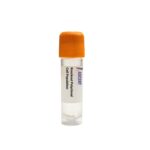
NSD3 Knockout Raji Polyclonal Cells

  • Product Type:

    Polyclonal Cell Population

  • Species:

    Homo sapiens (Human)

  • Tissue Source:

    Bone

  • Disease:

    Burkitt lymphoma

This polyclonal knockout product provides Raji B?lymphoma cells with CRISPR/Cas9?mediated disruption of NSD3, a histone methyltransferase that deposits H3K36me2 marks. NSD3 interacts with BRD4 and nuclear receptors to drive expression of MYC and CCND1, functioning as an oncogenic transcriptional amplifier. The EBV?positive Burkitt lymphoma background enables investigation of epigenetic regulation in lymphomagenesis and viral latency. Key applications include functional genomics, drug target validation, ChIP?seq for H3K36me2 mapping, RNA?seq profiling, proliferation, colony formation, drug sensitivity assays, and flow cytometry for cell cycle/apoptosis analysis.

Inquire Now

In stock

Ships next business day


Ask a Question

Shipping Info:

Cryopreserved in vials and shipped on dry ice


Disclaimer:

For Research Use Only

  • Characteristics

    Host Cell

    Raji

    Cell Type

    B cell line

    Sex of Donor

    Male

    Age

    11 years

    Derived From Site

    In situ; Maxilla

    Gene Name

    NSD3

    Gene Identifier

    NCBI Gene ID 54904

    Morphology

    Lymphoblast-like

    Growth Mode

    Suspension

    Storage

    Liquid nitrogen (LN2)

  • Culture Conditions

    Growth medium

    RPMI 1640

    Supplement(s)

    10% Fetal Bovine Serum, 1% Penicillin-Streptomycin Solution

    Temperature

    37°C

    Atmosphere

    5% CO₂

  • Quality Control

    Sterility testing

    The bacterial, yeast, and fungi are not detected in these cells by daily monitor.

    Mycoplasma testing

    Negative for mycoplasma through PCR analysis

  • Disclaimer

    Intended Use

    This product is intended for laboratory in vitro use only. lt is not intended for diagnostic, therapeutic, or clinical applications.

    Disclaimer

    Ascent Research endeavors to provide accurate and up-to-date product information. However, no warranties or representations are made regarding its completeness or reliability. References to scientific literature and patents are for informational purposes only, and the customer assumes sole responsibility for verifying their accuracy.

    By accepting this product, the customer acknowledges and agrees to assume all risks associated with its receipt, handling, storage, disposal, and use, including compliance with all applicable safety and environmental regulations and precautions. Relevant laws, regulations, and ethical guidelines must be followed in conducting any research, modifications, or derivatives derived from this product.

    This product is provided "AS IS", and except as expressly stated herein, Ascent Research disclaims all other warranties, express or implied. Under no circumstances shall Ascent Research, its affiliates, or representatives be liable for indirect, incidental, consequential, or punitive damages arising from the use of this material. While Ascent Research employs rigorous quality control measures, we shall not be held responsible for damages resulting from misidentification or misinterpretation of the provided materials.

Description

The NSD3 Knockout Raji Polyclonal Cells product is a CRISPR/Cas9-edited polyclonal population derived from the Raji B lymphocyte line, in which the NSD3 gene has been disrupted to create a loss-of-function model. The knockout pool is generated by transient delivery of Cas9 nuclease and guide RNAs targeting NSD3, followed by selection to enrich for edited cells. This polyclonal format maintains population heterogeneity and avoids the selection biases inherent to clonal isolation, providing a robust tool for NSD3 functional studies without a fixed clonal genotype. Cells are supplied as a cryopreserved mixed population ready for suspension culture recovery.

The Raji cell line is a well-established B lymphocyte model established from a Burkitt lymphoma patient. Raji cells are Epstein?CBarr virus (EBV)-positive and grow as lymphoblastoid suspensions. They are extensively used in immunological studies, EBV latency research, and investigations of B?cell receptor signaling. The EBV?positive background adds a layer of complexity that allows examination of viral?Chost interactions in the context of epigenetic processes. As a suspension culture, Raji cells are amenable to high?throughput assays common in functional genomics.

NSD3 encodes a histone lysine methyltransferase that catalyzes dimethylation of histone H3 at lysine 36 (H3K36me2), a mark of transcriptionally active chromatin. It is activated downstream of nuclear receptors RAR?? and ER?? and functions within the FGFR1 and MYC transcriptional networks. The methyltransferase interacts with BET bromodomain protein BRD4, histone deacetylases HDAC1/2, and, in translocation-driven cancers, the NUT fusion partner. Through these interactions, NSD3 promotes H3K36me2 deposition at promoters of oncogenes such as MYC and CCND1, recruiting co?activator complexes that facilitate RNA Polymerase II elongation. Thus, NSD3 acts as a chromatin?level regulator that tunes proliferation and survival gene programs.

In Raji B?lymphoma cells, NSD3?mediated H3K36me2 contributes to oncogenic MYC transcriptional networks. Disrupting NSD3 enables dissection of its role in lymphoma cell proliferation, survival, and signaling responses. The EBV?positive status of Raji further permits study of potential NSD3 involvement in viral latency and EBV?regulated gene expression. This polyclonal knockout model therefore provides a platform to investigate NSD3 function in a transformation?relevant B?cell environment that retains both Burkitt lymphoma pathology and viral epigenetic interactions.

Key applications include RNA?seq and ChIP?seq for transcriptomic and epigenomic profiling, western blotting for NSD3 and histone modifications, proliferation (MTS/ATP), colony formation, and flow cytometry?based cell cycle/apoptosis assays. Drug sensitivity, migration, and invasion assays can further characterize NSD3?dependent phenotypes. This product is also suitable for CRISPR screens and preclinical evaluation of NSD3?targeted inhibitors in a lymphoma model. For technical inquiries, please contact Ascent Research.


Reset Password

    Reach Us Questions? Click Me Here!

    Fill out the form below and a member of our team will contact you shortly!

    *Required field


      Reach Us

      Fill out the form below and a member of our team will contact you shortly!

      *Required field

      Product Inquiry (Optional)