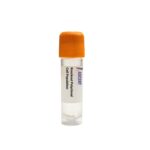
The NTPCR Knockout Raji Polyclonal Cells consist of a CRISPR/Cas9-edited polyclonal population of Raji B lymphocytes carrying a targeted disruption of the NTPCR gene. This loss-of-function model is designed to ablate expression of the encoded nucleoside triphosphate phosphohydrolase, enabling precise investigation of NTPCR-dependent processes in a human B-cell background. By employing a polyclonal knockout strategy, the product retains population-level heterogeneity while eliminating the target gene??s activity, providing a robust tool for functional studies in nucleotide metabolism and B-cell biology.
The Raji host cell line is a Burkitt??s lymphoma-derived human B lymphoblastoid cell line with well-characterized properties in immune response and antibody production. Widely utilized in hematological malignancy research, Raji cells exhibit constitutive activation of the MYC oncogene and dysregulated cell cycle progression, making them an appropriate model for studying B-cell malignancies and nucleotide metabolism. Their robust proliferative capacity and well-defined signaling networks facilitate mechanistic dissection of gene function in cancer metabolism and immune cell biology.
NTPCR encodes a nucleoside triphosphate phosphohydrolase that hydrolyzes nucleoside triphosphates (NTPs), including ATP, GTP, CTP, and UTP, to their corresponding diphosphates (NDPs) and inorganic phosphate, thereby regulating intracellular nucleotide pools. This enzymatic activity is directly linked to cellular energy homeostasis and proliferation through modulation of ATP levels and dNTP availability. NTPCR is transcriptionally regulated by upstream factors such as MYC, E2F1, and TP53, and interacts with nucleotide metabolism enzymes NME1 and NME2. Downstream, NTPCR influences dNTP pool composition, cell cycle progression, and apoptotic signaling, positioning it at a critical node between nucleotide metabolism and cell fate determination.
In the Raji cellular context, NTPCR disruption is expected to perturb nucleotide homeostasis, potentially impairing ATP generation and dNTP synthesis required for rapid B-cell proliferation. This knockout model enables systematic examination of how NTPCR loss affects Burkitt??s lymphoma cell growth, survival, and metabolic reprogramming, offering insights into the dependency of malignant B cells on nucleotide flux. By coupling this model with metabolic and cell cycle analyses, researchers can delineate the contribution of NTPCR to the aggressive phenotype of MYC-driven lymphomas.
Key applications include cancer metabolism research, B-cell biology studies, drug target validation, and nucleotide metabolism investigations. Experimentally, this polyclonal knockout cell population supports a range of downstream assays, including western blotting and RT-qPCR for expression analysis, MTT proliferation and ATP level measurements for metabolic phenotyping, Annexin V apoptosis and cell cycle flow cytometry for viability assessment, and HPLC-based quantification of nucleotide pools. The NTPCR Knockout Raji Polyclonal Cells thus serve as a versatile platform for dissecting nucleotide-dependent mechanisms in B-cell malignancies and beyond. For further information, please contact Ascent Research.