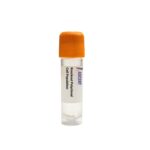
Quick Order Cart

Cat. No. ARG1316

NUBPL Knockout Raji Polyclonal Cells

  • Product Type:

    Polyclonal Cell Population

  • Species:

    Homo sapiens (Human)

  • Tissue Source:

    Bone

  • Disease:

    Burkitt lymphoma

The NUBPL Knockout Raji Polyclonal Cells are a CRISPR/Cas9-edited polyclonal knockout population derived from the human EBV-positive Burkitt lymphoma B-cell line Raji. NUBPL is a mitochondrial iron-sulfur cluster transfer protein essential for NADH:ubiquinone oxidoreductase (complex I) assembly, interacting with ISCU and NDUFAF1. This loss-of-function model impairs oxidative phosphorylation, enabling exploration of mitochondrial biology and metabolic vulnerabilities in B-cells. Researchers can utilize this product to investigate complex I assembly, iron-sulfur cluster biogenesis, and drug sensitivities in lymphoma through assays such as Seahorse metabolic flux analysis, complex I enzyme activity measurements, and mitochondrial membrane potential assessment. It serves as a valuable tool for modeling mitochondrial complex I deficiency diseases in a lymphoid context.

Inquire Now

In stock

Ships next business day


Ask a Question

Shipping Info:

Cryopreserved in vials and shipped on dry ice


Disclaimer:

For Research Use Only

  • Characteristics

    Host Cell

    Raji

    Cell Type

    B cell line

    Sex of Donor

    Male

    Age

    11 years

    Derived From Site

    In situ; Maxilla

    Gene Name

    NUBPL

    Gene Identifier

    NCBI Gene ID 80224

    Morphology

    Lymphoblast-like

    Growth Mode

    Suspension

    Storage

    Liquid nitrogen (LN2)

  • Culture Conditions

    Growth medium

    RPMI 1640

    Supplement(s)

    10% Fetal Bovine Serum, 1% Penicillin-Streptomycin Solution

    Temperature

    37°C

    Atmosphere

    5% CO₂

  • Quality Control

    Sterility testing

    The bacterial, yeast, and fungi are not detected in these cells by daily monitor.

    Mycoplasma testing

    Negative for mycoplasma through PCR analysis

  • Disclaimer

    Intended Use

    This product is intended for laboratory in vitro use only. lt is not intended for diagnostic, therapeutic, or clinical applications.

    Disclaimer

    Ascent Research endeavors to provide accurate and up-to-date product information. However, no warranties or representations are made regarding its completeness or reliability. References to scientific literature and patents are for informational purposes only, and the customer assumes sole responsibility for verifying their accuracy.

    By accepting this product, the customer acknowledges and agrees to assume all risks associated with its receipt, handling, storage, disposal, and use, including compliance with all applicable safety and environmental regulations and precautions. Relevant laws, regulations, and ethical guidelines must be followed in conducting any research, modifications, or derivatives derived from this product.

    This product is provided "AS IS", and except as expressly stated herein, Ascent Research disclaims all other warranties, express or implied. Under no circumstances shall Ascent Research, its affiliates, or representatives be liable for indirect, incidental, consequential, or punitive damages arising from the use of this material. While Ascent Research employs rigorous quality control measures, we shall not be held responsible for damages resulting from misidentification or misinterpretation of the provided materials.

Description

The NUBPL Knockout Raji Polyclonal Cells are a CRISPR/Cas9-edited polyclonal knockout cell population derived from the human Raji B-cell line, offering a loss-of-function model for the mitochondrial NUBPL gene. NUBPL encodes a critical iron-sulfur cluster transfer protein required for late-stage assembly of NADH:ubiquinone oxidoreductase (complex I). The polyclonal population contains diverse gene disruptions, enabling robust phenotypic analysis without clonal bias, and is suited for high-throughput studies of mitochondrial function in lymphoid cells.

The Raji host cell line is an Epstein-Barr virus (EBV)-positive B-lymphoblastoid line from Burkitt lymphoma, featuring suspension growth and expression of B-cell surface markers. Its transformed phenotype, driven by MYC and NF-??B activation and latent EBV genes, makes it a standard model for immunology and oncology. The suspension format facilitates metabolic flux assays and drug screening, and the lymphoma background provides a unique context for investigating mitochondrial dependencies.

NUBPL operates in mitochondrial iron-sulfur (Fe-S) cluster biogenesis, accepting clusters from the ISCU scaffold and inserting them into complex I subunits such as NDUFS1, NDUFS7, and NDUFV1. It functions within an assembly network including NDUFAF1, NFU1, BOLA3, HSCB, and HSPA9. Upstream transcription is driven by NRF1, PGC-1??, and TFAM, integrating with mitochondrial biogenesis programs. Disruption of NUBPL leads to complex I deficiency, reduced ATP synthesis, membrane potential collapse, and elevated reactive oxygen species.

In Raji B cells, NUBPL ablation exposes metabolic vulnerabilities critical to Burkitt lymphoma survival, which often relies on oxidative phosphorylation. This model enables discovery of synthetic lethal interactions and drug sensitivities under mitochondrial stress. Additionally, as NUBPL mutations cause Leigh syndrome and mitochondrial encephalopathy, the cells offer a unique lymphoid platform to study cell-type-specific complex I disease pathology, complementing conventional neuronal models.

Key applications include complex I enzyme activity assays, Western blot and blue-native PAGE for complex I analysis, Seahorse metabolic flux measurements, ATP quantification, and mitochondrial membrane potential assessments using JC-1 or TMRM. Further uses encompass ROS detection, viability testing under galactose challenge, and high-throughput drug screening targeting OXPHOS. This knockout tool is ideal for researching iron-sulfur cluster disorders in B-cells, metabolic adaptations in lymphoma, and mitochondrial disease therapeutic strategies. For further information, please contact Ascent Research.


Reset Password

    Reach Us Questions? Click Me Here!

    Fill out the form below and a member of our team will contact you shortly!

    *Required field


      Reach Us

      Fill out the form below and a member of our team will contact you shortly!

      *Required field

      Product Inquiry (Optional)