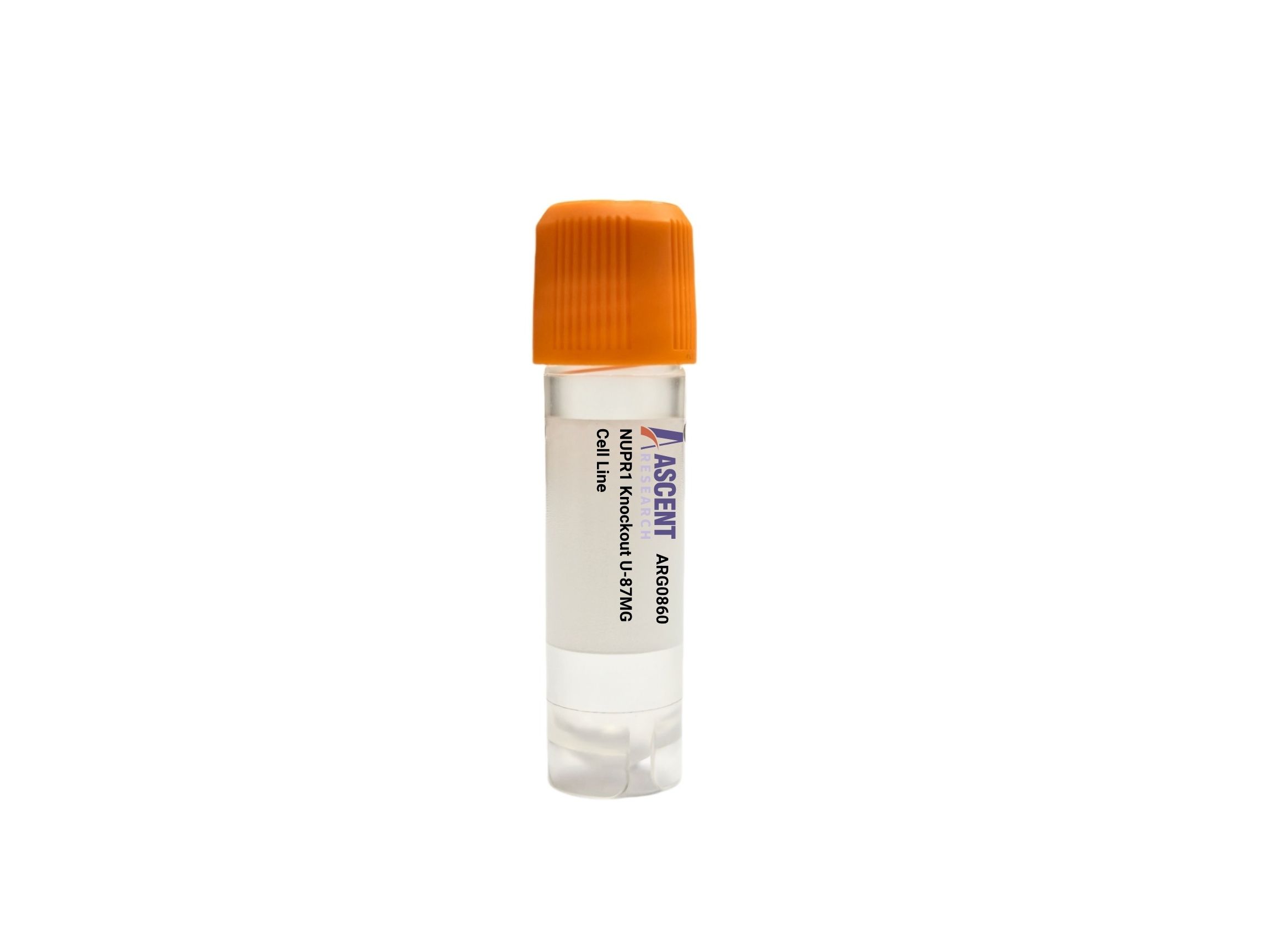
The NUPR1 Knockout U-87MG Cell Line is a CRISPR/Cas9-engineered human cell line designed for constitutive disruption of the NUPR1 gene. This loss-of-function model is derived from the U-87MG glioblastoma cell line and enables targeted investigation of NUPR1-dependent signaling mechanisms. By eliminating NUPR1 expression, researchers can dissect its roles in stress-induced transcriptional co-regulation, cell survival, and chemoresistance pathways.
The host cell line, U-87MG, was established from a female glioblastoma patient and displays adherent epithelial morphology. It is characterized by PTEN deficiency and wild-type p53 status, making it a widely utilized tumorigenic glial cell model. The U-87MG background is particularly relevant for studying glioblastoma biology, as it recapitulates key genetic alterations found in aggressive brain tumors, including aberrant growth factor signaling and defective tumor suppression.
NUPR1 functions as a stress-inducible chromatin-associated transcription cofactor that integrates signals from multiple upstream regulators, including TGF-??1, TNF-??, hypoxia, and DNA-damaging chemotherapeutic agents, as well as transcription factors NF-??B and p53. Upon stimulation, NUPR1 is recruited to target gene promoters through interactions with factors such as p300, SMAD2/3, PCAF, and MSL1, and it transcriptionally modulates downstream effectors including DDIT3, HSPA5, ATF4, BECN1, and CCNA1. This results in enhanced endoplasmic reticulum (ER) stress response and autophagy, ultimately promoting cell survival and chemoresistance. Representative pathway components include TGFBR1, SMAD2/3, NUPR1, p300, DDIT3, and HSPA5, illustrating a signaling axis from TGF-?? receptor activation to stress gene expression.
In the U-87MG glioblastoma context, NUPR1-mediated transcriptional reprogramming contributes to tumor cell adaptation under therapeutic pressure. The PTEN-deficient, p53 wild-type background provides a relevant genetic landscape for examining how stress-responsive cofactors drive malignant progression. NUPR1 knockout in this model allows researchers to probe the molecular basis of temozolomide resistance, uncover compensatory pathways, and evaluate the dependency of glioblastoma cells on autophagy and ER stress for survival.
This knockout cell line supports a broad range of experimental approaches. Western blotting for NUPR1 and downstream targets, RT-qPCR for DDIT3 and HSPA5, and ChIP-qPCR for chromatin occupancy enable molecular characterization. Functional assays such as MTS viability, Annexin V apoptosis, and temozolomide chemosensitivity quantify phenotypic effects, while transwell migration/invasion assays assess metastatic potential. Applications span cancer biology, chemoresistance mechanisms, glioblastoma progression, autophagy regulation, and transcriptional reprogramming under stress. For additional technical information or to discuss custom applications, please contact Ascent Research.