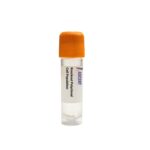
The OASL Knockout Raji Polyclonal Cells are a CRISPR/Cas9-edited polyclonal knockout population of Raji B lymphocytes, designed for loss-of-function analysis of the human OASL gene. This model uses CRISPR-mediated gene disruption in a bulk cell pool to create a heterogeneous knockout system, avoiding clonal selection artifacts. OASL encodes an interferon-stimulated protein that enhances RIG-I signaling, and its ablation enables detailed study of antiviral innate immunity pathways.
Raji is a suspension lymphoblastoid cell line derived from a Burkitt lymphoma patient. It retains EBV positivity and B cell characteristics, making it a standard model for humoral immunity and lymphoma research. The line??s vigorous growth and compatibility with gene editing facilitate the generation of polyclonal knockout pools for functional studies.
OASL is transcriptionally induced by type I and II interferons and acts by binding RIG-I to promote its activation. This interaction enhances MAVS-driven signaling through TRAF3 and TBK1, leading to IRF3/IRF7 phosphorylation and subsequent IFN-?? production. OASL also amplifies STAT1 phosphorylation and expression of ISGs such as ISG15, IFIT1, OAS1, and MX1, thus forming a positive feedback loop. Unlike other OAS proteins, OASL lacks 2??-5??-OAS activity but possesses a ubiquitin-like domain. Alternative isoforms p30 and p59 may differentially modulate RIG-I and ubiquitin pathways.
In Raji cells, OASL knockout offers a means to dissect innate immunity within an EBV+ B cell lymphoma context. EBV factors can alter interferon and NF-??B signaling, and OASL??s role in RIG-I potentiation may impinge on these virally modified networks. The polyclonal knockout population captures the variability inherent in unselected editing, providing a more physiologically relevant ensemble for studying B cell-intrinsic antiviral responses and potential tumor-immune interactions.
Applications include monitoring IFN-?? promoter activity via luciferase assays, quantifying ISG upregulation by RT-qPCR or RNA-seq, detecting STAT1 phosphorylation by phospho-flow or immunoblotting, and measuring viral replication in infection models. Co-immunoprecipitation can probe OASL-RIG-I binding and ubiquitin associations. The model is also suitable for immune modulator screens and interrogating RIG-I/MAVS pathway dynamics. For further support, contact Ascent Research.