Quick Order Cart

Cat. No. ARG0814

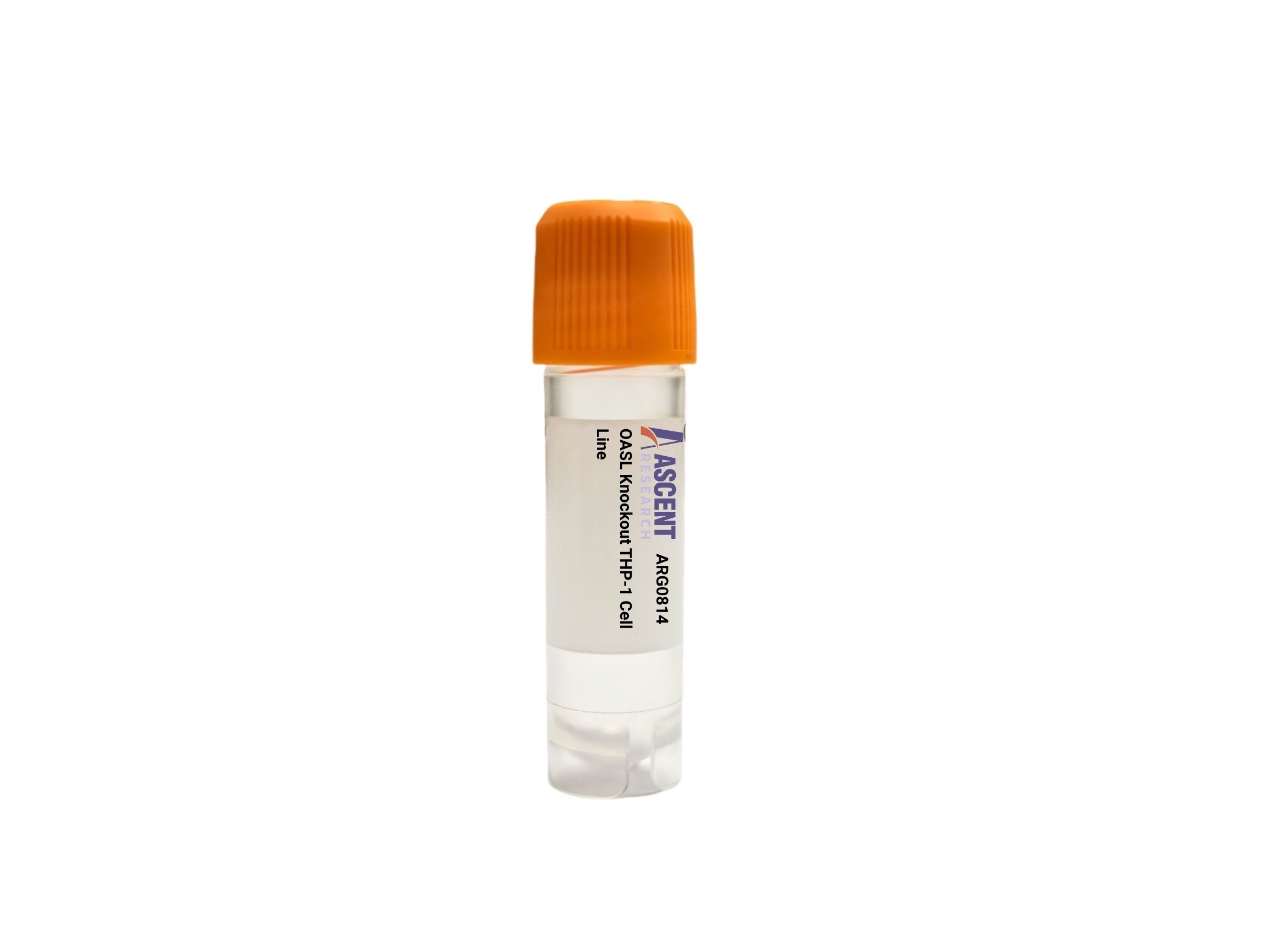
OASL Knockout THP-1 Cell Line

  • Product Type:

    Genome-edited Cells

  • Tissue Source:

    Blood (peripheral blood)

  • Disease:

    Acute monoblastic leukemia

  • Gene Species:

    Homo sapiens (Human)

The OASL Knockout THP-1 Cell Line is a CRISPR/Cas9-edited knockout cell line derived from the human monocytic THP-1 cell line. This model features disruption of the OASL gene, which encodes an interferon-stimulated protein that amplifies RIG-I signaling by binding RIG-I and promoting MAVS-TBK1-IRF3-mediated IFN-?? production. OASL is upregulated by interferons in a positive feedback loop critical for antiviral innate immunity. THP-1 cells are a widely used monocyte model capable of phagocytosis, cytokine release, and differentiation into macrophage-like cells. The OASL knockout line supports research into antiviral responses and interferonopathies, with common applications including VSV-GFP antiviral assays, phospho-IRF3 detection, and transcriptome profiling.

Inquire Now

In stock

Ships next business day


Ask a Question

Shipping Info:

Cryopreserved in vials and shipped on dry ice


Disclaimer:

For Research Use Only

  • Characteristics

    Host Cell

    THP-1

    Age

    1 year

    Sex of Donor

    Male

    Gene Name

    OASL

    Gene Species

    Homo sapiens (Human)

    Gene Identifier

    NCBI Gene ID 8638

  • Culture Conditions

    Temperature

    37°C

    Atmosphere

    5% CO₂

  • Quality Control

    Sterility testing

    Daily monitoring confirms that the cells are free from bacterial, yeast, and fungal contamination.

    Mycoplasma testing

    Negative for mycoplasma through PCR analysis

    Pathogens

    Cells tested negative for HIV-1, HBV, and HCV.

  • Disclaimer

    Intended Use

    This product is intended for laboratory in vitro use only. lt is not intended for diagnostic, therapeutic, or clinical applications.

    Disclaimer

    Ascent Research endeavors to provide accurate and up-to-date product information. However, no warranties or representations are made regarding its completeness or reliability. References to scientific literature and patents are for informational purposes only, and the customer assumes sole responsibility for verifying their accuracy.

    By accepting this product, the customer acknowledges and agrees to assume all risks associated with its receipt, handling, storage, disposal, and use, including compliance with all applicable safety and environmental regulations and precautions. Relevant laws, regulations, and ethical guidelines must be followed in conducting any research, modifications, or derivatives derived from this product.

    This product is provided "AS IS", and except as expressly stated herein, Ascent Research disclaims all other warranties, express or implied. Under no circumstances shall Ascent Research, its affiliates, or representatives be liable for indirect, incidental, consequential, or punitive damages arising from the use of this material. While Ascent Research employs rigorous quality control measures, we shall not be held responsible for damages resulting from misidentification or misinterpretation of the provided materials.

Description

The OASL Knockout THP-1 Cell Line is a CRISPR/Cas9-edited knockout cell line derived from the human monocytic THP-1 cell line through disruption of the OASL gene. This engineered model enables loss-of-function studies of OASL in innate immune signaling. It provides a consistent genetic background for examining OASL-dependent mechanisms without relying on transient silencing methods, making it suitable for a range of functional assays in immunology and virology.

The THP-1 cell line originates from the peripheral blood of an infant with acute monocytic leukemia and is widely used as a model for monocyte and macrophage biology. THP-1 cells display key innate immune functions such as phagocytosis, cytokine production, and differentiation into macrophage-like cells upon stimulation. Their robust type I interferon system makes them especially useful for studying antiviral responses and signal transduction pathways relevant to infectious and autoimmune diseases.

OASL is an interferon-stimulated gene that enhances RIG-I-like receptor signaling. Following viral challenge, OASL binds directly to the RNA sensor RIG-I, facilitating recognition of viral RNA and promoting the formation of a signaling complex that includes the adaptor MAVS and the E3 ligase TRIM25. This complex activates the kinases TBK1 and IKK??, which phosphorylate transcription factors IRF3 and IRF7, culminating in the transcriptional induction of type I interferons such as IFN-??. Because OASL expression is strongly induced by interferons, it establishes a positive feedback loop that amplifies antiviral responses. The pathway involves additional mediators like TRAF3, and OASL acts downstream of interferon signaling and upstream of IRF3 phosphorylation, thereby positioning it as a key amplifier of innate immunity.

Disrupting OASL in THP-1 cells ablates a critical feed-forward mechanism that enhances interferon production. This knockout model is highly relevant for dissecting RIG-I-mediated immune responses to viruses like hepatitis C, influenza, and SARS-CoV-2. Additionally, given the role of aberrant type I interferon signaling in systemic lupus erythematosus and other autoimmune conditions, the line offers a tool to explore how OASL deficiency alters immune homeostasis and may contribute to disease pathogenesis.

The OASL knockout THP-1 cell line supports diverse experimental workflows. Antiviral susceptibility can be measured using GFP-expressing vesicular stomatitis virus (VSV-GFP), while pathway activation is assessed by phospho-IRF3 western blot or IFN-?? ELISA. Gene expression changes can be profiled via RNA-seq, and protein interactions probed by co-immunoprecipitation of OASL and RIG-I. The model is also suitable for IFN-?? promoter luciferase reporter assays and intracellular cytokine staining by flow cytometry. These applications enable studies in antiviral innate immunity, macrophage infection models, interferon regulation, and autoimmune disease research. For more information, please contact Ascent Research.


Reset Password

    Reach Us Questions? Click Me Here!

    Fill out the form below and a member of our team will contact you shortly!

    *Required field


      Reach Us

      Fill out the form below and a member of our team will contact you shortly!

      *Required field

      Product Inquiry (Optional)