Quick Order Cart

Cat. No. ARG1978

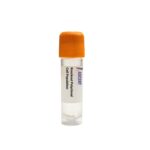
OTUD5 Knockout Raji Polyclonal Cells

  • Product Type:

    Polyclonal Cell Population

  • Species:

    Homo sapiens (Human)

  • Tissue Source:

    Bone

  • Disease:

    Burkitt lymphoma

The OTUD5 Knockout Raji Polyclonal Cells are a CRISPR/Cas9-edited polyclonal knockout population of human Raji B lymphocytes, lacking functional OTUD5 deubiquitinase. OTUD5 normally suppresses type I interferon signaling by removing ubiquitin from TRAF3 and TRIM25, key adaptors in RIG-I-like receptor pathways. Loss of OTUD5 enhances innate immune activation. This product is suited for studying antiviral signaling, autoimmune disease mechanisms, and B lymphocyte biology. Assays such as Western blotting, RT-qPCR, and reporter assays can be used to monitor interferon pathway activity and B cell responses. Contact Ascent Research for more details.

Inquire Now

In stock

Ships next business day


Ask a Question

Shipping Info:

Cryopreserved in vials and shipped on dry ice


Disclaimer:

For Research Use Only

  • Characteristics

    Host Cell

    Raji

    Cell Type

    B cell line

    Sex of Donor

    Male

    Age

    11 years

    Derived From Site

    In situ; Maxilla

    Gene Name

    OTUD5

    Gene Identifier

    NCBI Gene ID 55593

    Morphology

    Lymphoblast-like

    Growth Mode

    Suspension

    Storage

    Liquid nitrogen (LN2)

  • Culture Conditions

    Growth medium

    RPMI 1640

    Supplement(s)

    10% Fetal Bovine Serum, 1% Penicillin-Streptomycin Solution

    Temperature

    37°C

    Atmosphere

    5% CO₂

  • Quality Control

    Sterility testing

    The bacterial, yeast, and fungi are not detected in these cells by daily monitor.

    Mycoplasma testing

    Negative for mycoplasma through PCR analysis

  • Disclaimer

    Intended Use

    This product is intended for laboratory in vitro use only. lt is not intended for diagnostic, therapeutic, or clinical applications.

    Disclaimer

    Ascent Research endeavors to provide accurate and up-to-date product information. However, no warranties or representations are made regarding its completeness or reliability. References to scientific literature and patents are for informational purposes only, and the customer assumes sole responsibility for verifying their accuracy.

    By accepting this product, the customer acknowledges and agrees to assume all risks associated with its receipt, handling, storage, disposal, and use, including compliance with all applicable safety and environmental regulations and precautions. Relevant laws, regulations, and ethical guidelines must be followed in conducting any research, modifications, or derivatives derived from this product.

    This product is provided "AS IS", and except as expressly stated herein, Ascent Research disclaims all other warranties, express or implied. Under no circumstances shall Ascent Research, its affiliates, or representatives be liable for indirect, incidental, consequential, or punitive damages arising from the use of this material. While Ascent Research employs rigorous quality control measures, we shall not be held responsible for damages resulting from misidentification or misinterpretation of the provided materials.

Description

The OTUD5 Knockout Raji Polyclonal Cells are a CRISPR/Cas9-edited polyclonal knockout population derived from the human Raji B lymphocyte line. They feature targeted disruption of OTUD5, ablating functional deubiquitinase (DUBA). The polyclonal format provides a heterogeneous cell pool that avoids clonal bias and better mimics primary immune cell variability. This loss-of-function model suits researchers studying OTUD5 in a well-characterized B cell context.

Raji cells are an EBV-positive Burkitt lymphoma B lymphocyte line widely used for humoral immunity and antibody production studies. They retain key B cell features, serving as a robust model for B cell activation, proliferation, and immune signaling. Their viral association also facilitates host-pathogen interaction and oncogenesis research, providing a physiologically relevant system for OTUD5 investigation.

OTUD5 is a deubiquitinase that negatively regulates type I interferon signaling by deubiquitinating TRAF3 and TRIM25, essential adaptors in the RIG-I-like receptor (RLR) pathway. Upon viral RNA sensing by RIG-I and MAVS, TRAF3 and TRIM25 are ubiquitinated, propagating signals via TBK1 and IKK?? to phosphorylate IRF3/IRF7, inducing IFN-?? and ISGs. OTUD5 removes K63-linked ubiquitin chains from these substrates, attenuating the cascade and serving as a critical checkpoint. Its expression is induced by type I interferon and JAK-STAT, forming a negative feedback loop. OTUD5 also intersects with Toll-like receptor, NF-??B, and DNA damage pathways, and deubiquitinates p53, connecting innate immunity to tumor suppression.

In Raji polyclonal knockout cells, loss of OTUD5 removes this inhibitory brake, leading to heightened and sustained ubiquitination of TRAF3 and TRIM25 upon pathway stimulation. Consequently, downstream TBK1/IKK?? activation, IRF3/IRF7 phosphorylation, and type I interferon production are expected to be amplified. Given Raji??s B lymphocyte identity and EBV positivity, this model is particularly valuable for exploring how dysregulated deubiquitinase activity influences antiviral innate immunity, autoinflammatory responses, and B cell malignancies. The polyclonal nature minimizes artifacts from clonal adaptation, making the population more representative of in vivo heterogeneity and suitable for functional screens and drug testing.

Researchers can employ diverse techniques to characterize this knockout model. Western blotting monitors OTUD5 ablation, TRAF3/TRIM25 expression, and IRF3 phosphorylation; RT-qPCR quantifies IFN-?? and ISG transcripts; co-immunoprecipitation reveals TRAF3 ubiquitination; immunofluorescence tracks IRF3 nuclear translocation. Functional assays include dual-luciferase IFN-?? promoter reporters, ELISA for secreted IFN-??, and flow cytometry for B cell markers. The cells support transfection and viral infection for reconstitution and mechanistic studies. Applications encompass innate immunity, autoimmunity modeling (e.g., SLE), cancer immunotherapy, and antiviral research. For inquiries, contact Ascent Research.


Reset Password

    Reach Us Questions? Click Me Here!

    Fill out the form below and a member of our team will contact you shortly!

    *Required field


      Reach Us

      Fill out the form below and a member of our team will contact you shortly!

      *Required field

      Product Inquiry (Optional)