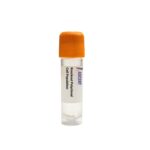
The OXSR1 Knockout Raji Polyclonal Cells are a CRISPR/Cas9-mediated gene-edited polyclonal knockout cell population from the Raji B lymphoblastoid line. This product consists of a heterogeneous mix of cells with targeted disruptions in the OXSR1 gene, creating a loss-of-function model suitable for studying this kinase’s role in signal transduction and ion transport. The polyclonal format offers a realistic representation of genetic variation post-editing, avoiding biases from single-cell clonal expansion. These cells serve as a versatile tool for dissecting OXSR1-dependent pathways in a B-cell context.
Raji cells, derived from a Burkitt lymphoma patient, are Epstein-Barr virus-positive suspension lymphoblastoid cells. Widely used as a B lymphocyte model, they are employed to investigate immunoglobulin production, antigen presentation, and lymphoma biology. The transformed phenotype supports robust proliferation and easy culture manipulation, while EBV positivity enables studies of viral?Chost interactions. This background makes Raji an ideal host for exploring how OXSR1 loss impacts malignant B-cell physiology and stress signaling networks.
OXSR1 encodes a serine/threonine kinase within the WNK-OSR1/SPAK cascade, phosphorylated and activated by WNK1 or WNK4 kinases in response to hyperosmotic or oxidative stress. Once active, OXSR1 phosphorylates SLC12A cotransporters??NKCC1, NKCC2, and NCC??boosting their ion transport activity to regulate cell volume and blood pressure. Key interacting partners include the related kinase SPAK/STK39 and the adaptor MO25/CAB39. By transducing environmental stress signals into ion flux modulation, OXSR1 maintains cellular osmotic equilibrium.
Knocking out OXSR1 in Raji cells allows investigation of its role in B-cell ion homeostasis and lymphoma biology. B lymphocytes rely on ion channels for antigen receptor signaling and volume changes during activation; OXSR1 disruption may impair these processes, affecting proliferation, survival, or immune function. Furthermore, since OXSR1 is linked to hypertension and renal salt wasting, this model could reveal uncharacterized contributions to hematopoietic disorders. Studying the WNK-OSR1 axis in a lymphoma context might illuminate new therapeutic vulnerabilities.
Researchers can apply these cells to Western blotting for OXSR1 protein, RT-qPCR for mRNA quantification, or phospho-immunoblotting to detect downstream NKCC1 activation. Ion flux assays (rubidium uptake) and cell volume measurements assess transporter function, while flow cytometry monitors apoptosis and cell cycle changes. The model also supports RNA-seq for transcriptomic profiling under stress and proliferation assays for phenotype characterization. Additionally, it serves in inhibitor screening and cancer drug target validation for the WNK-OSR1 pathway. For further inquiries, contact Ascent Research.