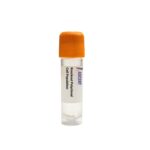
The P4HA1 Knockout Raji Polyclonal Cells product comprises a CRISPR/Cas9-edited polyclonal knockout cell population in which the P4HA1 gene has been disrupted in the human Raji B lymphocyte line. This loss-of-function model provides a genetically heterogeneous pool of edited cells, enabling robust and reproducible studies of P4HA1-dependent processes without requiring single-cell cloning. The polyclonal format preserves population-level biological variability while maintaining targeted gene ablation, making it suitable for high-throughput screening and functional assays where clonal artifacts are a concern. Researchers can use these cells to dissect the roles of P4HA1 in collagen hydroxylation, extracellular matrix (ECM) remodeling, and hypoxia signaling.
The host Raji cell line is an Epstein-Barr virus (EBV)-positive B lymphocyte model originating from a Burkitt’s lymphoma patient. It grows in suspension, expresses mature B-cell markers such as CD19, CD20, and CD22, and exhibits robust proliferative capacity characteristic of this aggressive lymphoma subtype. Raji cells are widely employed in immunology and oncology research to study B-cell receptor signaling, lymphomagenesis, and tumor microenvironment interactions. Their hematopoietic origin and suspension growth mode offer a distinctive platform for investigating how P4HA1 loss influences ECM adhesion and hypoxia response in a lymphoma context, complementing studies in adherent cell models.
P4HA1 encodes the catalytic alpha subunit of prolyl 4-hydroxylase, which hydroxylates proline residues on nascent collagen chains, a post-translational modification essential for triple helix formation and ECM deposition. It also hydroxylates HIF-1?? under normoxic conditions, marking it for VHL-mediated ubiquitination and proteasomal degradation. Key upstream regulators include TGF-??, HIF-1??, NF-??B, and SMAD transcription factors, while downstream targets encompass collagen I, collagen IV, lysyl oxidase (LOX), and matrix metalloproteinases (MMPs). The enzyme functions in a complex with P4HB (the beta subunit) and requires cofactors Fe2?, 2-oxoglutarate, and ascorbate.
By competing for hydroxylation, P4HA1 can indirectly stabilize HIF-1?? under limited enzyme activity, linking ECM synthesis to oxygen sensing. In the Raji lymphoma background, P4HA1 knockout disrupts collagen maturation and may impair cell?CECM adhesion, a process relevant to lymphoma cell homing and dissemination. Although Raji cells are non-adherent, they interact with stromal ECM components in vivo, and P4HA1 loss could alter tumor-stroma crosstalk and metastatic potential. Additionally, perturbed HIF-1?? hydroxylation can dysregulate hypoxia-responsive gene programs, potentially affecting angiogenesis, metabolic adaptation, and resistance to apoptosis.
These polyclonal knockout cells thus serve as a physiologically relevant platform to examine how collagen prolyl hydroxylation and oxygen sensing converge to influence lymphoma progression, immune evasion, and therapeutic vulnerability. Typical applications include exploring ECM biology and tumor microenvironment interactions via transwell invasion assays, collagen gel contraction assays, and cell adhesion assays. The model is well-suited for hypoxia response studies using luciferase reporters and RNA-seq profiling of HIF target genes. Researchers can investigate fibrosis mechanisms, cancer metastasis, and drug screening for collagen disorders or hypoxia pathway inhibitors. Techniques such as Western blotting for collagen hydroxylation status, RT-qPCR for MMP and LOX expression, and immunofluorescence for ECM proteins are readily combined with this knockout tool. For further technical details and ordering information, please contact Ascent Research.