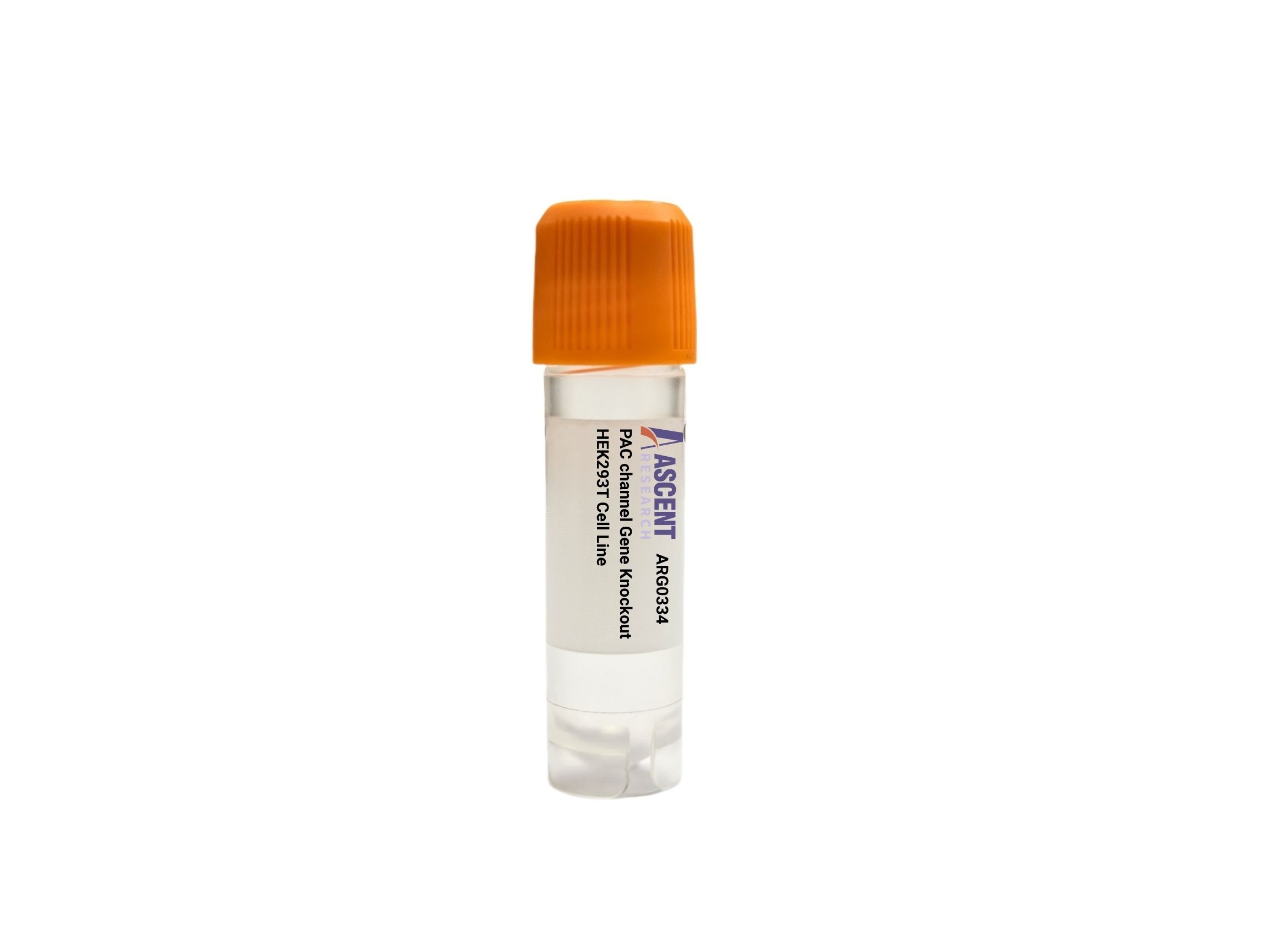
The PAC Channel Gene Knockout HEK293T Cell Line is a CRISPR/Cas9-edited knockout cell line derived from human embryonic kidney epithelial cells. This product features targeted disruption of the PAC channel gene, which encodes a proton-activated chloride channel critical for acid-induced chloride efflux. The knockout allele eliminates functional PAC protein expression in a stable cell pool, providing a consistent loss-of-function background. Researchers can utilize this model to study PAC-related ion transport without endogenous gene interference, facilitating detailed mechanistic analyses of pH-regulated chloride signaling.
The host cell line, HEK293T, is a derivative of the HEK293 line that stably expresses the SV40 large T antigen. This antigen facilitates episomal replication of plasmids containing the SV40 origin of replication, enhancing transient and stable transfections. HEK293T cells are human embryonic kidney epithelial cells known for their high transfection efficiency and susceptibility to adenovirus and SV40-mediated transformation. These characteristics make them a robust platform for gene function analysis, protein expression, and viral production, providing a reliable background for CRISPR/Cas9-mediated gene knockout studies.
The PAC channel acts as a primary proton sensor, directly gated by extracellular H+ to permit chloride efflux. This proton-activated chloride channel underpins pH homeostasis and cell volume regulation through chloride movement. Upstream regulators include low pH and acidic stimuli, which trigger channel opening, while downstream effectors encompass chloride fluxes that reduce cell volume and depolarize the membrane, potentially engaging apoptotic pathways. Key pathway components involve the PAC protein, intracellular chloride, extracellular pH sensors, and volume-sensitive WNK kinases, which together orchestrate cellular responses to acid stress. Consequently, PAC knockout disrupts this vital signaling axis, providing a clear model to study proton-chloride coupling.
In the HEK293T background, deletion of PAC eliminates proton-activated chloride currents, rendering cells insensitive to acidic microenvironmental stimuli. This disruption impairs normal pH-coupled chloride flux and volume regulation, which is critical in acidosis-related pathologies. The knockout cell line serves as a precise genetic model to investigate acidotoxicity mechanisms, including potential apoptotic cascades. By uncoupling proton sensing from chloride efflux, it enables detailed interrogation of intracellular pH and volume homeostasis. This system is thus invaluable for studying proton-gated chloride channel functions in disease-relevant contexts.
This knockout cell line is well-suited for exploring proton-sensing chloride channel physiology, acidotoxicity in ischemia and cancer, and neuropathic pain research. It serves as a robust platform for drug screening of PAC modulators and analysis of pH-dependent signaling. Key assays include whole-cell patch-clamp for current measurement, intracellular pH fluorometry, calcein-AM cell volume assays, and annexin V apoptosis detection. Phospho-signaling western blotting can further probe downstream pathways. Collectively, this model accelerates research into chloride-dependent cell functions and therapeutic development. For further information, please contact Ascent Research.