Quick Order Cart

Cat. No. ARG1734

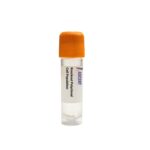
PANX1 Knockout Raji Polyclonal Cells

  • Product Type:

    Polyclonal Cell Population

  • Species:

    Homo sapiens (Human)

  • Tissue Source:

    Bone

  • Disease:

    Burkitt lymphoma

PANX1 Knockout Raji Polyclonal Cells are a CRISPR/Cas9-edited polyclonal knockout population derived from the Raji B lymphoblastoid cell line, offering a loss-of-function model for the PANX1 ATP release channel. PANX1 is activated by the P2X7 receptor and caspase-3/7, and its disruption impairs purinergic signaling, NLRP3 inflammasome assembly, and IL-1?? secretion. Host Raji cells, an EBV-positive Burkitt lymphoma line, provide a relevant B lymphocyte context for studying hemichannel-mediated ATP egress, apoptosis-driven find-me signals, and cancer cell communication. Ideal for ATP release luciferase assays, dye uptake, IL-1?? ELISA, and for screening PANX1 inhibitors in pain or ischemia research.

Inquire Now

In stock

Ships next business day


Ask a Question

Shipping Info:

Cryopreserved in vials and shipped on dry ice


Disclaimer:

For Research Use Only

  • Characteristics

    Host Cell

    Raji

    Cell Type

    B cell line

    Sex of Donor

    Male

    Age

    11 years

    Derived From Site

    In situ; Maxilla

    Gene Name

    PANX1

    Gene Identifier

    NCBI Gene ID 24145

    Morphology

    Lymphoblast-like

    Growth Mode

    Suspension

    Storage

    Liquid nitrogen (LN2)

  • Culture Conditions

    Growth medium

    RPMI 1640

    Supplement(s)

    10% Fetal Bovine Serum, 1% Penicillin-Streptomycin Solution

    Temperature

    37°C

    Atmosphere

    5% CO₂

  • Quality Control

    Sterility testing

    The bacterial, yeast, and fungi are not detected in these cells by daily monitor.

    Mycoplasma testing

    Negative for mycoplasma through PCR analysis

  • Disclaimer

    Intended Use

    This product is intended for laboratory in vitro use only. lt is not intended for diagnostic, therapeutic, or clinical applications.

    Disclaimer

    Ascent Research endeavors to provide accurate and up-to-date product information. However, no warranties or representations are made regarding its completeness or reliability. References to scientific literature and patents are for informational purposes only, and the customer assumes sole responsibility for verifying their accuracy.

    By accepting this product, the customer acknowledges and agrees to assume all risks associated with its receipt, handling, storage, disposal, and use, including compliance with all applicable safety and environmental regulations and precautions. Relevant laws, regulations, and ethical guidelines must be followed in conducting any research, modifications, or derivatives derived from this product.

    This product is provided "AS IS", and except as expressly stated herein, Ascent Research disclaims all other warranties, express or implied. Under no circumstances shall Ascent Research, its affiliates, or representatives be liable for indirect, incidental, consequential, or punitive damages arising from the use of this material. While Ascent Research employs rigorous quality control measures, we shall not be held responsible for damages resulting from misidentification or misinterpretation of the provided materials.

Description

The PANX1 Knockout Raji Polyclonal Cells are a CRISPR/Cas9-edited polyclonal knockout population derived from Raji B lymphoblastoid cells, designed to disrupt the PANX1 gene. This heterogeneous pool of edited alleles provides a robust loss-of-function model without clonal selection, enabling studies of PANX1-dependent processes in a lymphoid background with reduced clonal bias.

Raji cells originate from an EBV-positive Burkitt lymphoma and serve as a well-established model for B lymphocyte biology, EBV latency, and lymphomagenesis. Their lymphoblastoid phenotype, high proliferative capacity, and expression of key purinergic receptors make them highly suitable for gene disruption experiments aimed at dissecting signaling pathways relevant to hematological malignancies and immune cell communication.

PANX1 encodes a large-pore channel that mediates ATP release, functioning as a hemichannel and, in some settings, forming gap junctions. Its activity is triggered by extracellular ATP via the P2X7 receptor, mechanical stress, and by caspase-3/7 cleavage during apoptosis. Downstream, PANX1-mediated ATP egress activates purinergic P2Y/P2X receptors, driving NLRP3 inflammasome assembly with ASC, leading to caspase-1 activation and IL-1?? secretion. PANX1 interacts with actin and assembles into homomeric complexes. In apoptotic cells, caspase cleavage of PANX1 sustains ATP release, generating a ??find-me?? signal for phagocyte recruitment.

In Raji B cells, PANX1 knockout disrupts ATP release and purinergic signaling, allowing precise dissection of inflammasome activation and apoptotic clearance mechanisms. The cells express endogenous purinergic receptors and inflammasome components, providing a relevant context to study how PANX1 deficiency influences the NLRP3/IL-1?? axis, hemichannel-mediated communication, and tumor microenvironment interactions. This model also offers a non-neuronal platform for studying PANX1-associated neuropathic pain and migraine pathways.

Applications include quantitative ATP release luciferase assays, dye uptake measurements, IL-1?? ELISA, caspase-1 activity assays, western blot, RT-qPCR, and immunofluorescence. The polyclonal knockout cells support drug screening for PANX1 modulators, apoptosis signaling studies, cancer cell communication research, and investigation of ischemia-reperfusion injury. For technical assistance and custom experimental design, contact Ascent Research.


Reset Password

    Reach Us Questions? Click Me Here!

    Fill out the form below and a member of our team will contact you shortly!

    *Required field


      Reach Us

      Fill out the form below and a member of our team will contact you shortly!

      *Required field

      Product Inquiry (Optional)