Security Notice: Please be aware of impersonation attempts using our company name
Legitimate communications from Ascent Research will only come from official @ascentresearch.com email addresses.
Quick Order Cart

Cat. No. ARG0464

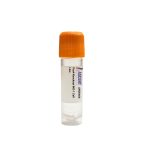
Pax4 Knockout INS-1 Cell Line

  • Product Type:

    Genome-edited Cells

  • Tissue Source:

    Pancreas

  • Gene Species:

    Rattus norvegicus (Rat)

The Pax4 Knockout INS-1 Cell Line is a CRISPR/Cas9-edited rat pancreatic beta cell line engineered for loss-of-function studies of the transcription factor Pax4. Derived from the glucose-responsive INS-1 insulinoma line, this model abolishes Pax4 activity, a key regulator of insulin gene expression and beta cell survival. Pax4 functions downstream of NEUROG3, Notch, and Wnt signals to promote insulin (INS) and Bcl-xL (BCL2L1) expression, maintaining beta cell identity. This knockout cell line is ideal for diabetes research, insulin secretion assays, and screening of beta cell protective compounds.

Inquire Now

In stock

Ships next business day


Ask a Question

Shipping Info:

Cryopreserved in vials and shipped on dry ice


Disclaimer:

For Research Use Only

  • Characteristics

    Host Cell

    INS-1

    Age

    666 days

    Gene Name

    Pax4

    Gene Alias

    paired box 4; MODY9

    Gene Species

    Rattus norvegicus (Rat)

    Gene Identifier

    NCBI Gene ID 83630

    Gene Type

    protein coding gene

    Gene Family

    Paired boxes

  • Culture Conditions

    Temperature

    37°C

    Atmosphere

    5% CO₂

  • Quality Control

    Sterility testing

    Daily monitoring confirms that the cells are free from bacterial, yeast, and fungal contamination.

    Mycoplasma testing

    Negative for mycoplasma through PCR analysis

    Pathogens

    Cells tested negative for HIV-1, HBV, and HCV.

  • Disclaimer

    Intended Use

    This product is intended for laboratory in vitro use only. lt is not intended for diagnostic, therapeutic, or clinical applications.

    Disclaimer

    Ascent Research endeavors to provide accurate and up-to-date product information. However, no warranties or representations are made regarding its completeness or reliability. References to scientific literature and patents are for informational purposes only, and the customer assumes sole responsibility for verifying their accuracy.

    By accepting this product, the customer acknowledges and agrees to assume all risks associated with its receipt, handling, storage, disposal, and use, including compliance with all applicable safety and environmental regulations and precautions. Relevant laws, regulations, and ethical guidelines must be followed in conducting any research, modifications, or derivatives derived from this product.

    This product is provided "AS IS", and except as expressly stated herein, Ascent Research disclaims all other warranties, express or implied. Under no circumstances shall Ascent Research, its affiliates, or representatives be liable for indirect, incidental, consequential, or punitive damages arising from the use of this material. While Ascent Research employs rigorous quality control measures, we shall not be held responsible for damages resulting from misidentification or misinterpretation of the provided materials.

Description

The Pax4 Knockout INS-1 Cell Line is a CRISPR/Cas9-mediated gene-disrupted cell line derived from the rat insulinoma INS-1 parental line. This product enables targeted loss-of-function studies of the Pax4 transcription factor in a glucose-responsive pancreatic beta cell background. The engineered disruption abolishes functional Pax4 protein expression, providing a physiologically relevant model for investigating beta cell development and dysfunction.

The INS-1 cell line originates from an X-ray-induced rat insulinoma and retains key characteristics of native pancreatic beta cells, including glucose-stimulated insulin secretion (GSIS) and expression of beta cell-specific transcription factors. These cells are widely used as a model system for studying beta cell biology and diabetes due to their robust insulin secretory response and maintained beta cell identity.

Pax4 functions as a master regulator of pancreatic beta cell identity, directly activating insulin (INS) and pro-survival factor Bcl-xL (BCL2L1) transcription. Upstream, NEUROG3, Notch ligands DLL1 and JAG1, and Wnt signals via WNT3A, FZD, and CTNNB1 coordinate its expression. Pax4 collaborates with PDX1 and MAFA to sustain the beta cell program, while interacting with HDACs and TLE corepressors to silence alternative endocrine genes. It also maintains expression of PDX1, MAFA, NKX6-1, and CCND1, linking PI3K-AKT-mediated survival to insulin secretion.

Disruption of Pax4 in INS-1 cells results in diminished expression of beta cell markers, severely impaired glucose-stimulated insulin secretion, and increased apoptotic susceptibility. This knockout phenotype mirrors key features of beta cell failure in diabetes, including reduced insulin output and compromised cell survival. Consequently, this cell line provides a robust platform for studying Pax4-dependent regulatory networks and for evaluating therapeutic interventions aimed at restoring beta cell function.

Typical applications include mechanistic investigations of beta cell dysfunction in type 1 and type 2 diabetes, compound screening for protective agents, and detailed analyses of Pax4 transcriptional targets via ChIP-qPCR. Compatible assays comprise GSIS, insulin ELISA, qRT-PCR for INS and PDX1, Western blot for Bcl-xL, apoptosis detection by Annexin V/propidium iodide flow cytometry, and immunofluorescence for insulin. This knockout model also supports co-culture and differentiation studies. For advanced technical support or custom inquiries, please contact Ascent Research.


Reset Password

    Reach Us Questions? Click Me Here!

    Fill out the form below and a member of our team will contact you shortly!

    *Required field


      Reach Us

      Fill out the form below and a member of our team will contact you shortly!

      *Required field

      Product Inquiry (Optional)