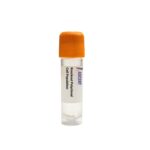
The PCGF1 Knockout Raji Polyclonal Cells are a CRISPR/Cas9-edited polyclonal knockout population derived from the Raji B lymphocyte line, designed for targeted disruption of the PCGF1 gene. Generated through CRISPR/Cas9-mediated gene disruption, this product consists of a heterogeneous pool of cells bearing diverse loss-of-function mutations, avoiding clonal selection bias. It provides a robust model for investigating Polycomb repressive complex 1 (PRC1)-mediated gene silencing and its contributions to B-cell biology and lymphoma. The cells are supplied as a ready-to-use stock for advanced epigenetic and cancer research.
The Raji host cell line is an EBV-positive B lymphocyte line established from a Burkitt lymphoma patient, serving as a model for Burkitt lymphoma and other B-cell malignancies. It is widely used to study B-cell receptor signaling, lymphomagenesis, and EBV-associated oncogenesis. Raji cells display rapid growth and activation of oncogenic pathways such as MYC and NF-??B, with EBV contributing additional epigenetic regulation that influences Polycomb-mediated silencing.
PCGF1 is a core PRC1 component that partners with RING1B to catalyze H2AK119ub, a repressive histone mark. It interacts with CBX2/4/8, PHC1/2, and RYBP to form variant PRC1 complexes that cooperate with PRC2 (EZH2, SUZ12, EED) and H3K27me3 to silence targets such as CDKN2A, HOX clusters, and CDKN1A. In Raji cells, PCGF1 activity is modulated by Notch signaling, BCR activation, and MYC, integrating proliferative signals with epigenetic control.
Disruption of PCGF1 in Raji cells derepresses tumor suppressor genes and alters PRC1-dependent chromatin silencing, potentially attenuating malignant phenotypes. The EBV-positive, MYC-overexpressing background enables dissection of cross-talk between viral oncoproteins, MYC-driven transcription, and Polycomb silencing. This polyclonal model allows study of H2AK119ub dynamics, chromatin accessibility, and gene expression in B-cell lymphoma without clonal artifacts, and is suited for exploring PRC1 inhibitor therapeutics.
Typical applications include chromatin immunoprecipitation (ChIP?CqPCR) to measure H2AK119ub and PRC1 occupancy, RT?CqPCR to quantify derepression of CDKN2A and HOX targets, and Western blotting for H2AK119ub. Functional assays such as cell proliferation, apoptosis (Annexin V), and drug sensitivity testing with PRC1 inhibitors further facilitate drug target validation and functional genomics. The polyclonal nature enables population-level analysis, complementing single-cell approaches. For further information and technical support, please contact Ascent Research.