Quick Order Cart

Cat. No. ARG1162

PCLAF Knockout Raji Polyclonal Cells

  • Product Type:

    Polyclonal Cell Population

  • Species:

    Homo sapiens (Human)

  • Tissue Source:

    Bone

  • Disease:

    Burkitt lymphoma

The PCLAF Knockout Raji Polyclonal Cells consist of a CRISPR/Cas9-edited polyclonal knockout population derived from the Raji Burkitt's lymphoma B-lymphocyte line. By disrupting the DNA damage tolerance factor PCLAF, this model allows researchers to interrogate PCNA monoubiquitination and translesion synthesis in a MYC-overexpressing context. PCLAF partners with PCNA and RAD18 to recruit POLH, enabling lesion bypass during replication. Applications span PCNA ubiquitination assays, DNA damage detection (??H2AX), cell cycle and proliferation analysis, and drug sensitivity profiling, supporting lymphoma target validation and inhibitor screening.

Inquire Now

In stock

Ships next business day


Ask a Question

Shipping Info:

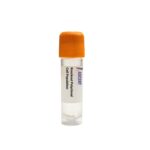
Cryopreserved in vials and shipped on dry ice


Disclaimer:

For Research Use Only

  • Characteristics

    Host Cell

    Raji

    Cell Type

    B cell line

    Sex of Donor

    Male

    Age

    11 years

    Derived From Site

    In situ; Maxilla

    Gene Name

    PCLAF

    Gene Identifier

    NCBI Gene ID 9768

    Morphology

    Lymphoblast-like

    Growth Mode

    Suspension

    Storage

    Liquid nitrogen (LN2)

  • Culture Conditions

    Growth medium

    RPMI 1640

    Supplement(s)

    10% Fetal Bovine Serum, 1% Penicillin-Streptomycin Solution

    Temperature

    37°C

    Atmosphere

    5% CO₂

  • Quality Control

    Sterility testing

    The bacterial, yeast, and fungi are not detected in these cells by daily monitor.

    Mycoplasma testing

    Negative for mycoplasma through PCR analysis

  • Disclaimer

    Intended Use

    This product is intended for laboratory in vitro use only. lt is not intended for diagnostic, therapeutic, or clinical applications.

    Disclaimer

    Ascent Research endeavors to provide accurate and up-to-date product information. However, no warranties or representations are made regarding its completeness or reliability. References to scientific literature and patents are for informational purposes only, and the customer assumes sole responsibility for verifying their accuracy.

    By accepting this product, the customer acknowledges and agrees to assume all risks associated with its receipt, handling, storage, disposal, and use, including compliance with all applicable safety and environmental regulations and precautions. Relevant laws, regulations, and ethical guidelines must be followed in conducting any research, modifications, or derivatives derived from this product.

    This product is provided "AS IS", and except as expressly stated herein, Ascent Research disclaims all other warranties, express or implied. Under no circumstances shall Ascent Research, its affiliates, or representatives be liable for indirect, incidental, consequential, or punitive damages arising from the use of this material. While Ascent Research employs rigorous quality control measures, we shall not be held responsible for damages resulting from misidentification or misinterpretation of the provided materials.

Description

The PCLAF Knockout Raji Polyclonal Cells represent a CRISPR/Cas9-edited polyclonal knockout cell population derived from the human Raji B-lymphocyte suspension line. This product offers a genetically heterogeneous pool in which the PCLAF gene (KIAA0101) has been disrupted, enabling loss-of-function studies without clonal isolation. The polyclonal format is ideal for pooled functional genomics, biochemical assays, and experiments where population-level knockout diversity is advantageous. It provides a ready-to-use tool for interrogating DNA damage tolerance and proliferation pathways in a lymphoma-relevant context.

Raji cells were established from a Burkitt’s lymphoma patient and represent an aggressive B-cell malignancy characterized by MYC deregulation. As suspension-adapted lymphoblastoid cells, they retain active DNA replication and repair machinery, making them a pertinent model for studying genome maintenance under oncogenic stress. This host background is particularly suited to examine how MYC-driven replication stress converges on DNA damage tolerance factors such as PCLAF.

PCLAF encodes the PCNA-associated factor, which directly interacts with proliferating cell nuclear antigen (PCNA) and promotes its monoubiquitination at lysine 164 by the E3 ligase RAD18. This modification serves as a molecular switch that recruits translesion synthesis (TLS) polymerases, notably POLH, to stalled replication forks, enabling lesion bypass and DNA damage tolerance. PCLAF is transcriptionally regulated by E2F transcription factors and MYC, thereby coupling cell cycle entry to genome stability pathways. Key interacting partners include PCNA, RAD18, ubiquitin, and POLH, while REV1 and FANCD2 participate in downstream repair events. Disruption of PCLAF thus compromises PCNA ubiquitination and TLS polymerase loading, sensitizing cells to replication-blocking lesions.

Within the Raji lymphoma background, PCLAF knockout uniquely addresses the dependency of MYC-overexpressing cells on damage tolerance for survival. Impaired PCNA ubiquitination and reduced TLS capacity are expected to increase sensitivity to crosslinking agents such as cisplatin and UV mimetics. This model facilitates identification of synthetic lethal relationships and validation of PCLAF as a potential therapeutic target in Burkitt’s lymphoma and related B-cell malignancies, while also revealing how proliferative signals sustain genome integrity under replicative stress.

Typical experimental applications include quantitative Western blot analysis of PCLAF levels and PCNA ubiquitination status, immunofluorescence detection of ??H2AX foci to assess DNA damage, and flow cytometry for cell cycle distribution. Proliferation can be measured via BrdU incorporation, while the comet assay detects DNA strand break accumulation. Drug sensitivity profiling with DNA-damaging agents tests chemosensitization phenotypes. These assays support target engagement studies, DNA repair inhibitor screening, and mechanistic dissection of translesion synthesis in lymphoma. For additional information or custom requests, please contact Ascent Research.


Reset Password

    Reach Us Questions? Click Me Here!

    Fill out the form below and a member of our team will contact you shortly!

    *Required field


      Reach Us

      Fill out the form below and a member of our team will contact you shortly!

      *Required field

      Product Inquiry (Optional)