Security Notice: Please be aware of impersonation attempts using our company name
Legitimate communications from Ascent Research will only come from official @ascentresearch.com email addresses.
Quick Order Cart

Cat. No. ARG0713

Pcyt2 Knockout RAW 264.7 Cell Line

  • Product Type:

    Genome-edited Cells

  • Tissue Source:

    Ascites

  • Disease:

    Leukemia

  • Gene Species:

    Mus musculus (Mouse)

The Pcyt2 Knockout RAW 264.7 Cell Line is a CRISPR/Cas9-edited macrophage model with targeted disruption of Pcyt2, the rate-limiting enzyme for phosphatidylethanolamine biosynthesis. Pcyt2 activity is regulated by SREBP1c and PPAR?? and is central to the CDP-ethanolamine pathway, affecting membrane phospholipid composition and autophagosome formation via LC3 lipidation. This knockout cell line enables investigation of phospholipid metabolism in innate immunity, autophagy, and inflammatory signaling. Key applications include phagocytosis assays, cytokine profiling, lipidomics, and LC3-based autophagy analysis, providing insights into macrophage function in metabolic disorders and lipodystrophy.

Inquire Now

In stock

Ships next business day


Ask a Question

Shipping Info:

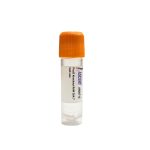
Cryopreserved in vials and shipped on dry ice


Disclaimer:

For Research Use Only

  • Characteristics

    Host Cell

    RAW 264.7

    Age

    Adult

    Sex of Donor

    Male

    Gene Name

    Pcyt2

    Gene Species

    Mus musculus (Mouse)

    Gene Identifier

    NCBI Gene ID 68671

  • Culture Conditions

    Temperature

    37°C

    Atmosphere

    5% CO₂

  • Quality Control

    Sterility testing

    Daily monitoring confirms that the cells are free from bacterial, yeast, and fungal contamination.

    Mycoplasma testing

    Negative for mycoplasma through PCR analysis

    Pathogens

    Cells tested negative for HIV-1, HBV, and HCV.

  • Disclaimer

    Intended Use

    This product is intended for laboratory in vitro use only. lt is not intended for diagnostic, therapeutic, or clinical applications.

    Disclaimer

    Ascent Research endeavors to provide accurate and up-to-date product information. However, no warranties or representations are made regarding its completeness or reliability. References to scientific literature and patents are for informational purposes only, and the customer assumes sole responsibility for verifying their accuracy.

    By accepting this product, the customer acknowledges and agrees to assume all risks associated with its receipt, handling, storage, disposal, and use, including compliance with all applicable safety and environmental regulations and precautions. Relevant laws, regulations, and ethical guidelines must be followed in conducting any research, modifications, or derivatives derived from this product.

    This product is provided "AS IS", and except as expressly stated herein, Ascent Research disclaims all other warranties, express or implied. Under no circumstances shall Ascent Research, its affiliates, or representatives be liable for indirect, incidental, consequential, or punitive damages arising from the use of this material. While Ascent Research employs rigorous quality control measures, we shall not be held responsible for damages resulting from misidentification or misinterpretation of the provided materials.

Description

The Pcyt2 Knockout RAW 264.7 Cell Line is a CRISPR/Cas9-edited macrophage model featuring targeted disruption of the Pcyt2 gene in the Raw 264.7 murine macrophage background. This knockout cell line serves as a powerful tool for dissecting the role of the CDP-ethanolamine pathway in phospholipid metabolism and innate immune cell function. By eliminating Pcyt2 expression, researchers can investigate de novo phosphatidylethanolamine (PE) synthesis and its downstream effects on membrane biology, autophagy, and macrophage-driven processes.

Raw 264.7 cells are a widely used BALB/c-derived macrophage line that recapitulates key features of primary macrophages, including robust phagocytic activity, cytokine secretion, and responsiveness to inflammatory stimuli. They provide a genetically tractable platform for studying macrophage biology in health and disease. This immortalized line maintains the ability to polarize toward different activation states and is commonly employed in studies of infection, inflammation, and metabolic signaling.

Pcyt2 encodes CTP:phosphoethanolamine cytidylyltransferase, the rate-limiting enzyme in the CDP-ethanolamine branch of PE biosynthesis. Pcyt2 activity is transcriptionally regulated by SREBP1c and PPAR?? in response to insulin and nutritional cues. The enzyme catalyzes the formation of CDP-ethanolamine from phosphoethanolamine and CTP, which subsequently contributes to the production of PE, a major membrane phospholipid. Downstream, PE abundance directly influences autophagosome formation through LC3 lipidation, mitochondrial function, and membrane lipid remodeling. Pcyt2 also intersects with the phosphatidylethanolamine methyltransferase (PEMT) pathway and interacts with factors such as creatine kinase.

In macrophages, PE is essential for membrane curvature during phagocytosis and for the biogenesis of autophagosomes that clear intracellular pathogens and damaged organelles. The absence of Pcyt2-mediated PE synthesis can therefore compromise phagocytic capacity, autophagy flux, and inflammatory cytokine output, linking phospholipid metabolism to innate immune effector functions. This knockout model enables dissection of how lipid composition governs macrophage activation and the interplay between metabolic and immune signaling pathways.

Researchers can employ this cell line to explore PE-dependent processes in innate immunity, including phagocytosis assays, LC3 lipidation western blotting, cytokine ELISA profiling, and lipidomics analysis. It is also suitable for investigating mitochondrial membrane potential and autophagy-related signaling. Additionally, the line supports disease modeling efforts in lipodystrophy and metabolic disorders where Pcyt2 deficiency is implicated. For further information, please contact Ascent Research.


Reset Password

    Reach Us Questions? Click Me Here!

    Fill out the form below and a member of our team will contact you shortly!

    *Required field


      Reach Us

      Fill out the form below and a member of our team will contact you shortly!

      *Required field

      Product Inquiry (Optional)