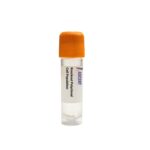
The PDE6D Knockout Raji Polyclonal Cells are a CRISPR/Cas9-edited polyclonal knockout cell population targeting the PDE6D gene in a human Burkitt lymphoma B lymphocyte background. This loss-of-function model, generated by CRISPR/Cas9-mediated gene disruption, maintains population heterogeneity while eliminating PDE6D expression, enabling studies of prenylation-dependent protein trafficking in B cells.
The Raji cell line is a human Burkitt lymphoma B lymphocyte model widely used in immunology and oncology. These suspension cells express surface immunoglobulin and retain features such as antigen presentation, making them suitable for B-cell receptor signaling and lymphomagenesis studies. Their malignant origin provides a relevant context for investigating oncogenic signaling dysregulation in B-cell malignancies.
PDE6D encodes a prenyl-binding protein that solubilizes and traffics prenylated proteins, including the PDE6 catalytic subunits PDE6A and PDE6B and small GTPases such as Ras and Rho family members. As a component of the rod cGMP phosphodiesterase holoenzyme, PDE6D interacts with PDE6G and participates in the phototransduction cascade by regulating cGMP hydrolysis. Its trafficking function depends on interactions with Arl2 and Arl3, while its expression in photoreceptors is controlled by CRX and NRL transcription factors. Knockout of PDE6D therefore disrupts membrane localization of prenylated proteins, impairing G protein signaling and phototransduction.
In Raji B lymphocytes, PDE6D knockout provides a model to examine prenylation-dependent trafficking in immune signaling. B-cell receptor signaling requires membrane-localized Ras GTPases, a process compromised by PDE6D loss. Aberrant prenylation is associated with B-cell malignancies, so this knockout enables dissection of PDE6D’s role in lymphomagenesis and could reveal altered subcellular distribution of prenylated proteins and ciliogenesis defects.
These cells are suitable for phospho-ERK flow cytometry after BCR stimulation to assess MAPK pathway activity, confocal microscopy to track mislocalization of prenylated proteins, and proliferation assays to evaluate growth dependency on PDE6D. Additional applications include Western blotting for PDE6D validation and co-immunoprecipitation to study interactions with Arl2/Arl3. For further information, please contact Ascent Research.