Quick Order Cart

Cat. No. ARG1219

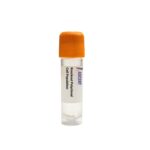
PDLIM5 Knockout Raji Polyclonal Cells

  • Product Type:

    Polyclonal Cell Population

  • Species:

    Homo sapiens (Human)

  • Tissue Source:

    Bone

  • Disease:

    Burkitt lymphoma

The PDLIM5 Knockout Raji Polyclonal Cells represent a genetically disrupted polyclonal population of the Raji Burkitt lymphoma B lymphocyte line, targeting the PDLIM5 gene. PDLIM5 functions as an adaptor linking protein kinase C (PKC) to the actin cytoskeleton through direct binding to alpha-actinin, playing a critical role in focal adhesion and cell migration. This model enables dissection of PDLIM5-dependent processes in B-cell malignancy, including cytoskeletal dynamics, adhesion, and PKC-mediated signaling. Applications such as cell adhesion assays, Transwell migration, immunofluorescence, and phospho-signaling analysis support functional investigations in lymphoma biology.

Inquire Now

In stock

Ships next business day


Ask a Question

Shipping Info:

Cryopreserved in vials and shipped on dry ice


Disclaimer:

For Research Use Only

  • Characteristics

    Host Cell

    Raji

    Cell Type

    B cell line

    Sex of Donor

    Male

    Age

    11 years

    Derived From Site

    In situ; Maxilla

    Gene Name

    PDLIM5

    Gene Identifier

    NCBI Gene ID 10611

    Morphology

    Lymphoblast-like

    Growth Mode

    Suspension

    Storage

    Liquid nitrogen (LN2)

  • Culture Conditions

    Growth medium

    RPMI 1640

    Supplement(s)

    10% Fetal Bovine Serum, 1% Penicillin-Streptomycin Solution

    Temperature

    37°C

    Atmosphere

    5% CO₂

  • Quality Control

    Sterility testing

    The bacterial, yeast, and fungi are not detected in these cells by daily monitor.

    Mycoplasma testing

    Negative for mycoplasma through PCR analysis

  • Disclaimer

    Intended Use

    This product is intended for laboratory in vitro use only. lt is not intended for diagnostic, therapeutic, or clinical applications.

    Disclaimer

    Ascent Research endeavors to provide accurate and up-to-date product information. However, no warranties or representations are made regarding its completeness or reliability. References to scientific literature and patents are for informational purposes only, and the customer assumes sole responsibility for verifying their accuracy.

    By accepting this product, the customer acknowledges and agrees to assume all risks associated with its receipt, handling, storage, disposal, and use, including compliance with all applicable safety and environmental regulations and precautions. Relevant laws, regulations, and ethical guidelines must be followed in conducting any research, modifications, or derivatives derived from this product.

    This product is provided "AS IS", and except as expressly stated herein, Ascent Research disclaims all other warranties, express or implied. Under no circumstances shall Ascent Research, its affiliates, or representatives be liable for indirect, incidental, consequential, or punitive damages arising from the use of this material. While Ascent Research employs rigorous quality control measures, we shall not be held responsible for damages resulting from misidentification or misinterpretation of the provided materials.

Description

The PDLIM5 Knockout Raji Polyclonal Cells comprise a heterogeneous CRISPR/Cas9-edited Raji B lymphocyte population with targeted disruption of the PDLIM5 gene. This polyclonal knockout model is supplied as a mixed population, enabling bulk analysis of PDLIM5 loss of function without clonal isolation. It serves as a versatile tool for examining the scaffold protein’s contributions to B-cell adhesion, migration, and signaling.

The Raji cell line originates from a male patient with Epstein-Barr virus-associated Burkitt lymphoma. As a B lymphocyte model, it retains key features of humoral immunity, including antibody secretion and antigen presentation. Raji cells are widely employed to explore oncogenic signaling, B-cell receptor biology, and lymphoma pathogenesis, making them an appropriate host for studying cytoskeletal dynamics in a malignant context.

PDLIM5 acts as a multifunctional adaptor that physically bridges protein kinase C (PKC) to the actin cytoskeleton via direct interactions with alpha-actinin and actin. This scaffolding positions PKC near its substrates to modulate focal adhesion dynamics, cell adhesion, and migration. PDLIM5 is activated downstream of integrin signaling and mechanical stress, which trigger FAK-mediated phosphorylation events. In turn, PDLIM5 regulates actin polymerization and focal adhesion turnover, thereby coordinating cell morphology and motility. Additional binding partners such as 14-3-3 proteins and the ubiquitin ligase NEDD4 suggest involvement in broader signaling and degradation networks.

In Raji lymphoma cells, ablation of PDLIM5 provides a system to investigate how its loss impacts B-cell adhesion to extracellular matrix and cellular motility??processes that are often dysregulated in hematologic malignancies. The polyclonal knockout population allows assessment of collective cell behavior, reflecting the heterogeneity of tumor populations. This model is particularly valuable for studying the interplay between PKC signaling and actin cytoskeleton remodeling in the context of lymphoma progression.

Researchers can utilize these cells for a variety of experimental approaches, including quantitative cell adhesion assays to measure attachment to fibronectin or VCAM-1, Transwell migration studies to evaluate chemotactic responses, and immunofluorescence visualization of focal adhesion complexes. The knockout model supports molecular characterization through Western blotting, RT-qPCR, and co-immunoprecipitation to confirm target ablation and probe PDLIM5 interactors. Additionally, phospho-specific flow cytometry can reveal perturbations in PKC-mediated signaling cascades. The PDLIM5 Knockout Raji Polyclonal Cells are also suitable for functional complementation by reintroducing PDLIM5 variants, aiding structure?Cfunction analyses. For further technical details or personalized support, please reach out to Ascent Research.


Reset Password

    Reach Us Questions? Click Me Here!

    Fill out the form below and a member of our team will contact you shortly!

    *Required field


      Reach Us

      Fill out the form below and a member of our team will contact you shortly!

      *Required field

      Product Inquiry (Optional)