Quick Order Cart

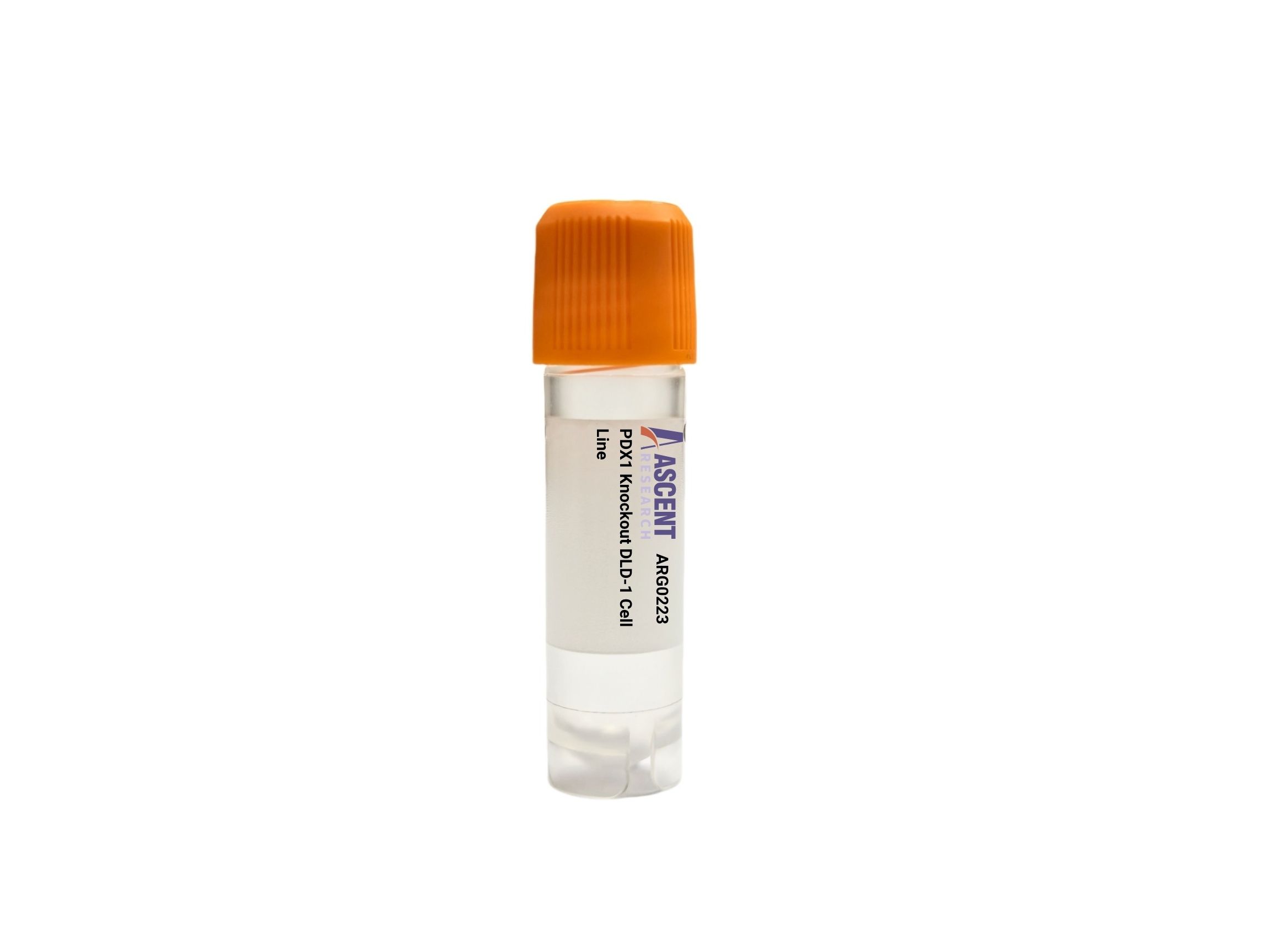
Cat. No. ARG0223

PDX1 Knockout DLD-1 Cell Line

  • Product Type:

    Genome-edited Cells

  • Tissue Source:

    Large intestine (colon)

  • Disease:

    Adenocarcinoma

  • Gene Species:

    Homo sapiens (Human)

The PDX1 Knockout DLD-1 Cell Line is a CRISPR/Cas9-edited knockout cell line that disrupts the PDX1 gene in human colorectal adenocarcinoma DLD-1 cells. PDX1 encodes a homeodomain transcription factor essential for pancreatic development and ??-cell function, and its ectopic expression has been tied to Wnt-driven colorectal tumorigenesis. This cell line provides a defined loss-of-function model for studying PDX1-mediated gene regulation, including its interactions with PBX1 and MEIS1 and its transcriptional control of effectors such as INS and SST. Applications range from drug target validation to mechanistic dissection of PDX1??s role in cancer cell proliferation and metabolic signaling.

Inquire Now

In stock

Ships next business day


Ask a Question

Shipping Info:

Cryopreserved in vials and shipped on dry ice


Disclaimer:

For Research Use Only

  • Characteristics

    Host Cell

    DLD-1

    Morphology

    Epithelial-like

    Age

    Adult

    Gene Name

    PDX1

    Gene Species

    Homo sapiens (Human)

    Gene Identifier

    NCBI Gene ID 3651

  • Culture Conditions

    Temperature

    37°C

    Atmosphere

    5% CO₂

  • Quality Control

    Sterility testing

    Daily monitoring confirms that the cells are free from bacterial, yeast, and fungal contamination.

    Mycoplasma testing

    Negative for mycoplasma through PCR analysis

    Pathogens

    Cells tested negative for HIV-1, HBV, and HCV.

  • Disclaimer

    Intended Use

    This product is intended for laboratory in vitro use only. lt is not intended for diagnostic, therapeutic, or clinical applications.

    Disclaimer

    Ascent Research endeavors to provide accurate and up-to-date product information. However, no warranties or representations are made regarding its completeness or reliability. References to scientific literature and patents are for informational purposes only, and the customer assumes sole responsibility for verifying their accuracy.

    By accepting this product, the customer acknowledges and agrees to assume all risks associated with its receipt, handling, storage, disposal, and use, including compliance with all applicable safety and environmental regulations and precautions. Relevant laws, regulations, and ethical guidelines must be followed in conducting any research, modifications, or derivatives derived from this product.

    This product is provided "AS IS", and except as expressly stated herein, Ascent Research disclaims all other warranties, express or implied. Under no circumstances shall Ascent Research, its affiliates, or representatives be liable for indirect, incidental, consequential, or punitive damages arising from the use of this material. While Ascent Research employs rigorous quality control measures, we shall not be held responsible for damages resulting from misidentification or misinterpretation of the provided materials.

Description

The PDX1 Knockout DLD-1 Cell Line is a CRISPR/Cas9-edited knockout cell line that provides stable, heritable disruption of the PDX1 gene in a human colorectal adenocarcinoma background. This cell line was generated through CRISPR/Cas9-mediated gene targeting, eliminating PDX1 protein expression and enabling loss-of-function investigations. As a complete gene-disruption model, it offers a defined experimental system for examining PDX1-dependent cellular processes without the variability of transient knockdown methods. It is well-suited for downstream assays including transcript and protein analyses, as well as phenotypic readouts in cancer biology and metabolic research.

The DLD-1 host cell line is an epithelial cell model derived from a colorectal carcinoma patient and is widely used in cancer studies. DLD-1 cells carry an APC mutation that leads to constitutive activation of the Wnt/??-catenin pathway, driving uncontrolled proliferation and serving as a representative system for colon tumorigenesis research. Their stable karyotype, reproducible growth kinetics, and compatibility with genetic manipulation make them an ideal background for generating CRISPR knockout derivatives. Combined with the PDX1 disruption, this cell line provides a physiologically relevant platform to explore gene function within a constitutively activated Wnt signaling context.

PDX1 encodes a homeodomain transcription factor that acts as a master regulator of pancreatic development and ??-cell function. It is activated by upstream regulators HNF1A and FOXA2, and directly transactivates genes including INS, SST, and GCK. PDX1 also engages protein interactions with PBX1 and MEIS1, and may modulate Wnt signaling through association with ??-catenin and TCF7L2. Hence, PDX1 integrates endocrine differentiation programs with proliferative signaling cascades.

In DLD-1 cells, where aberrant Wnt signaling is driven by APC mutation, PDX1 may contribute to tumorigenic processes such as proliferation and migration. The knockout of PDX1 in this background allows researchers to disentangle its potential oncogenic roles from the dominant Wnt transcriptional program. Since PDX1 is not normally expressed in colonic epithelium, its ectopic presence in DLD-1 cells mimics certain cancer-associated reactivation events. Consequently, this knockout model is especially suited for investigating how PDX1 influences colorectal cancer cell behavior and whether it interacts with canonical Wnt components to modulate downstream targets.

Typical applications of this cell line include functional validation of PDX1 as a therapeutic target in diabetes and cancer, as well as mechanistic studies of pancreatic transcription factor networks. Assays such as RT-qPCR, Western blotting, immunofluorescence, and RNA-seq can be used to examine gene and protein expression changes upon PDX1 loss. Phenotypic analyses via proliferation, apoptosis, migration, and colony formation assays further clarify its role in tumor cell dynamics. Additionally, luciferase reporter assays can probe PDX1 transcriptional activity. For more details, please contact Ascent Research technical support.


Reset Password

    Reach Us Questions? Click Me Here!

    Fill out the form below and a member of our team will contact you shortly!

    *Required field


      Reach Us

      Fill out the form below and a member of our team will contact you shortly!

      *Required field

      Product Inquiry (Optional)