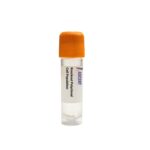
PHF10 Knockout Raji Polyclonal Cells are a CRISPR/Cas9-edited polyclonal knockout population derived from the Raji B lymphoblastoid cell line. This loss-of-function model enables study of PHF10-dependent processes in a B-cell context. The polyclonal format captures gene-editing heterogeneity, offering a robust system for functional genomics and chromatin biology research. Elimination of PHF10 protein expression allows dissection of SWI/SNF-mediated chromatin remodeling and transcriptional regulation.
The Raji cell line, originating from a Burkitt lymphoma patient, is a human B lymphoblastoid model commonly used in immunology and hematologic malignancy studies. Raji cells grow in suspension, harbor Epstein-Barr virus, and serve as a standard for investigating B-cell receptor signaling, apoptosis, and lymphomagenesis. Their genetic and proliferative features make them suitable for studying epigenetic and transcriptional determinants of B-cell survival. PHF10 knockout in this background provides a clinically relevant platform for B-cell lymphoma research.
PHF10 is a subunit of the BAF (SWI/SNF) chromatin remodeling complex, which uses ATP hydrolysis to reposition nucleosomes and regulate genome accessibility. It interacts with core ATPases SMARCA4 and SMARCA2, scaffold proteins ARID1A and SMARCB1, and ACTB. Through these interactions, PHF10 helps target the complex to genomic loci, influencing transcription of downstream genes including cell cycle regulators and apoptosis factors. PHF10 expression is modulated by upstream transcriptional cues and developmental signals, integrating cellular context with chromatin state.
In Raji lymphoma cells, SWI/SNF activity maintains oncogenic gene expression. PHF10 disruption is expected to impair chromatin remodeling at regulatory elements controlling proliferation and survival, potentially altering malignancy or sensitizing cells to apoptosis. Given recurrent SWI/SNF aberrations in B-cell lymphomas, this polyclonal knockout pool aids dissection of BAF subunit functions in transformation and drug resistance, and enables exploration of synthetic lethal interactions and epigenetic vulnerabilities.
Applications include ChIP-qPCR and RNA-seq for epigenetic and transcriptomic profiling, Western blotting for protein validation, and functional assays such as proliferation, viability, and flow cytometry-based apoptosis detection. Co-immunoprecipitation can assess BAF complex assembly. These uses support SWI/SNF mechanistic studies, drug target identification, and preclinical oncology. For more information, please contact Ascent Research.