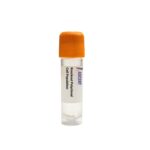
PHF21A Knockout Raji Polyclonal Cells are a CRISPR/Cas9-edited polyclonal knockout cell population derived from Raji B lymphoblastoid cells, engineered to disrupt the PHF21A gene. This product provides a loss-of-function model for studying PHF21A??s role in transcriptional repression and chromatin remodeling. The polyclonal format preserves genetic heterogeneity, enabling robust functional assessment without clonal selection artifacts. Researchers can employ these cells to dissect the LSD1-CoREST histone demethylase complex and its impact on B-cell biology, with applications spanning epigenetic regulation and lymphomagenesis.
Raji is an EBV-positive B lymphoblastoid cell line from a Burkitt lymphoma patient, widely used as a model for B-cell malignancies. These suspension cells retain mature B-cell characteristics and antigen-presenting functions, providing a relevant background for examining chromatin modifiers in lymphoma biology. The EBV-driven transformation adds a layer of viral-host epigenetic interplay, making Raji an ideal host for knockout studies targeting the LSD1-CoREST complex, which endogenously expresses its components including PHF21A.
PHF21A (BHC80) is a core scaffold of the LSD1-CoREST complex that demethylates H3K4me1/2, repressing transcription. It interacts with LSD1, CoREST, HDAC1/2, and BRAF35, linking demethylase activity to chromatin. Regulated by REST/NRSF, PHF21A targets genes like SCN1A, BDNF, and GRIA2. Knockout likely disrupts complex assembly, causing derepression of these targets and altering H3K4me2-dependent gene regulation in B cells, offering a system to probe complex dynamics and downstream transcriptional effects.
In Raji cells, PHF21A knockout enables investigation of LSD1-CoREST-mediated epigenetic control over B-cell identity and transformation. The EBV background highlights how chromatin regulators intersect with viral latency programs, potentially impacting proliferation and apoptosis balance. This model sheds light on Burkitt lymphoma pathophysiology and broader B-cell malignancies. Additionally, since PHF21A mutations are linked to neurodevelopmental disorders, the cells can be used to study REST-dependent neuronal gene circuits in a non-neuronal context.
Typical applications include ChIP-qPCR for H3K4me2 changes at BDNF or SCN1A promoters, western blotting for PHF21A and complex partners, and RNA-seq to capture global transcriptomic shifts. RT-qPCR validates target gene upregulation, while flow cytometry assesses B-cell marker profiles. Functional assays such as proliferation, apoptosis, and LSD1 inhibitor sensitivity testing facilitate therapeutic target validation. For further details or custom cell engineering requests, contact Ascent Research.