Quick Order Cart

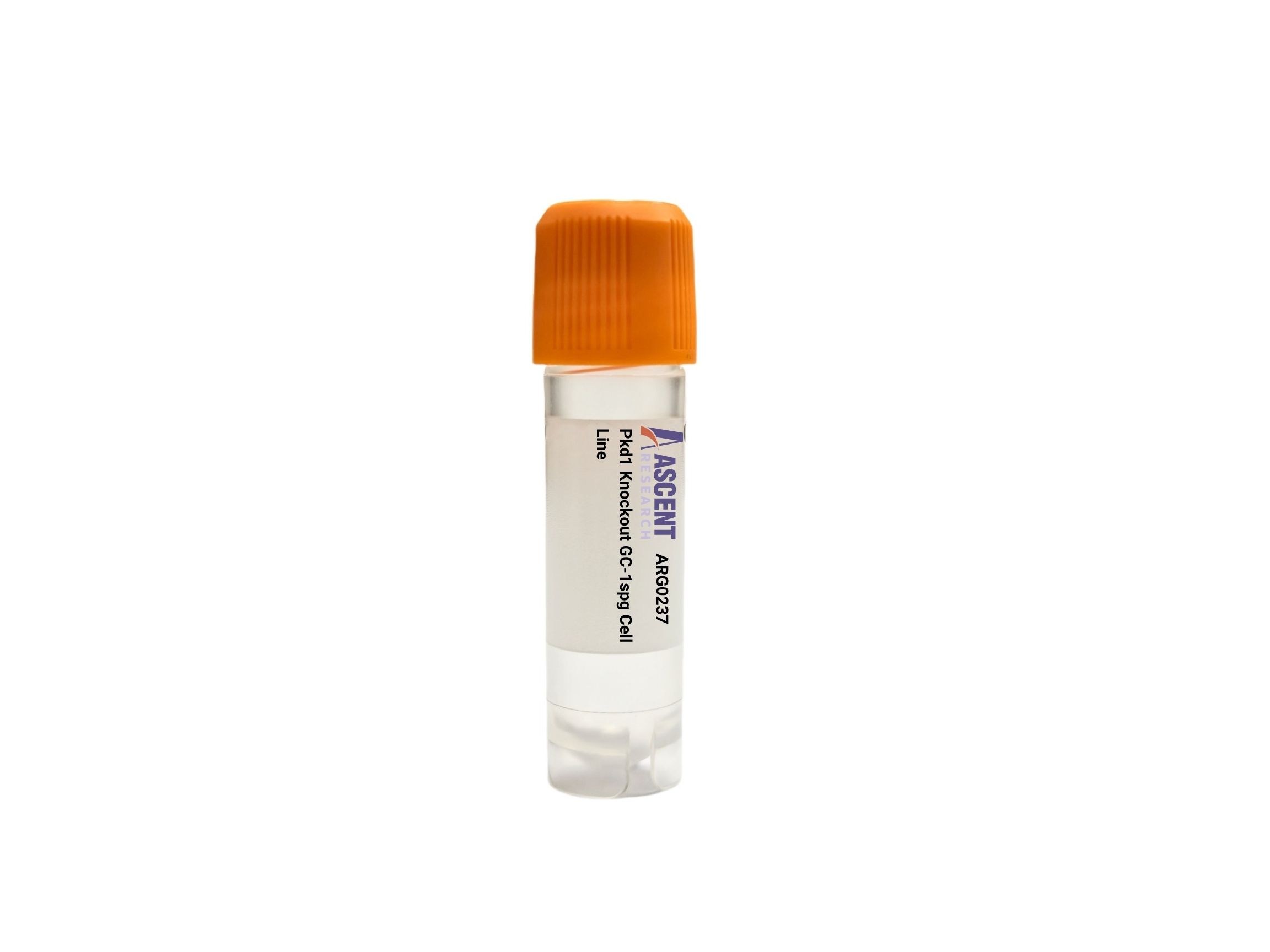
Cat. No. ARG0237

Pkd1 Knockout GC-1spg Cell Line

  • Product Type:

    Genome-edited Cells

  • Disease:

    Normal

  • Gene Species:

    Mus musculus (Mouse)

The Pkd1 Knockout GC-1spg Cell Line is a CRISPR/Cas9-edited knockout cell line derived from mouse spermatogonial cells (GC-1spg). It eliminates polycystin-1, a mechanosensory receptor that complexes with polycystin-2 to control calcium, cAMP, and mTOR signaling, impacting pathways mediated by G proteins, ERK, and transcription factors such as STAT3 and CREB. This model is valuable for studying polycystic kidney disease, ciliopathies, and male fertility defects. It enables investigations into mechanotransduction, spermatogenesis, and cilia biology, using assays like immunofluorescence for cilia markers, calcium imaging, and mTOR activity measurement.

Inquire Now

In stock

Ships next business day


Ask a Question

Shipping Info:

Cryopreserved in vials and shipped on dry ice


Disclaimer:

For Research Use Only

  • Characteristics

    Host Cell

    GC-1spg

    Age

    10 days

    Gene Name

    Pkd1

    Gene Alias

    polycystin 1, transient receptor potential channel interacting; PC-1, PC1, polycystin-1

    Gene Species

    Mus musculus (Mouse)

    Gene Identifier

    NCBI Gene ID 18763

    Gene Type

    protein coding gene

    Gene Family

    C-type lectin-like/link domain superfamily

  • Culture Conditions

    Temperature

    37°C

    Atmosphere

    5% CO₂

  • Quality Control

    Sterility testing

    Daily monitoring confirms that the cells are free from bacterial, yeast, and fungal contamination.

    Mycoplasma testing

    Negative for mycoplasma through PCR analysis

    Pathogens

    Cells tested negative for HIV-1, HBV, and HCV.

  • Disclaimer

    Intended Use

    This product is intended for laboratory in vitro use only. lt is not intended for diagnostic, therapeutic, or clinical applications.

    Disclaimer

    Ascent Research endeavors to provide accurate and up-to-date product information. However, no warranties or representations are made regarding its completeness or reliability. References to scientific literature and patents are for informational purposes only, and the customer assumes sole responsibility for verifying their accuracy.

    By accepting this product, the customer acknowledges and agrees to assume all risks associated with its receipt, handling, storage, disposal, and use, including compliance with all applicable safety and environmental regulations and precautions. Relevant laws, regulations, and ethical guidelines must be followed in conducting any research, modifications, or derivatives derived from this product.

    This product is provided "AS IS", and except as expressly stated herein, Ascent Research disclaims all other warranties, express or implied. Under no circumstances shall Ascent Research, its affiliates, or representatives be liable for indirect, incidental, consequential, or punitive damages arising from the use of this material. While Ascent Research employs rigorous quality control measures, we shall not be held responsible for damages resulting from misidentification or misinterpretation of the provided materials.

Description

The Pkd1 Knockout GC-1spg Cell Line is a CRISPR/Cas9-edited knockout cell line derived from mouse GC-1spg spermatogonial cells. It features targeted disruption of Pkd1, encoding polycystin-1 (PC1). This loss-of-function model enables dissection of PC1 signaling in male germ cells. Supplied as a stable cell line, it ensures consistent experimental outcomes without recurrent transfection or selection.

GC-1spg cells originate from murine spermatogonial cells of the male germ cell lineage, crucial for spermatogenesis. They retain features of spermatogonial stem/progenitor cells, supporting proliferation and differentiation in vitro. Importantly, these cells express primary cilia, making them apt for investigating cilia-dependent pathways in germ cell development.

Polycystin-1 acts as a mechanosensor and signaling receptor, complexing with polycystin-2 (PKD2) at cilia and the plasma membrane. It is activated by fluid shear stress and extracellular matrix interactions, regulating intracellular calcium via G proteins and TRPC1. Downstream, PC1 orchestrates mTORC1, cAMP/PKA, and ERK cascades, influencing STAT3, CREB, TAZ/YAP, and NFAT. It interacts with E-cadherin, focal adhesion kinase, ??-catenin, and tuberin, governing cell adhesion, polarity, and proliferation. Loss of PC1 is linked to cystogenesis and ciliopathies.

In GC-1spg spermatogonial cells, Pkd1 knockout disrupts pathways critical for germ cell homeostasis. PC1-mediated mechanotransduction and mTOR modulation are essential for spermatogonial stem cell maintenance and differentiation. Loss of PC1 may impair cilia function, calcium signaling, and mTORC1 activity, leading to defective proliferation or apoptosis, and thereby male infertility. This model provides a platform to study how polycystin signaling integrates mechanical and chemical cues in testicular biology.

The knockout cell line is applicable for autosomal dominant polycystic kidney disease modeling, cilia biology, spermatogenesis research, and mechanotransduction studies. It supports drug screening targeting mTOR, cAMP, or calcium pathways, and male fertility investigations. Key assays include Western blotting for PC1, RT-qPCR for downstream targets, immunofluorescence for cilia markers (acetylated tubulin, Arl13b), calcium imaging, mTOR activity assays (phospho-S6), co-immunoprecipitation with PC2, and migration assays. For further information, contact Ascent Research.


Reset Password

    Reach Us Questions? Click Me Here!

    Fill out the form below and a member of our team will contact you shortly!

    *Required field


      Reach Us

      Fill out the form below and a member of our team will contact you shortly!

      *Required field

      Product Inquiry (Optional)